
For years, flushing was something like a grower’s rite of passage: two weeks before harvest you stop feeding nutrients, pour pure water, and believe the plant will “wash out” everything unnecessary. In theory — cleaner taste, better ash, stronger aroma. In practice? The years 2023–2025 brought a wave of studies, lab analyses and blind tests that flipped this tradition upside down. It turns out that flushing does not actually do what grower folklore claimed for decades. In this article I break the topic down completely: what works, what is a myth, and how you should really approach the final stage of flowering in 2025.
When I started growing, flushing was dogma. If you did not flush — you were an amateur. If you did — you felt like a professional. Nobody questioned whether it actually worked. But times have changed, and growers today have access to data we simply did not have before: mineral analysis in plant tissue, chlorophyll levels, terpene profiles and ash studies. Because of this, growers began looking at flushing with cold logic rather than through the lens of old forum legends.
1. Where Did Flushing Come From and Why Did It Become So Popular?
In the 90s, mineral fertilizers had ridiculously high salt concentrations, and growers watered “by intuition” with no EC control and no understanding of water balance. No wonder plants were often overfed, nitrogen-heavy and harsh in taste. Flushing with water actually helped — but only because everything leading up to it was chaotic.
Today we have fertilizers with precise ratios, real-time EC monitoring, stable photochemistry under LEDs and modern knowledge about plant metabolism. In other words: flushing was a solution to problems that modern growing simply avoids.
2. What Do the Latest Studies Say? (2023–2025)
In 2023 the first serious comparative tests appeared. They were conducted on several strains, under repeatable conditions, with laboratory analysis.
The results were surprising:
– the mineral content in plant tissue was nearly identical in flushed and non-flushed plants,
– no evidence was found that the plant “removes” salts from the flowers,
– differences in taste were minimal and difficult to reproduce,
– the impact on terpene levels was statistically insignificant.
Blind tasting tests also showed that growers cannot reliably distinguish flushed buds from unflushed ones — as long as the plant was properly fed throughout the cycle.
Even more interesting: plants that had their nutrients cut too early produced smaller and less dense buds.
Why?
Lack of minerals at the end of flowering = reduced biomass production and weaker photosynthesis.
3. So Does That Mean Flushing Is Completely Useless?
Yes. And no. It depends.
1. Flushing does NOT “clean” nutrients out of the plant
Cannabis cannot pump minerals out of its flowers. Biologically impossible — nutrients are part of the cell structure.
2. Flushing may affect burn quality — but only indirectly
If someone overfed the plant all cycle long and had an EC runaway of 3.0–3.5 mS/cm, then flushing sometimes improves smoke quality.
But that’s fixing a disaster, not a growing technique.
3. In a properly run grow, flushing adds nothing
When EC is stable and nitrogen is reduced in the last weeks according to best practices, flushing has no benefit whatsoever.
4. Where Do Legends About “Cleaner Ash” Come From?
Ash is one of the most misleading indicators in the grower world. People believed that white ash = good quality, black ash = too many nutrients. Unfortunately, the truth is far more complex.
Ash color is influenced by:
– drying speed,
– the type of calcium and magnesium used,
– combustion temperature,
– chlorophyll content,
– even the structure of trichomes.
Black ash does not necessarily mean overfeeding. Most often it means the buds dried too fast or cured in too much humidity.
5. What About Organic Growing — Does Flushing Matter There?
In organic growing, flushing becomes completely meaningless.
In living soil, nutrients are not dissolved salts — they are part of a complex micro-ecosystem. Microbes build a healthy rhizosphere and the plant takes exactly what it needs, at the pace dictated by its metabolism.
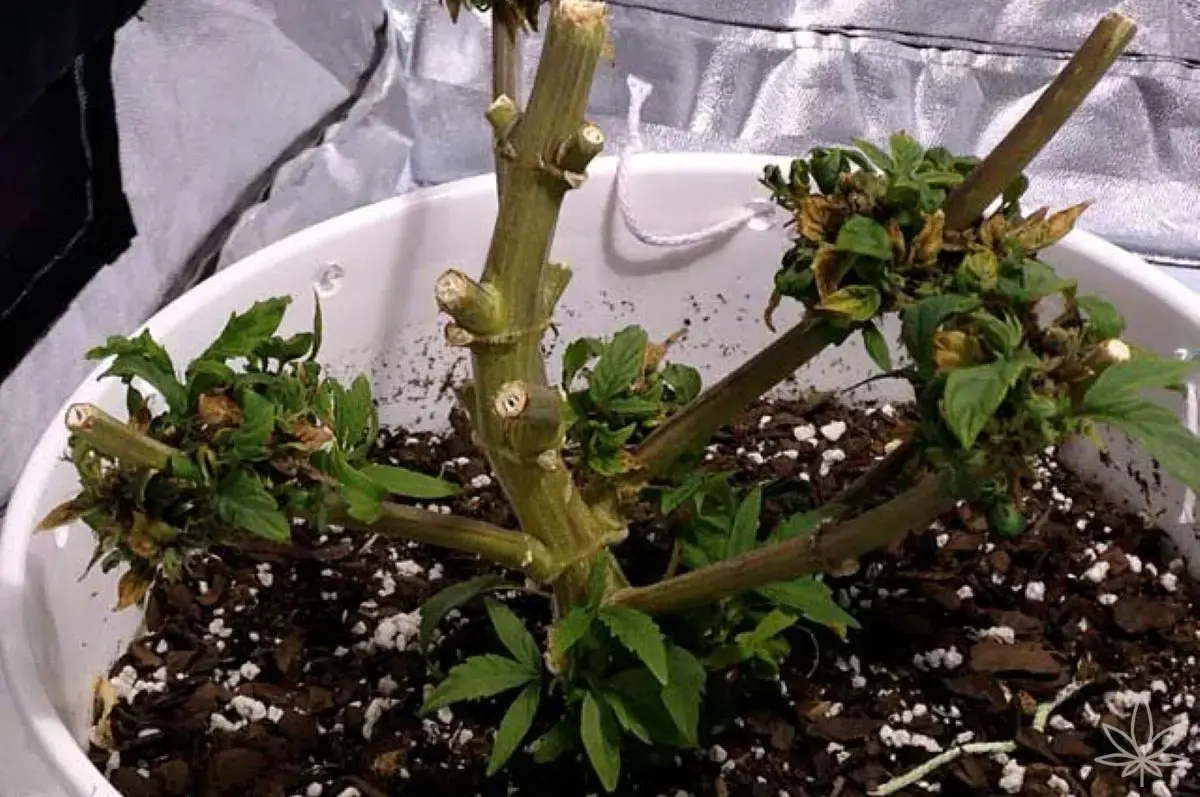
Flushing in organic setups can even be harmful — by washing away microbes you destabilize the soil. In extreme cases plants can develop deficiencies that ruin the finish.
6. And What About Mineral Nutrients — Is Flushing Useful There?
In mineral growing, flushing can make sense only in two cases:
1. When you clearly have nitrogen toxicity.
Pure water can help reset the medium.
2. When EC in the substrate is extremely high.
If EC runoff is 2.5–3.0 mS/cm and the plant slows down, flushing may restore balance.
But these are emergency situations — not standard practice.
7. The Modern Approach to Late Flowering (2025)
By 2025, professional growers agree on one thing: instead of flushing, the correct technique is controlled nutrient reduction.
Usually it looks like this:
– in the last 10–14 days nitrogen is reduced to a minimum,
– phosphorus and potassium are kept at stable, moderate levels,
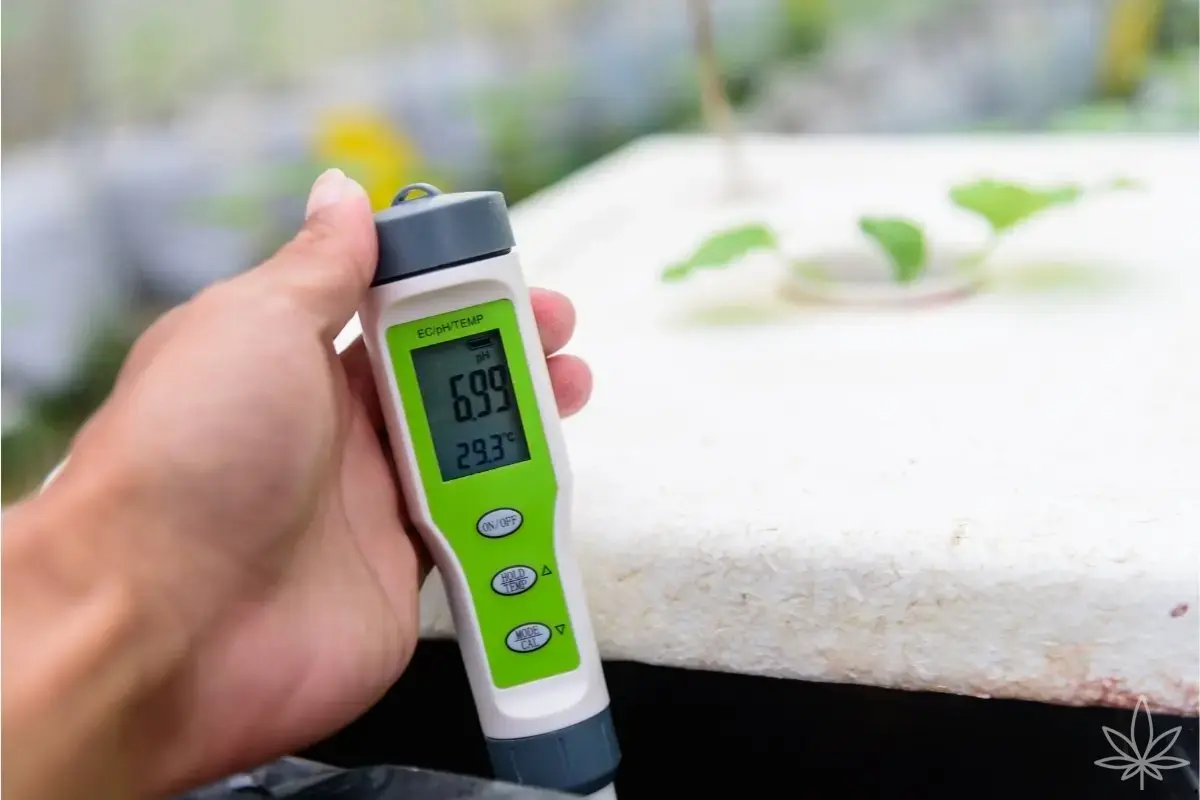
– EC gradually drops from 1.6 to 0.8–1.0,
– watering becomes less frequent but more precise,
– pH remains stable, which improves terpene expression.
The result?
The plant does not starve, but is not overfed either.
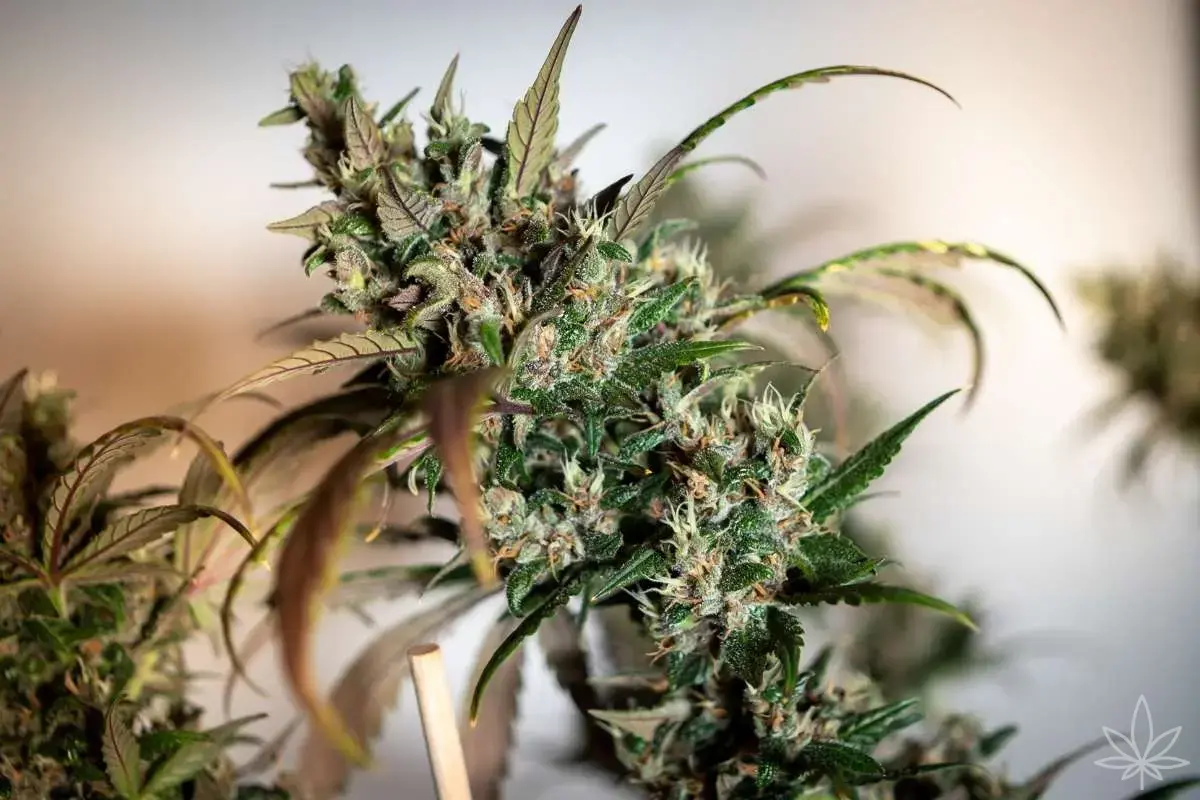
Trichomes mature evenly, and buds do not lose weight.
8. How Much Does Flushing Cost — And How Much Does Not Flushing Save?
This is the funny part — flushing is actually expensive.
If at the end of flowering you water every 2–3 days with 5–8 liters per plant, over two weeks you use:
– 20–30 liters of water per plant,
– plus time, pump energy and logistics.
For 6–8 plants in Western Europe, this often totals 12–20 EUR.
Not flushing = 0 EUR + no stress + no bud shrinkage.
9. My Real-World Experience: What Actually Works
After years of tests, comparisons and A/B cycles, I have one conclusion:
The best quality comes when the plant is not starving — but also not overfed.
This is what I do:
– gradually lower EC in the last 10 days,
– reduce nitrogen to the bare minimum,
– keep pH stable,
– water smaller but precise amounts,
– harvest based on trichomes, not calendar dates.
I have never seen better smell or taste after flushing — but I have often seen bud size decrease.
Flushing is a beautiful grower myth. For decades it made sense, helped in the days of primitive fertilizers and chaotic feeding — but in 2025 we know that in a properly run grow it has no scientific or practical justification. The plant does not flush nutrients out of its flowers. Taste, aroma and burn quality depend far more on correct feeding, controlled EC, slow drying and a proper cure.
If you want the best possible quality — forget flushing and run a stable feed schedule to the very end, reducing nutrients gradually rather than suddenly. Cannabis will reward you for this approach — and you will feel it in every puff.