Sooner or later, every grower asks the same question: can you harvest multiple times from the same plant? Without planting a new one, without germination, without starting from scratch. Online, stories circulate about “eternal plants,” three, four, even five harvests from a single cannabis plant. It sounds tempting. The problem is that biology has no mercy for myths. Cannabis is not a perennial plant — but… there are techniques that allow you to temporarily bend its life cycle. This article puts the topic in order, without forum magic: what is actually possible, what is only theoretical, and when “multi-season cannabis” really makes sense.
Where does the myth of multi-season plants come from?
The dream is simple: one plant, multiple harvests, maximum efficiency. The myth has three main sources. First, re-vegging — forcing a plant to return from flowering back to vegetative growth. Second, photos of “weird” leaves and plants that started growing again after harvest. Third, classic internet claims of “it works for me.” What’s usually missing is biological context. Because the fact that a plant is still alive does not mean it functions like a fresh one.
Botany without nonsense: why cannabis is not perennial
Cannabis is an annual plant. Its natural cycle is straightforward: vegetative growth → flowering → reproduction → death. After flowering, the plant is hormonally and metabolically exhausted. It is programmed to reproduce, not to live long-term. In nature, nothing pushes it back into vegetative growth — because there is no reason to.
This is crucial: “plant death” does not mean instant drying, but a gradual loss of regenerative capacity. And it is exactly into this biological gap that re-vegging steps.
Re-vegging – turning back time against biology
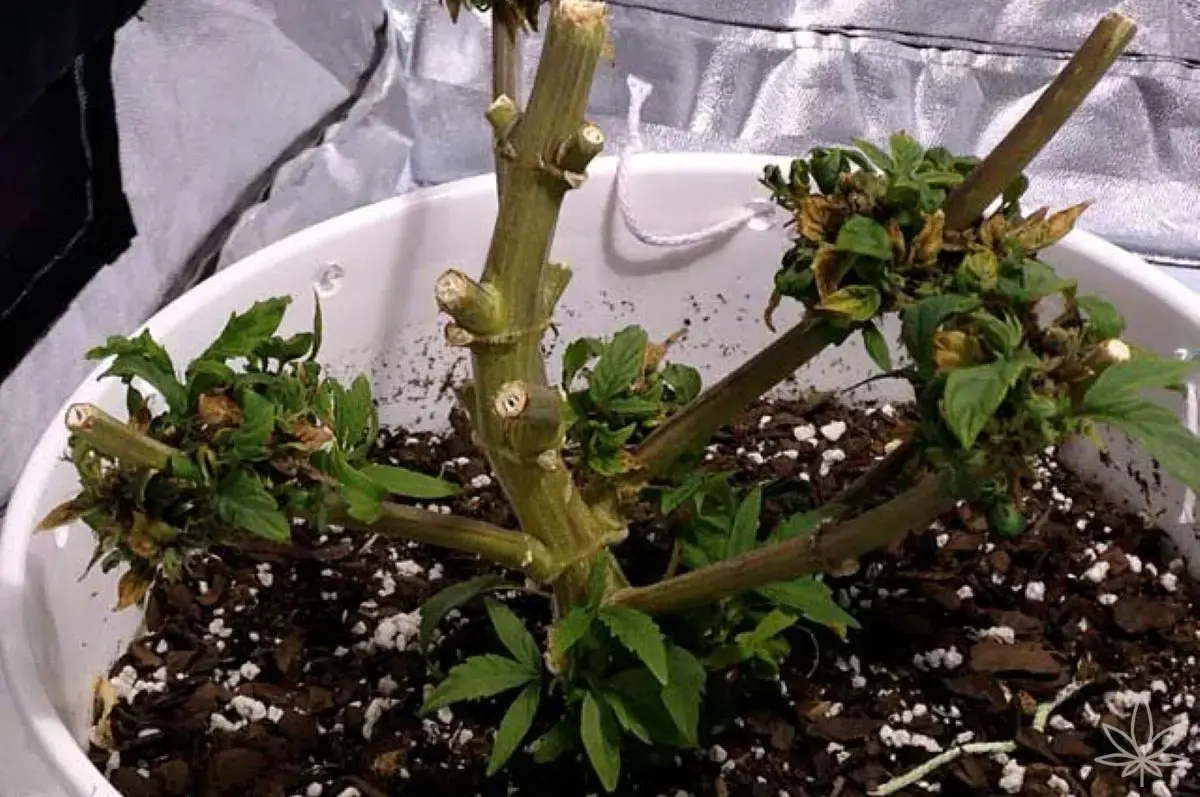
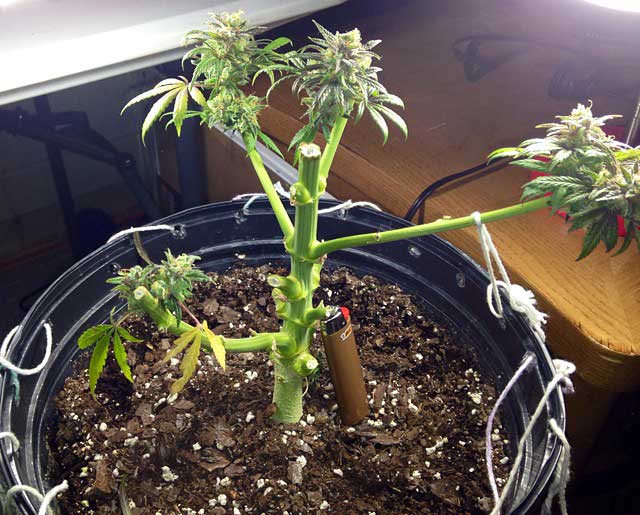
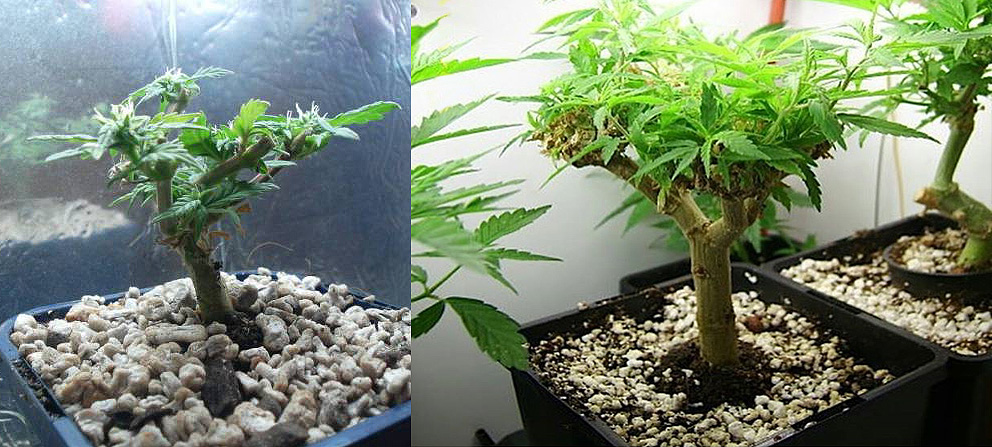
Re-vegging is based on changing the photoperiod after harvest (from 12/12 back to 18/6 or 20/4) while leaving part of the living plant tissue intact. Flowering hormones slowly fade, and the plant — often after weeks of shock — begins producing new shoots.
The result? Deformed, single-blade leaves, chaotic growth, and a long “recovery” phase. This is not a reset. It is resuscitation.
Key facts:
- the first re-veg often works,
- the second is noticeably weaker,
- the third is a gamble,
- every cycle increases stress and the risk of problems.
Multi-season cannabis indoor – the only place where it makes sense
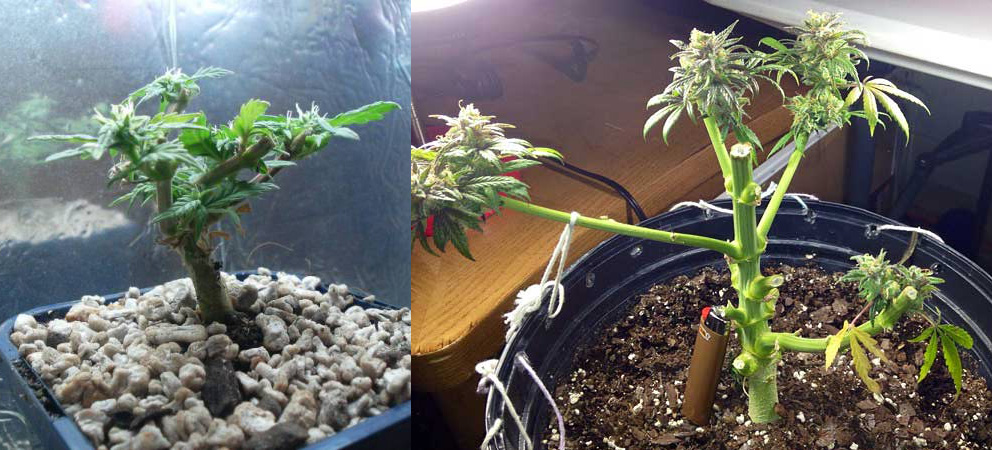
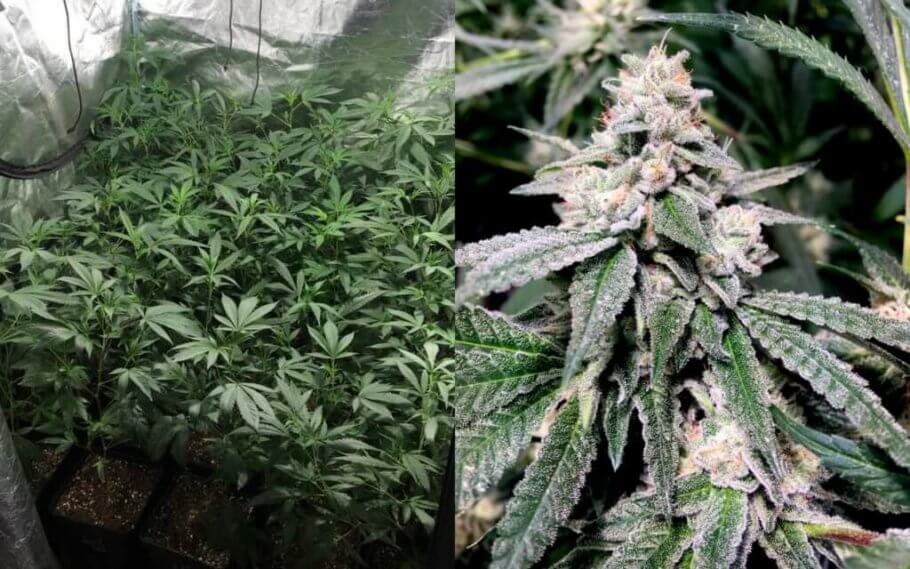
Indoor growing offers full control over light, temperature, and humidity. Only here does “multi-season” cannabis have any real footing.
Required conditions:
- a photoperiod of at least 18 hours of light after harvest,
- leaving lower branches and fan leaves intact,
- very careful cutting — not harvesting “down to zero,”
- stable VPD and restrained feeding (no pushing).
In reality:
- 2 harvests from one plant – often achievable,
- 3 harvests – possible, but at the cost of time and quality,
- 4+ harvests – extremely rare and usually not worth it.
With each cycle, the risk increases:
- hermaphroditism,
- root system problems,
- looser flower structure,
- loss of aroma and terpene expression.
Outdoor: theory versus practice
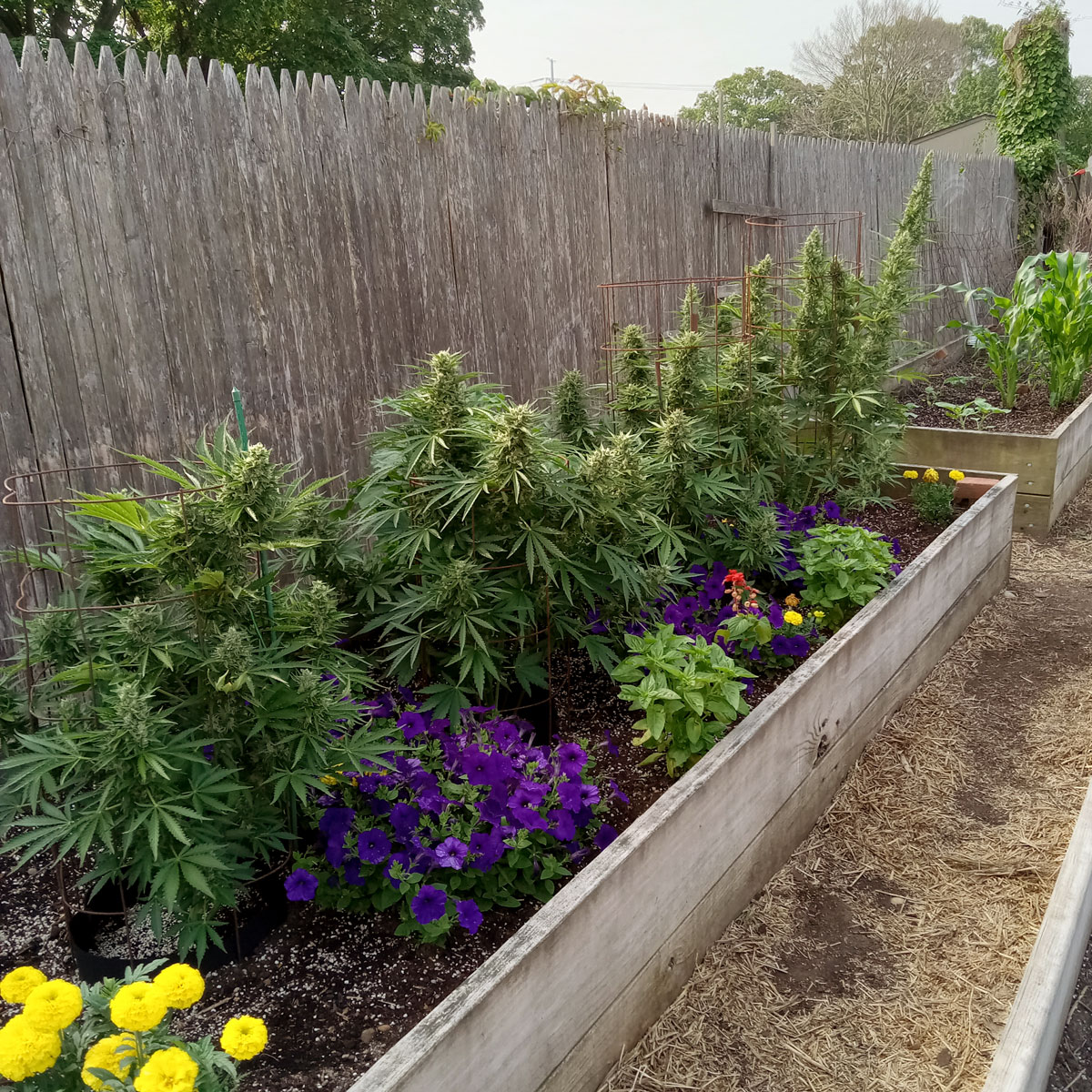

Outdoor growing looks tempting: big plants, real sun, nature doing the work. The problem is lack of photoperiod control. After an autumn harvest, days get shorter — not longer. True re-vegging is therefore almost impossible.
Exceptions:
- very long seasons (southern Spain, California),
- partial harvesting of top buds in mid-summer,
- leaving lower branches for a secondary finish.
This is not a full second cycle, but rather stretching the leftovers. On top of that come:
- mold,
- pests,
- exhausted root systems,
- autumn diseases.
In practice: technically possible, production-wise pointless.
Why autoflowers are completely out of the question
Here, things are simple. Autoflowering strains:
- do not respond to photoperiod changes,
- run on a genetic internal clock,
- do not return to vegetative growth after flowering.
Autoflowers mean one cycle, one harvest — end of story.
The hidden cost of the “eternal plant”
Every re-veg cycle means:
- accumulated stress,
- longer and longer recovery times,
- higher risk of mutations and hermaphrodites,
- declining flower quality.
That’s why experienced growers rarely choose this path long-term. As an experiment — yes. As a production strategy — no.
When it makes sense (and when it absolutely doesn’t)
It makes sense if:
- you want to preserve exceptional genetics,
- you’re testing a strain before turning it into a mother,
- you’re learning how plants respond to stress,
- you’re running an experimental project.
It does not make sense if:
- you expect top-tier flower quality,
- you want predictable harvests,
- you’re looking for a “yield hack.”
A better alternative to multi-season cannabis
Instead of pushing one plant to the limit:
- keep mother plants and take clones,
- use a perpetual grow setup,
- plan staggered harvests.
The result?
Better quality, less stress, more control — and zero mythology.
A grower’s conclusion
Yes — it is possible to harvest more than once from the same cannabis plant. But this is not an “eternal plant.” It is a temporary workaround against plant biology, and it comes at a cost. Indoor, it can be an interesting tool. Outdoor, it remains mostly theoretical. That’s why, sooner or later, most growers return to the classic cycle: a healthy plant, one solid harvest, and a fresh start. In cannabis cultivation, stability always beats magic.