If you’ve ever looked at your electric meter after a month of flowering and felt like your plants were burning through cash faster than a joint at a festival, this text is for you. Indoor cultivation does not have to consume energy like a dragon — all you need are a few smart decisions, some optimization and a bit of technical intuition. In this article, I break down how to build a sustainable and energy-efficient grow that not only lowers your bills but also improves the quality of your harvest. All of that without compromise and without spending a fortune.
Energy-hungry grows – where the problem comes from
Indoor growing has one big downside: you control the light, temperature and climate like a god… but you pay for all of it yourself. Lighting, ventilation, air-conditioning, heating, filters — everything adds up to your monthly energy bill. In 2025, with rising electricity prices (in the EU averaging 0.22–0.35 EUR/kWh), growers increasingly look for ways to run their grows more efficiently.
Good news? You can cut costs by 30–50%, without losing a gram of quality.
1. LED lighting – the foundation of an efficient grow
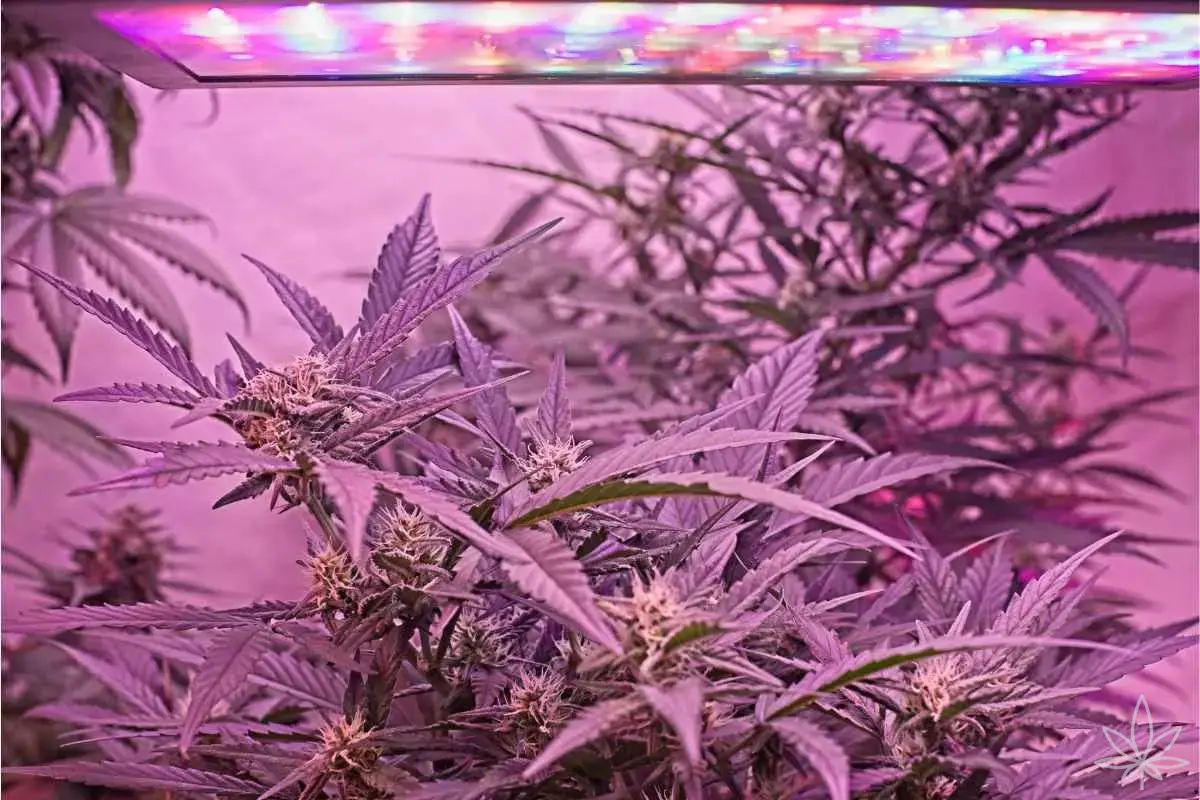
If you’re still running HPS lights… times have changed. Today’s LEDs are nothing like the purple monsters from 2015. Modern panels:
- use 40–60% less energy,
- emit less heat,
- have better spectrums (full-spectrum + deep-red + UV),
- provide higher yields at lower consumption.
A good panel for a 100×100 cm tent costs 200–350 EUR in the premium range (240–300 W). Electricity consumption for one cycle (around 90 days) is about 120–150 EUR, depending on your rate.
Pro tip: look for fixtures with 2.7–3.2 µmol/J efficiency or higher.
2. Ventilation and air movement – huge savings for very little money
Most growers oversize their ventilation, assuming “more power = better”. That’s wrong.
- For an 80×80 cm tent, 280–320 m³/h is enough.
- For 100×100 cm — 350–450 m³/h.
- For 120×120 cm — 500–650 m³/h.
It’s better to work with a speed controller than to run the fan full throttle. A fan at 40–60% power runs quieter and consumes 30–50% less electricity.
Oscillating fans? Two small ones for 15–25 EUR each are enough — just position them so the air dances, not slaps the plants.
3. Climate control – how not to overpay for heating and cooling
The biggest cost besides lighting is temperature control. And here, small adjustments make a huge difference.
Optimal ranges:
- Veg: 23–26°C,
- Flowering: 24–27°C,
- Night: 20–22°C.
If you use LEDs, they generate less heat, so in winter you may need some heating — but here are a few tricks:
Heat recovery from lights and ventilation
If possible, direct your exhaust into another room in your home — free heating.
Tent insulation
A layer of thermal insulation mat (5–10 EUR/m²) reduces heat loss by 10–15%.
Humidification instead of cooling
At high temps and low humidity, plants transpire faster — raising RH to 55–60% in veg reduces thermal stress and lets you run slightly warmer without an AC unit.
4. Mediums and nutrients – ecological also means cheaper
Organic grows in coco or living soil have a bonus: they require fewer bottles and less water.
- A complete set of organic nutrients for a cycle costs 40–70 EUR.
- Carbon-filtered water is cheaper and more ecological.
- You can partially regenerate the medium instead of throwing it away after each cycle.
Organic plants also handle temperature fluctuations better — meaning less energy spent stabilizing the climate.
5. Automation – small devices, big reductions in costs
Even the simplest automation reduces energy usage by eliminating “wasted power”.
Useful tools:
- Digital timer – 10–15 EUR
- Temperature/humidity controller – 20–40 EUR
- Fan speed dimmer – 15–25 EUR
- Smart Wi-Fi plug – 10–20 EUR
This ensures that ventilation, humidification or heating run only when needed — saving dozens of euros per cycle.
6. Cycle planning – save energy without losing quality
One of the most underrated ways to save power is… planning the cycle better.
Shortening veg by a week = real savings
Instead of 5 weeks of veg, often 3–4 are enough, especially with LST. You reduce hours of lighting, watering and ventilation — and yields don’t have to drop.
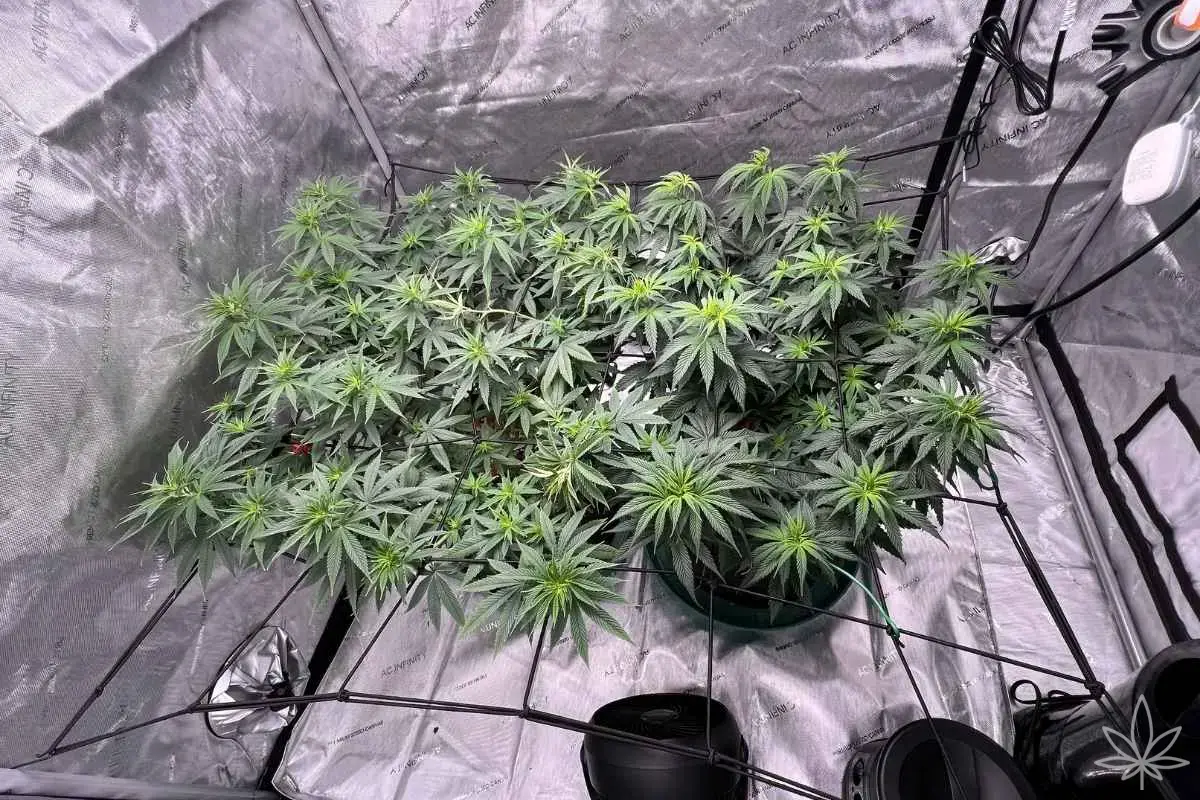
Squares, SCROG and an even canopy
More light hits the buds and less hits the tent walls. This alone can boost efficiency by 10–20% without changing equipment.
7. A realistic example of an efficient 100×100 cm grow room
Equipment:
- LED 240–300 W – 250 EUR
- Fan 400 m³/h + carbon filter – 90–130 EUR
- 2× oscillating fans – 40 EUR
- Automation (Wi-Fi plug + controller) – 30–50 EUR
Average electricity cost per cycle:
90–140 EUR (depending on EU region)
Yield:
300–450 g of high-quality flower.
Energy cost per gram = 0.20–0.40 EUR — extremely competitive.
Conclusion
An energy-efficient grow doesn’t require expensive gadgets or a tech revolution. It’s mainly about: smart lighting, properly calibrated ventilation, stable climate and good automation. Instead of fighting your electricity bills, you can run a grow that is efficient, ecological and inexpensive — and at the same time gives more stable and more aromatic yields.
If you optimize these elements, you’ll feel the difference after your very next bill. And the plants? They’ll reward you for the calmer environment.