
At some point, every grower hits the same question. First you’re just excited something is growing, then you’re stressed about whether you’re doing it “right,” and finally—when harvest time comes and comparisons start—you hear it (or say it) out loud:
“Alright… but what should I be pulling per square meter?”
And that’s where the trouble begins, because the internet loves numbers without context. Someone posts a bucket of buds with “1 kg from 1 m²,” another says “2 g/W under LED,” and a new grower reads it like a baseline. But indoor yield isn’t one number—it’s the sum of conditions, decisions, and mistakes. And people get creative when they measure “one square meter.”
This article is here to give you an honest answer: what’s normal, what’s good, what’s genuinely advanced—and why.
Before You Count Grams, Define What You’re Measuring
“Yield per 1 m²” sounds simple, but in practice people compare completely different things. One person counts wet weight straight off the plant, another weighs after a quick dry, someone else includes sugar leaves, another doesn’t trim stems. Then everyone wonders why the numbers don’t match.
So in this article, when I say “yield,” I mean:
- dry weight after a proper dry,
- no stems,
- no “green ballast” (not padded with extra leaf),
- and based on real, usable canopy area—the square meter that was actually filled and receiving light.
If you want honest comparisons, compare like that.
What Counts as “A Lot” — Real Ranges, Not Forum Records
The most accurate answer is “it depends.” I know—that doesn’t help. So here are realistic ranges, but with context, not as commandments.
In a typical indoor LED grow without CO₂, with a normal cycle and decent plant management, a solid result starts around 500 g per 1 m². That usually means you’ve got the basics under control: light, watering, climate, and you’re not making major mistakes.
A very good level for most home growers is 600–800 g per 1 m². That’s rarely “luck” or “genetics did all the work.” It’s consistency: even canopy, stable environment, smart training, and a root zone that isn’t constantly swinging.
When someone can regularly hit 800–900 g per 1 m²without CO₂, that’s a sign they’ve built a system—not just had a lucky run. Above that, it gets harder because the plant becomes limited by more than light: leaf temperature, CO₂ availability in the air, water/nutrient transport speed, and overall environmental stability.
900–1100 g per 1 m² is absolutely possible, but in real life it’s more often tied to CO₂ supplementation, strong and very even light distribution, and excellent climate control. That’s already semi-commercial territory where equipment and skill must match.
And the famous “1 kg per m²”? Yes, it can be done. But if someone talks about it like it’s normal, they’re usually leaving out key details: veg time, PPFD, whether CO₂ was used, how the climate was controlled, and whether it’s repeatable.
g/W — Useful, but Sometimes Misleading
Old-school growers used to say: “1 gram per watt is good.” It was simple because HPS had predictable limitations, and watts roughly translated to usable light.
Today, with modern LEDs, g/W can still be useful—but only if you understand what it measures. It’s an indicator of energy efficiency, not a guarantee of total mass.
Here’s what that looks like:
- 600W and 700 g → excellent efficiency and a strong result
- 1000W and 900 g → more total mass, but worse efficiency
Which is “better”? Depends on your goal. If you’re not running a business and calculating ROI, most home growers are best served by a balanced approach: strong yield without wrecking quality, stressing plants, or inflating the power bill.
Something People Forget: Cycle Time Is a “Cost” Too
Two harvest numbers can look similar while being completely different stories.
500 g per 1 m² with a short veg and a clean, fast run is not the same as 800 g per 1 m² after a long veg where plants sat in the tent for six extra weeks before flipping to 12/12. Same grams, very different production time.
So when you compare, ask yourself: are you chasing a single-cycle record, or maximizing output across a whole year? Over a year, a stable 650–750 g with shorter, repeatable cycles often beats one heroic “1 kg run” followed by messy, inconsistent results.
Yield Isn’t Just Weight — Density and Quality Can Lie
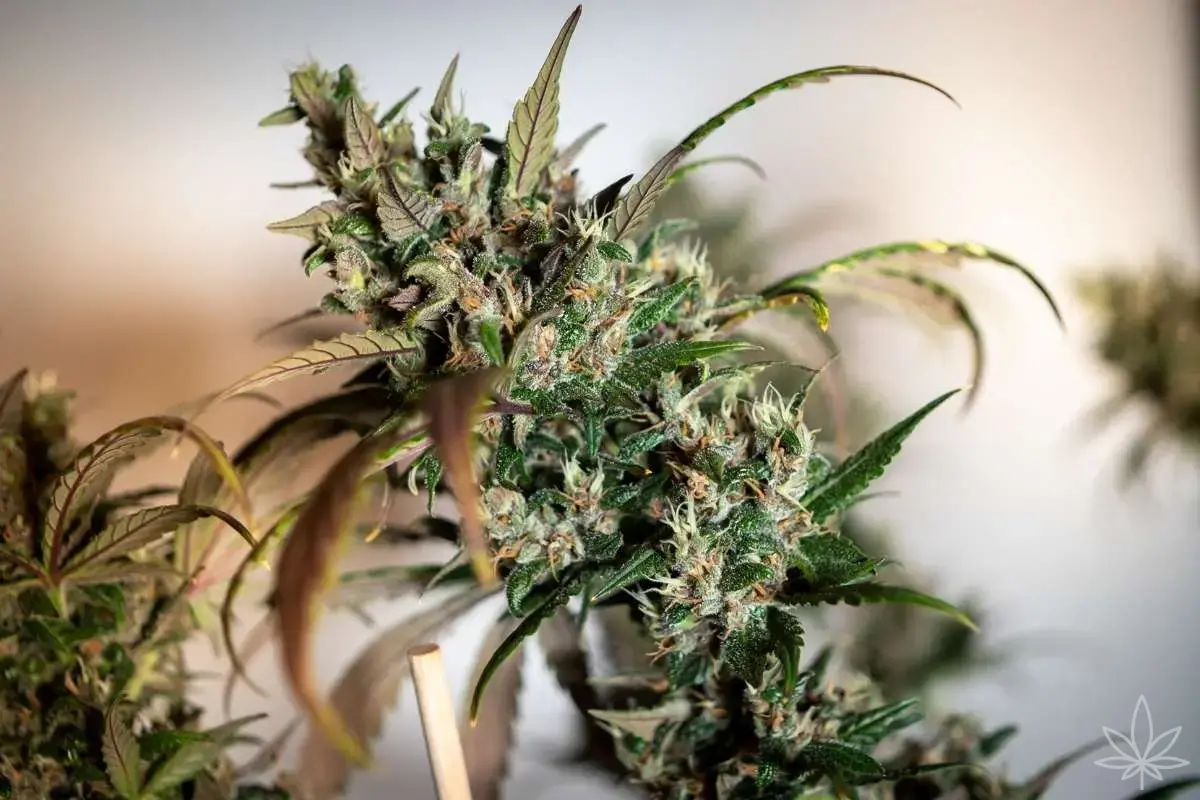
The internet loves weight. Growers love weight. But anyone who has held a dense, resin-heavy top knows that 700 g of true “brick buds” can be worth more than 900 g of airy material that turns into dry fluff after a week in jars.
When you chase the number alone, it’s easy to drift into:
- too much light too close to the canopy,
- overfeeding to force bulk,
- overpacking the canopy,
- extending veg endlessly “because it’ll get bigger.”
And then mass goes up while quality drops. You get airy structure, foxtailing, more stress issues, and sometimes weaker terpene expression because the tops ran too hot.
What Actually Limits Yield per m²?
This is where many growers get it wrong. The easiest answer is: “my light is too weak.” But in many home setups, the light stopped being the limiting factor a long time ago.
Most often, yield is limited by environmental stability. If I had to name three factors that block growers from moving from “okay” to “very good,” it’s these:
- climate and VPD (can the plant transpire and photosynthesize without constant stress?),
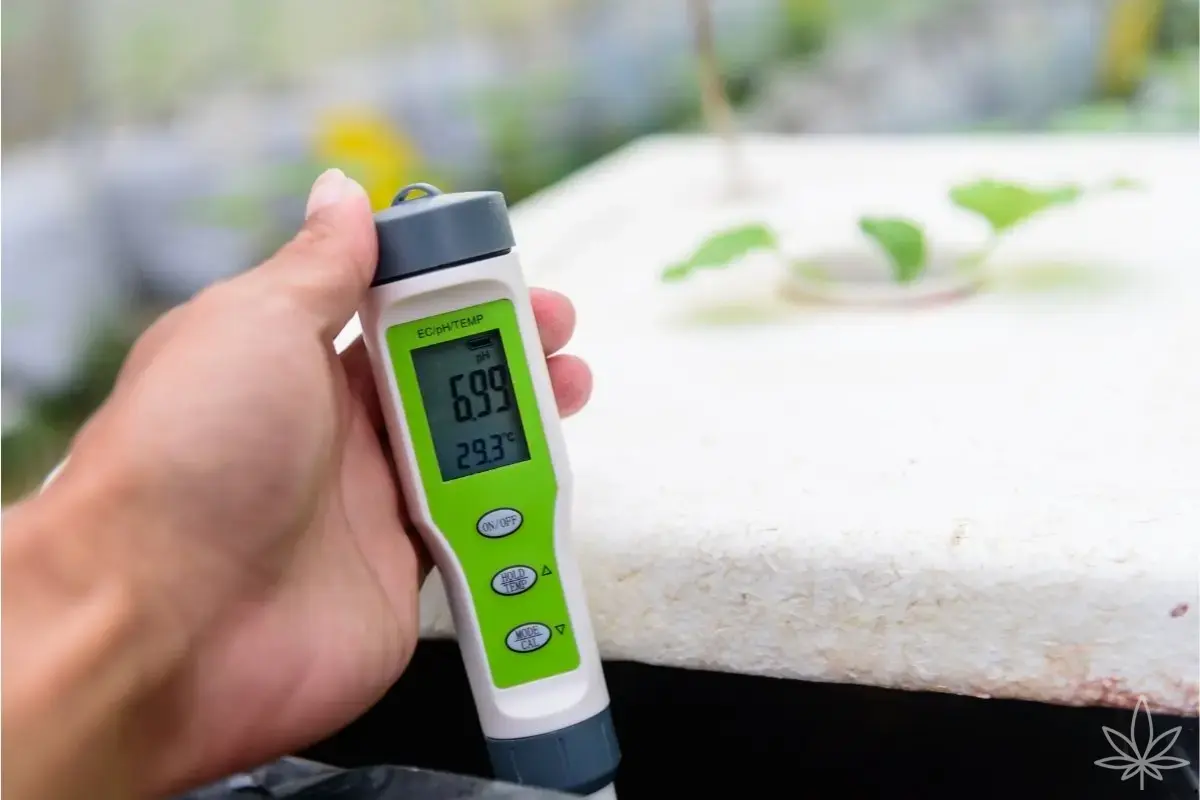
- root-zone stability (watering rhythm, oxygenation, root temperature, and avoiding wild EC swings),
- even canopy (is the full 1 m² working, or only a few tops in the center?).
And here’s the best part: a 10–15% yield jump often comes not from a stronger lamp, but from better airflow, more stable temperatures, and less chaotic watering.
The Real Definition of “A Lot”: Repeatability
If you want the most honest definition of a “big yield,” it’s this:
A lot is a result you can repeat.
Anyone can hit a one-off record: a perfect phenotype, a perfect run, the stars align. Mastery starts when you can pull 700–800 g per 1 m² consistently and you know exactly why it happens. No miracles, no lottery.
The maryjane.farm Verdict
If you want a simple compass that doesn’t lie:
- 500 g per 1 m² is a solid result and a strong start,
- 600–800 g per 1 m² is very good and intentional growing,
- 800–900 g per 1 m² usually means a dialed, stable system,
- 900 g–1 kg+ per 1 m² is an optimization project that demands excellent conditions—often CO₂—and high control.
Before you chase “a kilo per square meter,” ask a better question: is your system stable? Does quality rise with mass? And can you repeat the result?
Because in indoor growing, the winner isn’t the guy who hits one record run.
It’s the grower who has control.