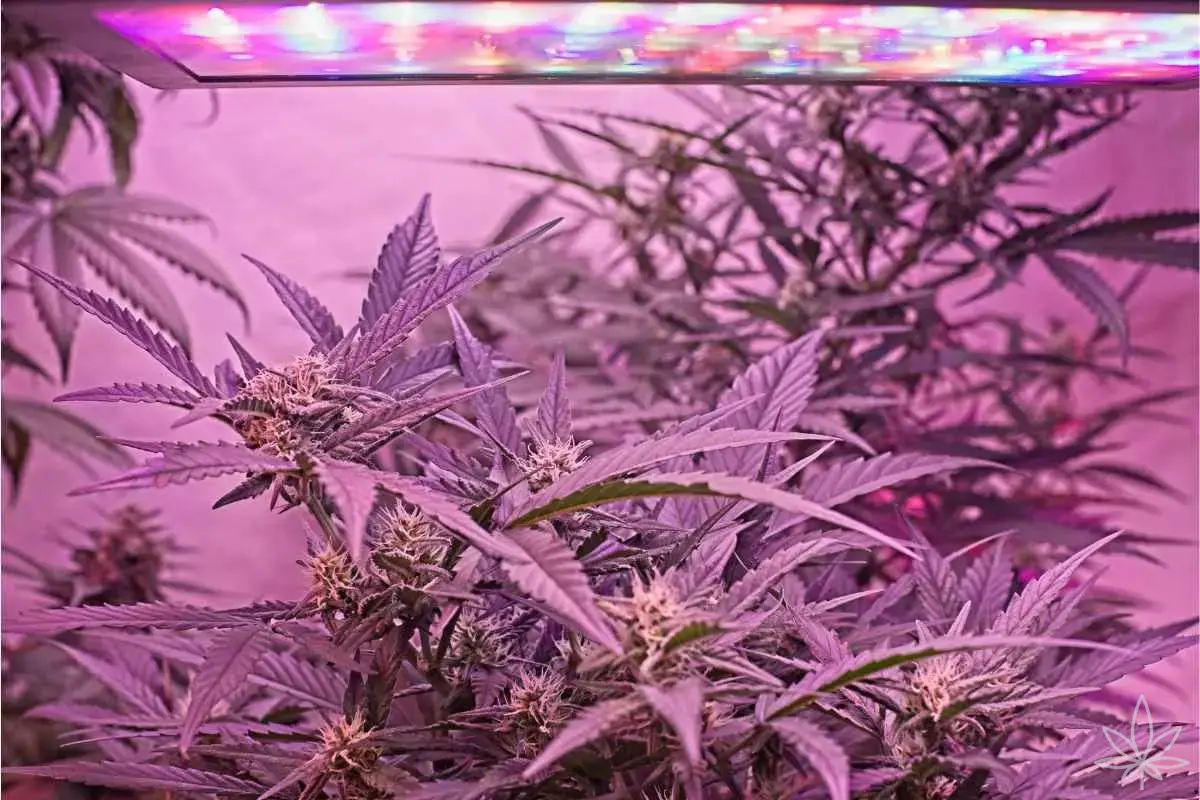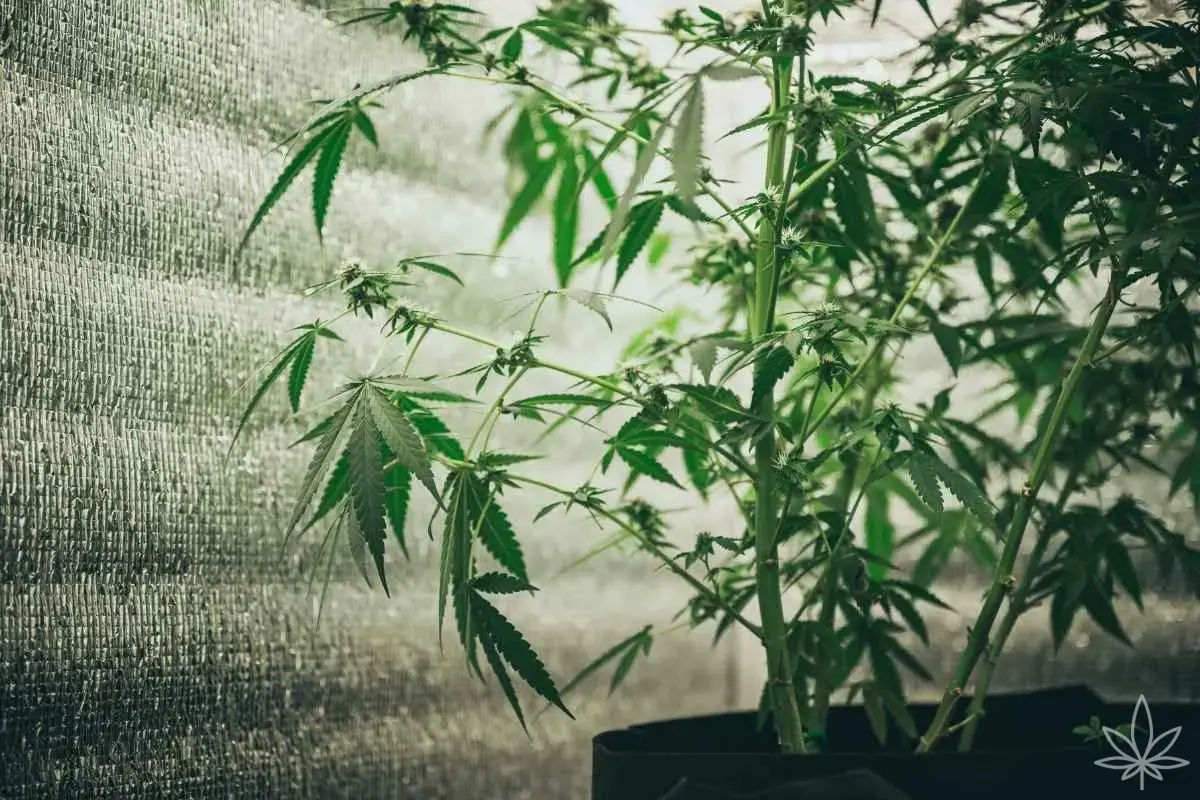
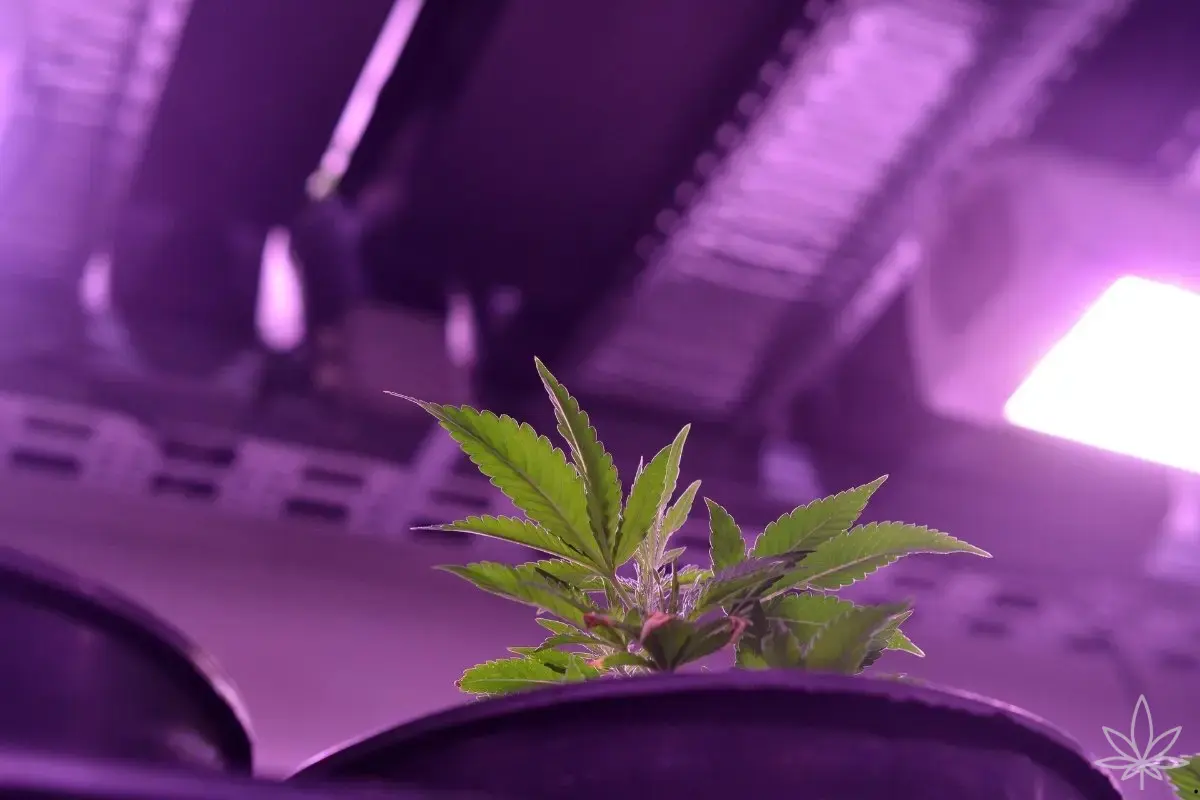
In 2026, the biggest trap of LED indoor growing doesn’t look like a disaster. It looks like “nice numbers” in a light-meter app, even plants, seemingly healthy color… and then suddenly: leaf curl, the top fading, “deficiencies” despite feeding, swollen tops with weak aroma, or foxtailing (meaning flowers that start building new “towers” instead of finishing evenly).
And very often the culprit is one thinking error: you look at PPFD and ignore DLI.
Sounds like another abbreviation from industry slang? No worries. In this text I unpack every abbreviation “in plain language” right when it appears—so you don’t need to know jargon to set your light correctly and avoid turning your plants into a tanning booth.
Light Indoors: Not Only “How Much,” but Also “How Long”
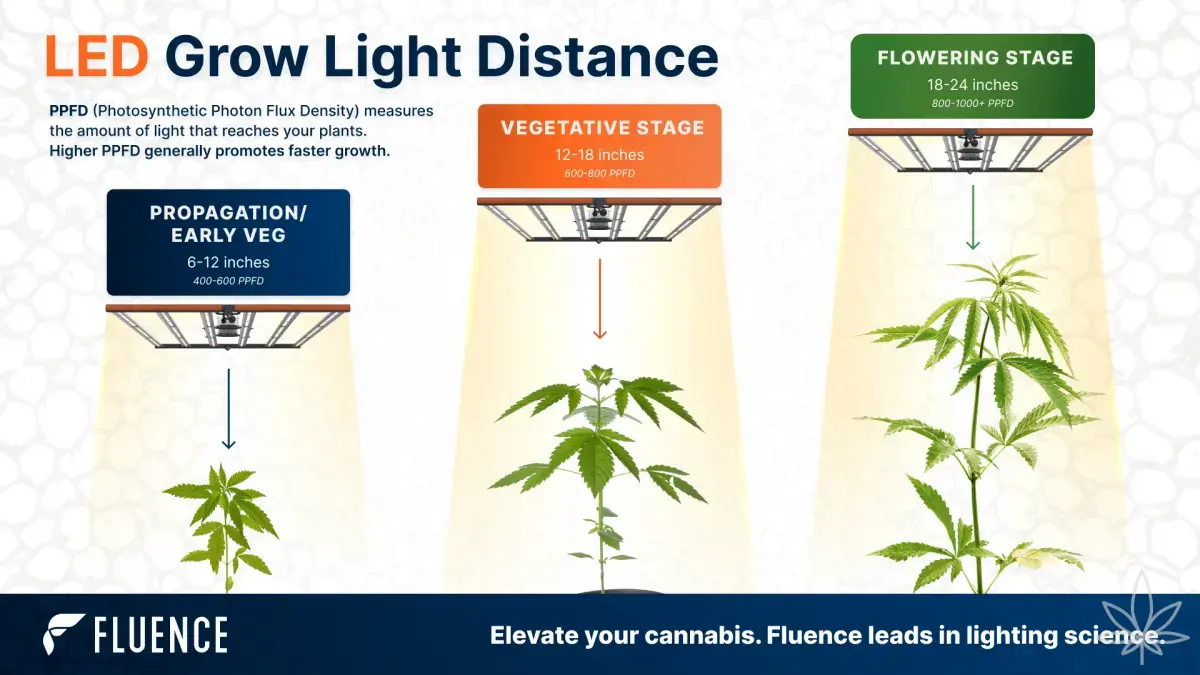
Let’s start with a simple comparison. PPFD (Photosynthetic Photon Flux Density) is, in practice, “light intensity”—how many photons hit the leaves per second, per square meter. It’s measured in µmol/m²/s (micromoles per square meter per second). That’s a snapshot: you take a measurement and you see how hard you’re lighting at that moment.
And DLI (Daily Light Integral) is the “daily light dose”—how much light the plant receives in total across the whole day. DLI is measured in mol/m²/day (moles per square meter per day). That’s no longer a snapshot, it’s the full-day bill.
And now the key point: you can have reasonable PPFD and still have absurdly high DLI if you run a very long photoperiod (for example 20/4 or 18/6). The plant doesn’t count your watts and doesn’t read lamp marketing. The plant “sees” how many photons it received in total.
Why Do People Fall into the DLI Trap?
Because in recent years measuring light became extremely easy. In the past you needed a PAR meter (PAR means Photosynthetically Active Radiation—the range of light usable for photosynthesis). Today people measure with a phone and an app, look at PPFD and think: “OK, I’m within the ranges, so I can add hours of light and it will be even better.”
And sometimes… it will. But only until the plant says: “thanks, that’s enough.” Then it starts protecting itself.
It’s easiest to see this with autoflowers (automatically flowering varieties), which many people run on 20/4 or even 24/0. There DLI can shoot into the stratosphere even though PPFD “doesn’t look scary.”
A Simple Example That Opens Your Eyes
Let’s assume you’re lighting plants at PPFD 900 µmol/m²/s.
- With a 12/12 photoperiod (12 hours of light / 12 hours of darkness) that gives roughly ~39 mol/m²/day DLI.
- With 18/6 it becomes about ~58 mol/m²/day.
- With 20/4 it’s around ~65 mol/m²/day.
Same intensity, and yet the “daily dose” jumps dramatically. And that is the core of this whole article: what is great at 12/12 in flowering can be too much at 18/6, and at 20/4 it can turn a grow into a fight with “deficiency” symptoms that are not deficiencies.
How Much DLI Is Already “Too Much” for Cannabis?
There is no one magic number, because DLI depends on genetics, temperature, carbon dioxide, and whether the plant has conditions to “process” that light. But we can talk about practical ranges that usually work indoors.
Without additional CO₂ (carbon dioxide), most home grows fall into these zones:
- Seedlings and young plants: roughly 10–20 DLI
- Vegetative growth (veg): often 20–35 DLI
- Flowering (flower): usually 30–45 DLI as a “safe, strong zone”
Above that, problems start showing up more often if the rest of the environment isn’t dialed in. And “the rest of the environment” is not an empty phrase.
This is where VPD (Vapor Pressure Deficit) comes in—the difference in water vapor pressure between the leaf and the air. In practice, VPD tells you whether the plant can transpire well (release water through the leaves) and transport nutrients. You can have great DLI on paper, but if VPD is off, the plant won’t turn light into growth—it will turn it into stress.
To manage VPD you need two things: temperature and RH (Relative Humidity). And one more detail that many people forget: leaf temperature, not only air temperature. LEDs often heat the leaf differently than HPS, so “settings from a guide written 10 years ago” can simply not work today.
What Does “Too High DLI” Look Like in Real Life?
This matters, because this is where most diagnostic mistakes happen. When DLI is too high, symptoms can imitate deficiencies and lockout (nutrient uptake blockage).
The most common picture looks like this:
- top leaves become lighter, as if nitrogen or magnesium were lacking,
- tips can lightly burn despite “normal” EC (EC means Electrical Conductivity—the conductivity of the solution, indirectly its “strength”),
- the plant “drinks like a dragon” but looks as if it isn’t eating,
- “taco” leafing starts (leaf edges curling up), especially near the tops,
- flowers swell but aroma drops, and structure becomes looser,
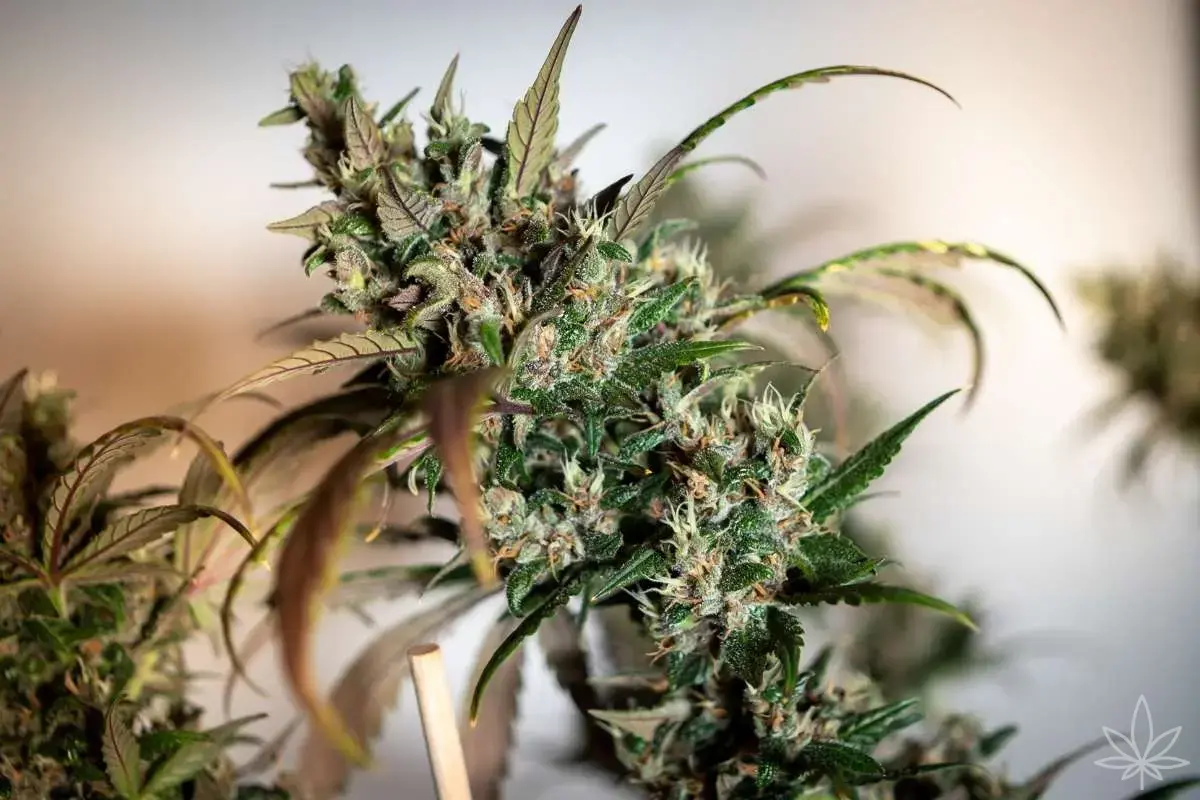
- foxtailing appears, because under stress the plant keeps pushing new growth inside the flower clusters.
And then the grower makes the classic mistake: adds Cal-Mag, increases doses, plays with pH, while the problem is not a lack of nutrients—it’s too large a daily light dose relative to conditions.
Photoperiod 20/4 and 18/6: When It Works and When It Hurts
Long photoperiods can make sense—but not automatically. With autoflower strains many growers choose 18/6 or 20/4, because the plant doesn’t need darkness to induce flowering. That’s true. But with LEDs it’s easy to overdo DLI.
In practice, if you run 20/4, it’s usually smarter to lower PPFD. And this is one of the simplest tricks that makes a difference: instead of holding “flowering-level” 900–1000 µmol/m²/s like you would at 12/12, you set, for example, 600–800 µmol/m²/s and watch plant response.
That’s not stepping backwards. That’s matching the dose to the exposure time.
How to Set Light “Like a Human,” Without a Physics PhD
If you want a procedure that works in 90% of grows, it looks like this:
First you choose the photoperiod (for example 18/6 or 20/4). Then you measure PPFD at several points across the canopy (not only in the center). And only at the end do you convert in your head whether DLI isn’t becoming too high.
You don’t have to calculate to the decimal. It’s enough to remember the logic: the longer you run the lights, the lower PPFD you need to avoid pushing DLI too far.
If the plant looks great, holds color, doesn’t curl leaves, and tops are hard and fragrant—leave it. If “weird” stress starts at the top, don’t run for nutrients immediately. First ask yourself: could this be overlighting (too much light) across the day?
When Does High DLI Make Sense? CO₂ and “Real” Conditions
There is one situation where high DLI can truly pay back in yield: when you add CO₂ and you control the climate. CO₂ is the fuel of photosynthesis. Without it, the plant reaches the wall sooner. With it, that wall moves higher.
But CO₂ is not a magic button. If you add CO₂ and don’t control temperature, VPD, airflow, and irrigation, it’s easy to end up on an even bigger carousel of problems. Then the plant gets “more fuel,” but still can’t burn it in the engine.
The Most Common Myth: “PPFD Looks Fine, So There Can’t Be Too Much Light”
This is myth number one in LED indoor growing. PPFD can look fine in a given second, but the day is long. That’s exactly why DLI is such a game changer. DLI explains why two people can have identical PPFD and one has cover-worthy plants, while the other fights “deficiencies” that can’t be fixed.
Because they aren’t deficiencies. It’s overload.
The maryjane.farm Verdict
If you want a simple rule that saves nerves and money:
PPFD tells you how hard you’re lighting right now. DLI tells you how hard you’re lighting the plant across the entire day. And DLI wins when you run a long photoperiod (18/6, 20/4).
For many growers, the biggest jump in quality and stability isn’t buying a stronger light—it’s stopping “burning plants with a full day” and starting to dose light like a mature grower: appropriate to the hours of light and the conditions inside the tent.