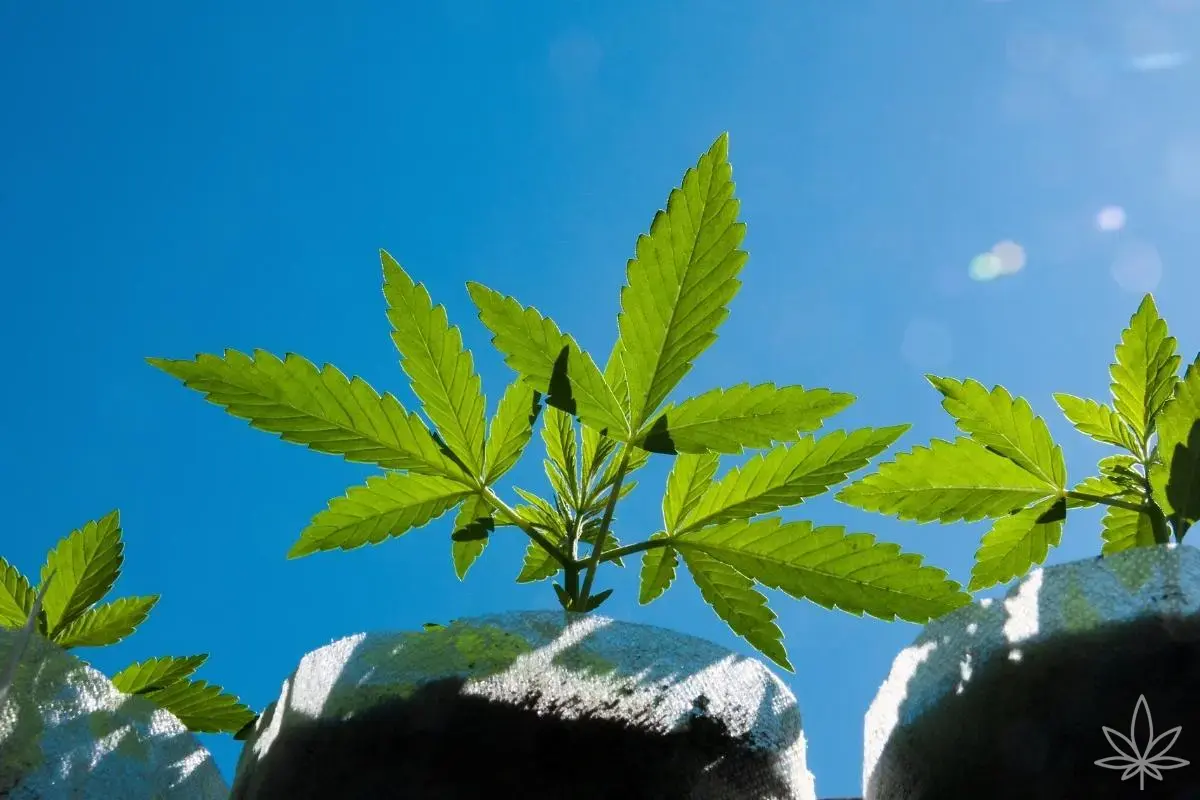
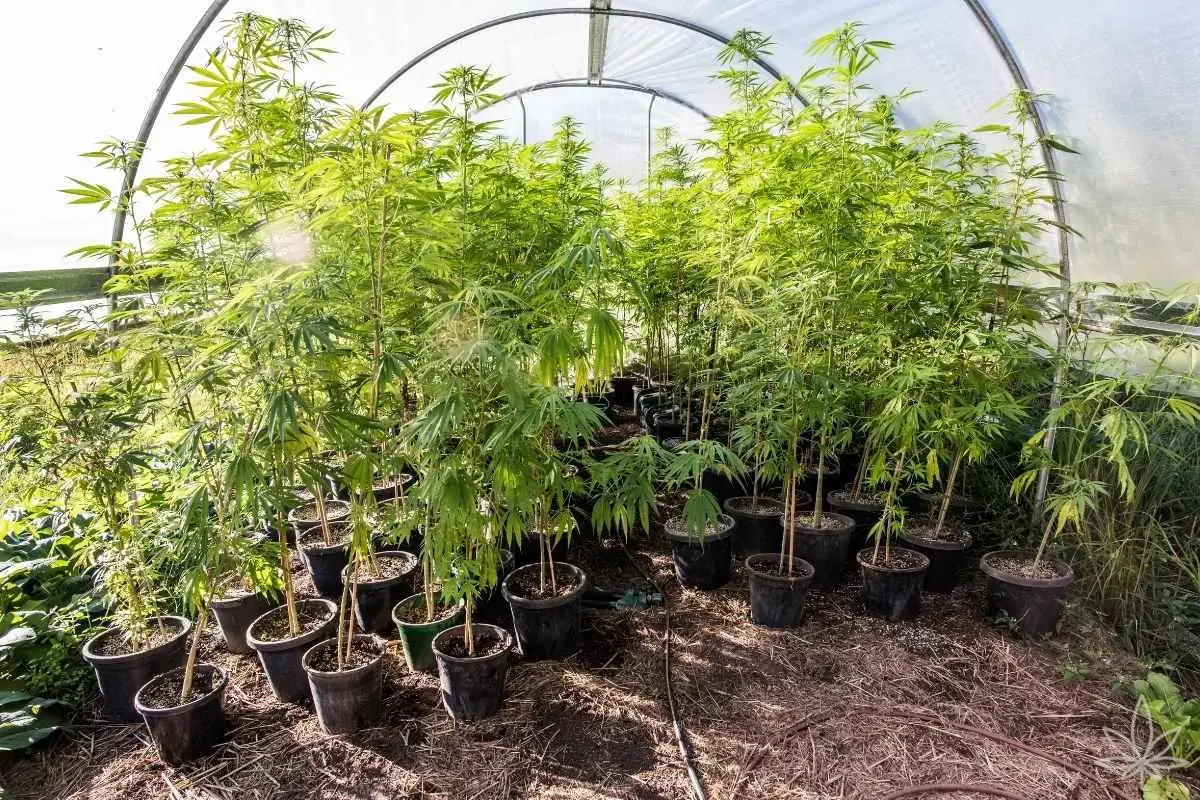
The sun is the best grow light ever invented. It does not use electricity, you do not have to hang it from ratchets, there is no controller, no fan noise, no power supply heating up, and it does not cost hundreds of euros. On a clear summer day, it delivers so much energy that a small indoor grow tent can look like a bedside lamp in comparison. That is why outdoor growing still attracts so many growers. If a plant gets good soil, reasonable watering, access to light and a bit of luck with the weather, it can reward the grower with growth that a small indoor setup simply cannot match.
But the sun is not an automatic yield machine. It is a force you need to understand and manage. A well-positioned plant uses it like fuel. A badly prepared plant gets punished through its leaves, roots and overall growth rate. Most of the time this does not happen in some dramatic cinematic way. The plant simply starts drooping during the middle of the day, curling leaf edges, slowing down, drinking water much faster, while the pot becomes as hot as a pan left on a balcony.
In Europe, this is no longer only a southern European issue. Yes, Spain, Portugal, Italy, Greece and southern France still deal with the harshest sun and drought conditions. But heatwaves are now becoming increasingly common across Central, Western and Northern Europe as well. According to Copernicus, 41% of Europe experienced more days than usual with at least strong heat stress in 2025, meaning a perceived temperature of 32°C or more. Very strong and extreme heat stress thresholds begin at 38°C and 46°C respectively under the UTCI scale.
For people, this is a climate and health issue. For outdoor growers, it is everyday practical reality. A plant standing in a pot on a balcony, in a garden or at a hidden outdoor spot does not read weather reports. It simply receives the conditions directly through its leaves and roots.
Plants Love Sunlight, But They Do Not Love Being Cooked
Cannabis is a light-hungry plant. In outdoor growing, a properly sunny location is one of the foundations of success. Too much shade usually means weaker growth, longer internodes, less green mass and lower flowering potential. The plant stretches toward light, builds a thinner structure and wastes energy fighting for better exposure.
But there is a difference between healthy sunlight and a location that turns into an oven during July. Beginners often put everything into one category. Since cannabis likes light, they assume full direct sun from morning to evening must always be ideal. Not necessarily. If the plant has too little water, a small container, overheated roots and sits on concrete all day, then full sun stops being fuel. It becomes stress.
Photosynthesis only works properly when the plant has everything else needed to support it. The plant needs light, water, carbon dioxide and a functioning root system. If one part starts failing, the others do not magically compensate. Intense sunlight will not help a plant whose roots are boiling inside a black pot. It will not help a seedling that just left a windowsill and has never experienced real summer radiation.
That is why outdoor growing is not about giving plants “as much sunlight as possible no matter what.” It is about giving them as much light as they can actually process without constant stress.
The First Days Outdoors Are the Hardest
Young plants are the easiest to damage. Especially seedlings that previously lived under LEDs, on a windowsill, inside a propagator or in some protected environment. They may look healthy, have nice color and several leaf sets, but that does not mean they are ready for aggressive midday sunlight.
Outdoor light is different. There is UV radiation, wind, rapid evaporation, changing temperatures and constantly heating substrate. A seedling that looked confident indoors may suddenly droop like a wet cloth after a few hours in strong direct sun. Sometimes pale dry spots appear. Sometimes leaf edges curl upward. Sometimes the plant simply freezes for several days and looks as if someone removed its batteries.
This is not always a deficiency problem. Very often it is simply a plant exposed too quickly to conditions it does not yet understand. That is why hardening off matters not only for cold weather, but also for sunlight. Plants should adapt gradually: first morning or late afternoon sun, then longer outdoor periods, then eventually stronger exposure.
This is not about treating cannabis like a fragile orchid. It is about using common sense during the first few days. Losing three days to proper acclimation is far better than losing two weeks recovering from stress.
Drooping Leaves During Heat Do Not Always Mean Thirst
This is one of the most common mistakes. It gets hot, the leaves droop, and the grower immediately grabs a watering can. Sometimes that is correct. If the pot feels light, the substrate is dry deeper down and the plant recovers after watering, then yes — it needed water.
But during heatwaves, leaves can droop even when dry soil is not the actual issue. The plant may be reducing water loss because it cannot transport enough moisture fast enough. Roots may function poorly because the container is overheated. The substrate may be wet but oxygen-poor. After transplanting, the root system may simply still be too small to support the leaf mass under harsh sunlight.
If the soil is already wet, the pot is heavy and the leaves still droop, adding more water is not the solution. It may only suffocate the roots further. At that point the grower needs to think more broadly: is the plant standing in too much direct sun, is the container overheating, is airflow poor, is the substrate structure bad, is nutrient concentration too strong during rapid evaporation?
During heatwaves, morning watering is usually best. The plant starts the day with moisture available, while the substrate avoids sudden midday shock. Evening watering can also work well, especially in dry climates, but in more humid regions growers must be careful not to create wet, stagnant nighttime conditions.
The Pot Can Become a Bigger Problem Than the Sun
Plants growing directly in the ground usually have a larger buffer. Soil heats more slowly, loses moisture more gradually and roots can grow deeper. Containers provide mobility and control, but during summer they can also become traps.
A black plastic pot standing on a south-facing balcony, bright pavement or concrete surface can reach temperatures roots absolutely hate. The plant receives direct sunlight from above, heat from the sides and reflected heat from below. Add dry wind and rapid evaporation, and even a properly watered plant may struggle badly.
In outdoor growing, the container is not just a container. It is the climate around the roots. Light-colored pots heat up less than black ones. Larger pots provide more water reserve and more stable temperatures. A container placed on wood, grating or anything separating it from hot surfaces performs better than one directly touching heated concrete.
Sometimes the simplest things create the biggest improvements: shading the sides of the pot, moving it where it receives less brutal afternoon sun, adding mulch, using larger containers. These methods sound boring. But outdoor growing is often won through boring methods.
Southern Europe: Full Sun Is Not Always Ideal
Spain, Portugal, southern Italy, Greece, Cyprus, Malta and southern France rarely lack sunlight. Their problem is often too much of it. Long seasons, powerful sunlight and warm nights can produce incredible outdoor growth, but only when plants have enough water and stable roots.
In southern Europe, the biggest enemies are heatwaves, dry winds, rapidly drying substrate and overheated pots. In these conditions, partial shade during the middle of the day is not failure. It is often smart cultivation. Plants may thrive in morning and late afternoon sunlight while suffering badly between noon and 4 PM.
Shade cloth, partially protected locations, larger containers, mulch and morning watering can do more than another twenty-euro supplement. In very hot regions, growing directly in the ground often provides more stability than keeping plants in small balcony pots.
Southern outdoor growing is not about hiding plants from sunlight. It is about avoiding constant survival mode.
Central Europe: Cold One Week, Heatwave the Next
Poland, Germany, Czechia, Slovakia, Austria, Hungary and similar regions face a different trap: instability. In May, growers worry about cold nights. By June or July, temperatures suddenly hit 32–35°C. A plant that already struggled through cold stress, transplant shock or slug damage suddenly faces aggressive sunlight and drying substrate.
This is exactly where many growers fail to notice when protection from cold should become protection from heat. A greenhouse, plastic cover or sheltered wall location may help in spring but become dangerous during summer heatwaves. What worked in April can cook plants in June.
In Central Europe, flexibility matters. During heatwaves, growers should avoid heavy training, unnecessary transplanting, aggressive feeding and leaving small pots baking on hot balconies. Plants need stability: morning watering, mulch, shaded containers, airflow and sometimes partial midday shade. Simple but effective.
Western Europe: Humidity Does Not Prevent Heat Stress
The Netherlands, Belgium, Ireland, the UK, western France and northwestern Germany are associated more with rain than extreme heat. And yes, moisture, clouds and wind are frequent outdoor challenges there. But sunlight should not be ignored.
In Atlantic climates, the problem is often different from southern Europe. Plants may spend days under cloudy, humid conditions with slowly drying substrate, then suddenly face strong sun and heavy humidity. Under these conditions, transpiration becomes difficult. It is not dry desert heat. It is more like a greenhouse with poor ventilation.
In these regions, airflow becomes critical. A closed warm corner after rain can become far worse than a more open space with steady air movement. Plants need sunlight, but they also need to breathe. If moisture lingers around them until evening while heat builds up during the day, leaf problems and mold may arrive quickly.
Northern Europe: Long Days Solve Nothing Alone
Scandinavia, the Baltic countries and colder northern regions have shorter seasons, but summer days there can be extremely long. That is a major advantage. Plants receive many hours of light and can use them effectively during good weather.
Still, northern Europe is not immune to heat problems. Sudden temperature spikes can stress plants badly because they are adapted to cooler conditions. Plants growing in containers on balconies or near reflective walls can overheat almost as easily as those in Central Europe.
In northern regions, avoiding lost time is especially important. Strong stress during a short season steals valuable growth days that may never return. That is why growers should maximize sunlight while still respecting container temperature, wind, watering and sudden heatwaves.
Mountains: Harsh Light and Cold Nights
Outdoor growing in mountains and elevated areas follows different rules. Days may be sunny, dry and intense while nights become cold. Radiation is stronger, wind harsher and weather more unpredictable. Plants may suffer strong daytime evaporation and nighttime slowdown simultaneously.
In these locations, sunlight alone is not enough. Growers need to think about the entire daily cycle. The location should provide good exposure without constant drying wind and extreme root stress. Containers need protection and soil must avoid becoming either freezing wet mud or dry stone.
Mountain growing clearly shows that outdoor cultivation is not theory from charts. Two balconies only a few hundred meters apart may behave completely differently. One becomes excellent. The other slowly cooks the plant during the day and chills it at night.
Shade Is a Tool, Not a Failure
Many growers treat shade as defeat. That is a mistake. Deep shade all day is obviously poor for cannabis. But partial shade during the hottest hours can be a very smart protection method.
Morning and late afternoon sunlight are often ideal. Plants work hard without facing the brutal pressure of midday heat. In southern Europe, on balconies or during severe heatwaves, temporary shading can preserve healthy growth. Shade cloth does not automatically mean weak outdoor cultivation. Sometimes it simply means the grower understands when sunlight helps and when it overwhelms.
Shade should be used intelligently. The goal is not hiding the plant all day. The goal is reducing pressure when conditions exceed what the plant can comfortably handle.
Drought Means More Than Lack of Rain
Drought in outdoor growing does not begin only when soil cracks like a desert. It begins when roots struggle to access moisture while sunlight and airflow force increasingly rapid evaporation. The European Environment Agency reports that water stress affects around 30% of Europe’s land area and 34% of its population each year, especially in southern Europe and densely populated regions.
For growers, this means water must become part of the strategy, not an afterthought. In-ground growing benefits from healthy soil structure, organic matter and mulch. Containers benefit from larger volume, proper drainage and protection from overheating. A watering can alone will not solve bad positioning, undersized pots or substrate drying within hours.
Drought also teaches growers to evaluate locations not only in May when everything looks fresh and green, but in July when conditions become brutal. Will there still be water? Will the pot become an oven? Will the soil retain moisture? Will the plant receive any relief during the harshest hours? Outdoor success is often decided before visible problems begin.
What Not to Do During Heatwaves
During extreme heat, growers should not add extra stress. Heatwaves are not the time for heavy pruning, aggressive training, unnecessary transplanting, experimental nutrients or spraying products under direct sunlight. Plants already have enough work to do.
Spraying leaves at midday is asking for trouble. Droplets, oils, soaps, foliar nutrients and pesticides can cause damage under intense light and high temperatures. If spraying is absolutely necessary, it should happen early in the morning or during the evening.
Growers should also avoid increasing nutrient strength simply because the plant looks weak. During heat, substrate dries faster and salts become more concentrated, especially in containers. A stressed plant usually does not need stronger feeding. It needs cooler roots, stable moisture and several calm days.
How to Tell If the Plant Is Still Coping
A plant may look slightly tired during a hot afternoon. That alone is normal. What matters is whether it recovers in the evening and how it looks the next morning. If leaves are firm in the morning, new growth appears healthy and color remains stable, the plant is probably managing conditions well.
Problems begin when every day leaves permanent damage. Leaves droop even in the morning, edges curl, tips dry out, new growth weakens and the pot becomes light only hours after watering. At that point, growers need to change something.
Sometimes shading the pot helps. Sometimes mulch helps. Sometimes moving the plant into lighter midday shade helps. Sometimes a larger container is necessary. Sometimes watering timing must change. The worst thing a grower can do is watch the same problem repeat for a week while responding only with more water.
A Simple Plan for a Hot Week
When forecasts show several days of intense heat, preparation should happen beforehand. Plants should enter the heatwave hydrated but not waterlogged. Containers should be protected from direct overheating. Mulch should reduce evaporation without trapping moisture directly against the stem. Container plants should be moved away from hot walls and reflective surfaces whenever possible.
Young seedlings may temporarily need partial shade. Older plants can usually tolerate more, but container-grown plants still require attention. Water in the morning, observe during the evening, avoid drastic interventions and avoid unnecessary experiments.
This all sounds ordinary. But ordinary things are exactly what save outdoor grows during heatwaves. Larger pots. Bright containers. Mulch. Morning watering. Airflow. Midday shade. Less panic. More observation.
Sunlight is the foundation of successful outdoor growing, but it is not a magical “yield button.” Plants need conditions that allow them to actually use that light. If roots overheat, substrate dries too quickly, pots sit on burning concrete and leaves wilt every afternoon, that is not ideal outdoor growing. That is survival mode.
Southern Europe struggles with harsh sunlight, drought and overheated containers. Central Europe deals with rapid weather swings. Western Europe battles humidity combined with sudden heat. Northern Europe faces short seasons and temperature spikes. Mountain regions combine harsh radiation, wind and cold nights.
The simplest rule is this: give plants sunlight, but protect the roots and water balance. Do not place them under brutal heat simply because “cannabis loves light.” It does. But it also loves healthy roots, stable substrate and conditions where it can grow instead of merely survive.