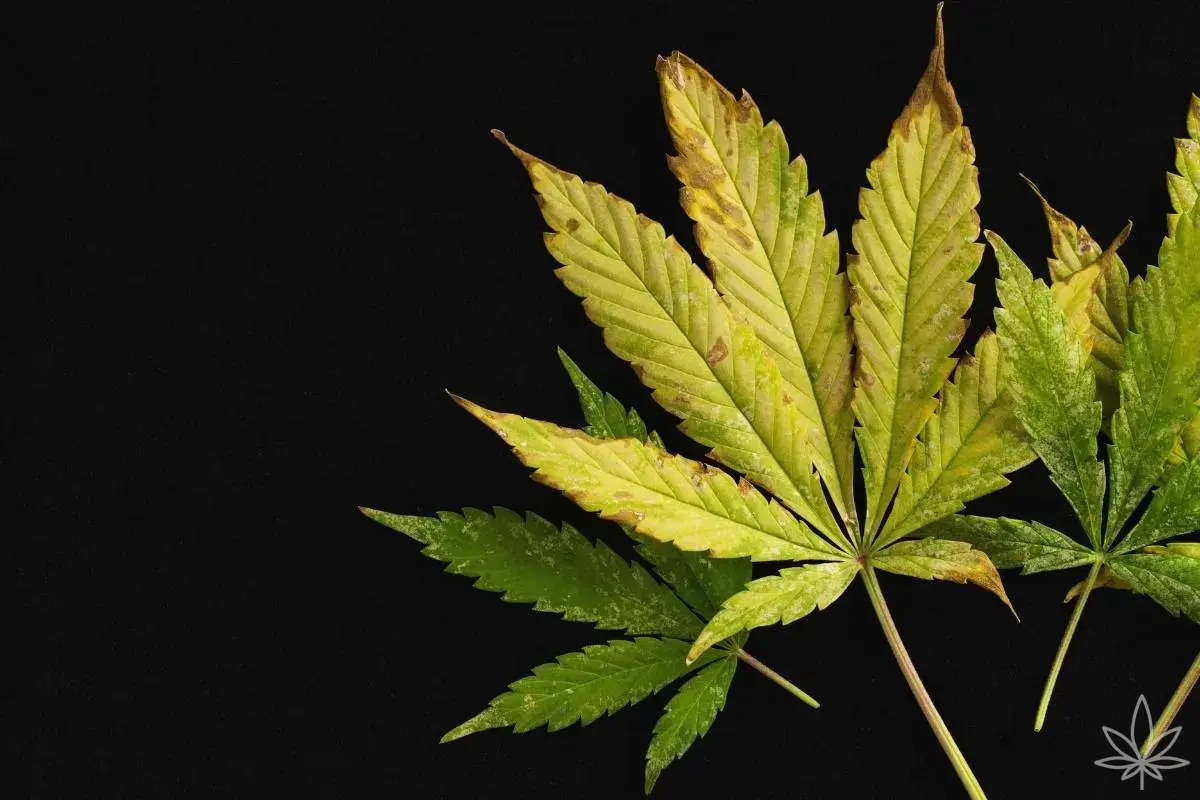
When calcium and magnesium supplementation saves your plants, and when it only messes with their root
If I had to point out the most common reflex among beginner growers under LEDs, right next to checking pH, it would be buying a bottle of Cal-Mag. Many treat it like a magic serum: “plant turning yellow? Cal-Mag!”, “spots on the leaves? Cal-Mag!”. Only life isn’t that simple, and the cannabis plant doesn’t always scream for calcium or magnesium. Sometimes it’s a nitrogen deficiency, sometimes a lockout issue, and sometimes… just a false alarm.
In this article, we’ll talk honestly: when Cal-Mag is a shield, when it’s a placebo, and when it’s a double-edged sword that can cause a real mess.
Why do LEDs and filtered water increase the need for Cal-Mag?
Let’s start with the facts. Old HPS lamps emitted a lot of radiant heat, which influenced metabolism and transpiration. LEDs are efficient and cool, but they bring other challenges for the plant. Under full-spectrum LEDs, photosynthesis is more intense, which means the plant consumes magnesium (a key part of chlorophyll) and calcium (a building block of cell walls) more quickly.
The second point is water. If you’re watering with tap water, in most cases it already contains plenty of calcium and some magnesium, especially in hard water regions. But if you use RO (reverse osmosis) filtration or buy distilled water – you’re basically starting with pure H₂O. Zero minerals. And that means you must provide Ca and Mg entirely from a bottle.
How to recognize deficiencies?
Okay, but how do you know if it’s actually a calcium or magnesium deficiency, and not something else entirely?
Magnesium (Mg) deficiency symptoms:
- Yellowing between the veins of older leaves (interveinal chlorosis).
- Red or purple petioles if the deficiency gets worse.
- Leaves may eventually brown and crumble at the edges.
Calcium (Ca) deficiency symptoms:
- Small, irregular spots on young leaves that later turn into holes.
- Deformed new growth, often with curled tips.
- Weakened stem structure, breaking more easily.
Important: Ca and Mg move differently inside the plant. Magnesium is mobile – the plant “sucks” it out of older leaves and moves it to new growth. Calcium is immobile – if it’s missing in young growth, the defect stays there permanently.
When does Cal-Mag really help?
- Growing in RO/distilled water. Here Cal-Mag is a must, otherwise you start from zero.
- High-intensity LEDs. The stronger the photosynthesis, the bigger the appetite for Mg.
- Coco as a medium. Coco tends to bind calcium, so Cal-Mag supplementation is nearly standard.
- Genetic appetite. Some strains (especially hybrids with strong sativa lineage) are hungrier for Mg.
When does Cal-Mag do harm?
Here’s where it gets interesting, because growers often don’t realize that Ca and Mg in excess can block other nutrients.
- Too much Ca = potassium (K) lockout. Result? Symptoms similar to K deficiency: burnt leaf edges, slower growth, and smaller buds.
- Too much Mg = calcium and iron lockout. Suddenly the plant shows chlorosis on young leaves and looks like it lacks Fe, even though it’s in your feed.
- Double dosing. Many base nutrients (especially hydro and coco formulas) already contain Ca and Mg. Adding another bottle can easily push you over the limit.
Practical dosing tips
- Starting in RO: Add 0.3–0.5 EC of Cal-Mag as a base, then the rest of the nutrients.
- Medium/hard tap water: Often already contains 50–150 ppm Ca and Mg combined. In this case, supplementation is usually ½ dose or none at all.
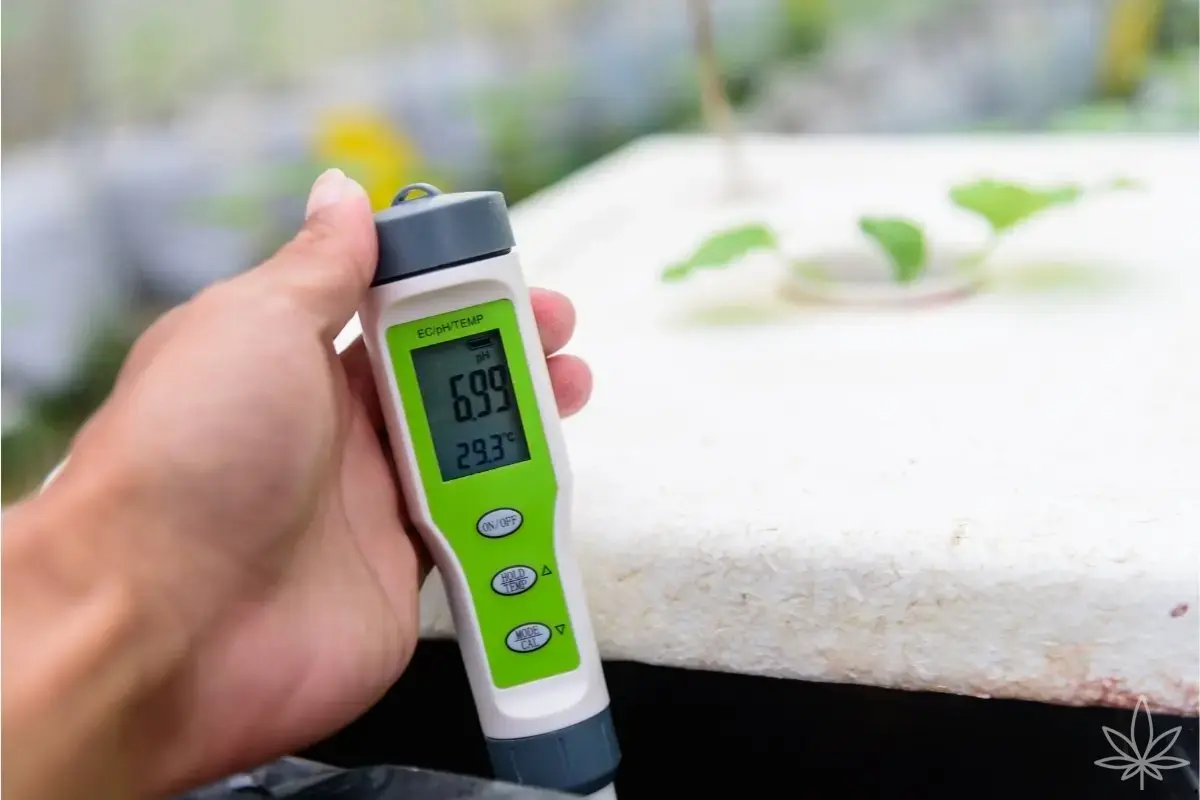
- Watch pH: Mg deficiencies often show up at too low pH (<5.5 in hydro), Ca deficiencies at too high (>6.5 in soil). It may be a balance issue, not the lack of fertilizer.
Cal-Mag as a placebo
I’ve seen plenty of growers treat every spot as a sign to pour Cal-Mag. The result? The plant still suffers, because the problem is elsewhere – like overwatering, high EC, or lack of nitrogen. Cal-Mag won’t fix everything, just like a vitamin pill won’t heal a broken leg.
Conclusion
Cal-Mag is a tool. Sometimes it’s a shield that saves your plants from crumbling and yellowing under strong LEDs. Other times it’s a placebo you add with hope, but it only stirs things up in the root zone. And in yet another scenario, it becomes a double-edged sword, blocking other nutrients.
The key is observation: knowing your medium, your water source, and your plant’s real needs. If you approach this consciously, your plants will reward you with lush green leaves and rock-hard buds.
Do you want me to prepare the German version (DE) next, same 1:1 style?