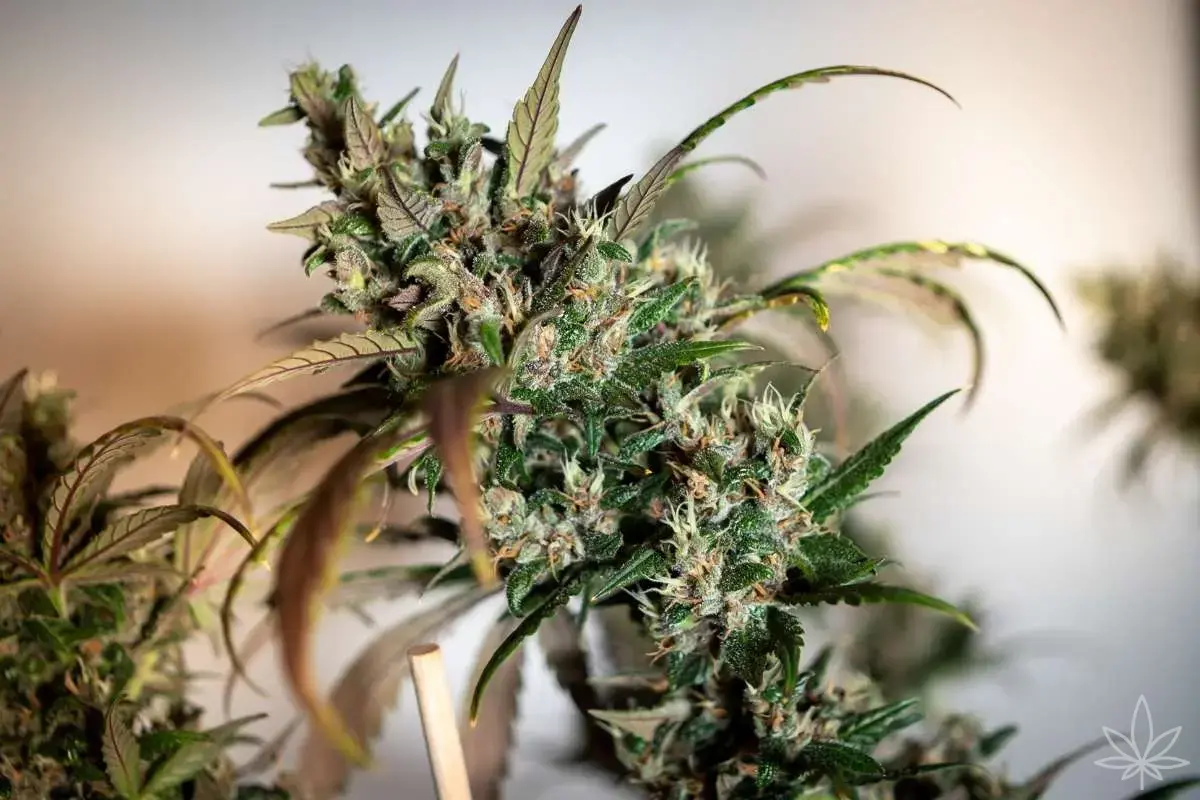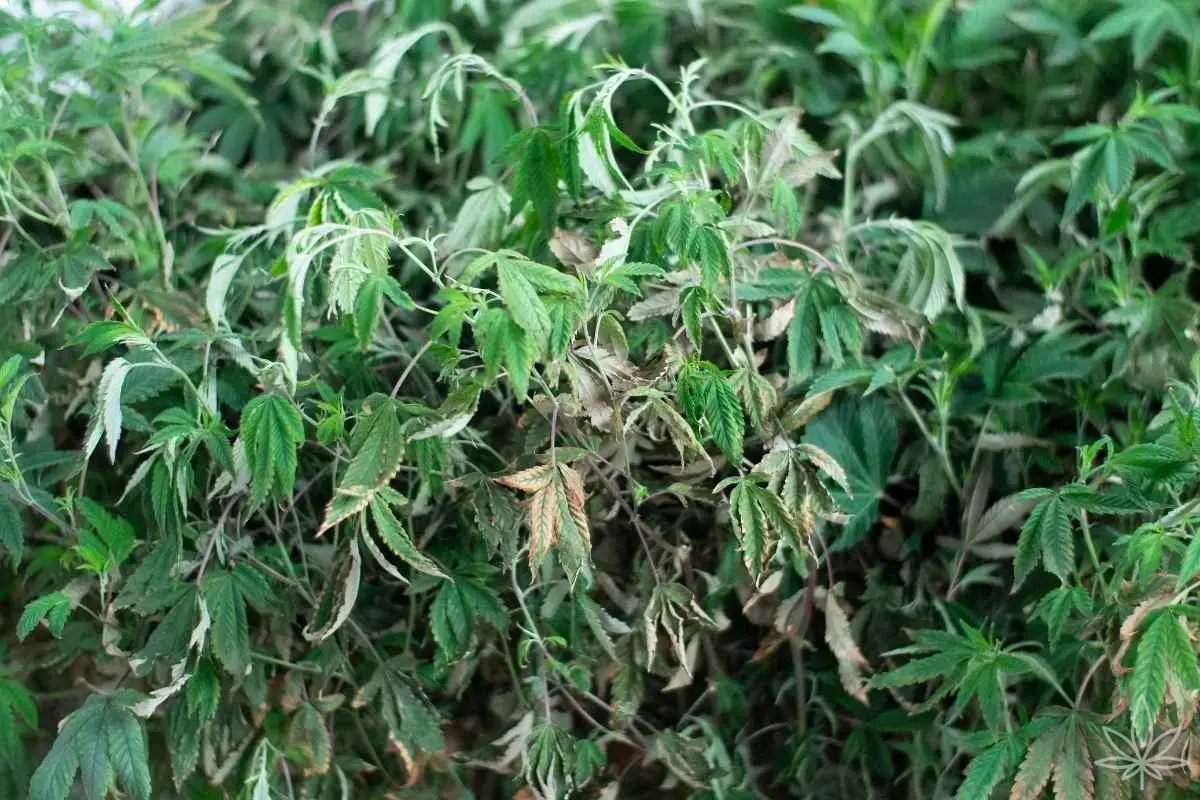
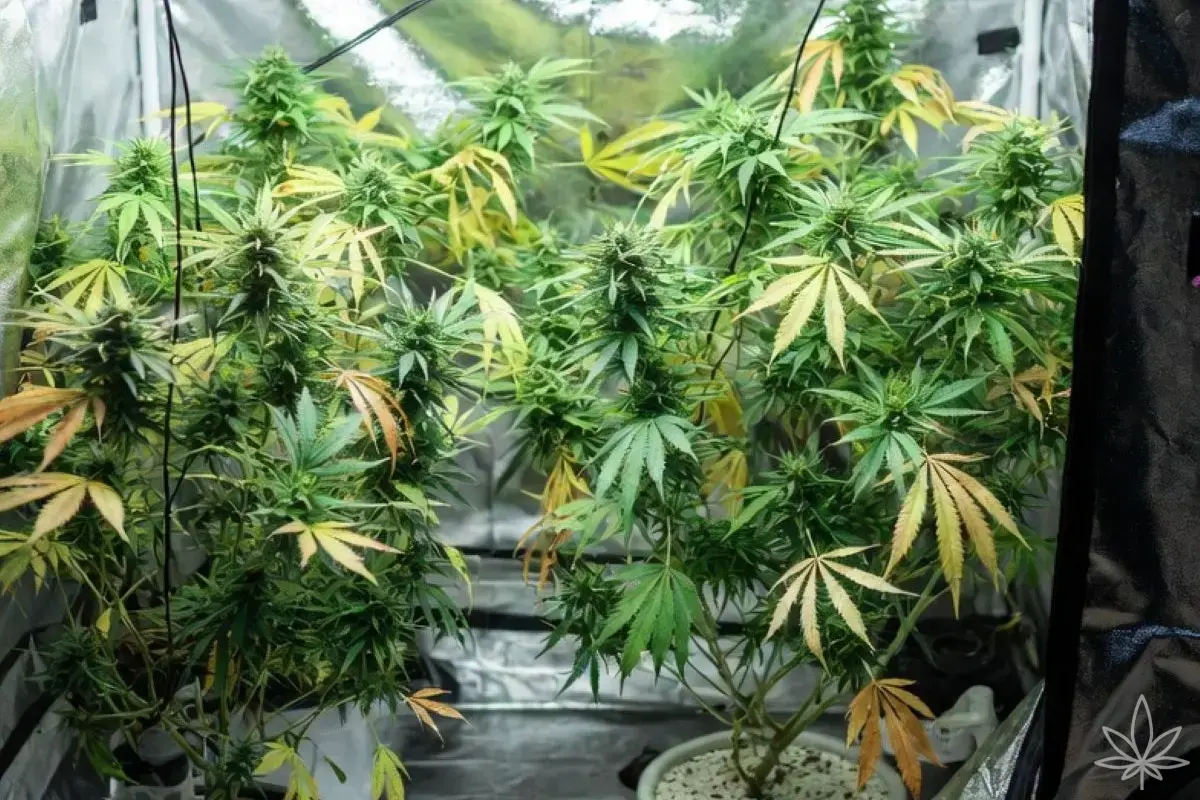
If you walk into your grow room and see leaves curled like tacos, burnt edges, drooping tops and plants begging for mercy, it means heat stress and light stress have done their job. In 2024 and 2025 Europe is experiencing record heatwaves, and growers are fighting to keep temperatures and climate stability under control. I have seen it all — plants fried under 400 W LEDs hanging too close to the canopy, outdoor crops scorched by 38°C sun, even roots cooked inside overheated coco. In this article I’ll show you exactly how to recognize heat and light stress, how to save your plants at every stage of growth, and how to prevent this mess from happening again. Everything based on real grow-room practice and real parameters.
Heat stress and light stress are among the most common problems modern growers face. Today’s LEDs can be brutally intense, and climate change means that many indoor grows across Europe are running under conditions no one dealt with a decade ago. And outdoor? Even worse: weeks of 33–38°C with no rain and baked soil.
But don’t worry. Most plants can be saved — as long as you act quickly and understand what actually happened.
1. How to Identify Heat and Light Stress – The Symptoms You Cannot Ignore
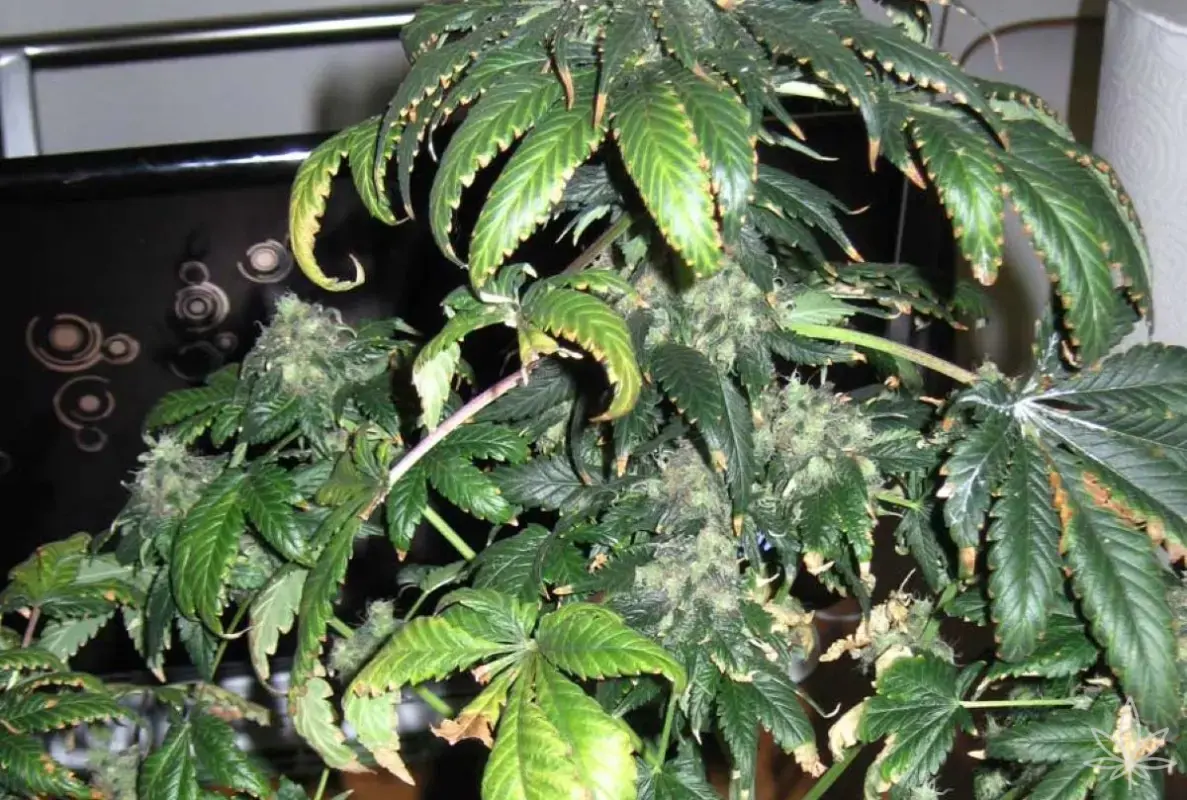
“Tacoing” – leaves curled like shells
A classic. When the plant tries to reduce evaporative surface, leaves curl and fold upward. It is the first sign that:
- canopy temperature exceeded 28–29°C,
- the light is too close (PPFD above 900–1000),
- humidity dropped below 45%.
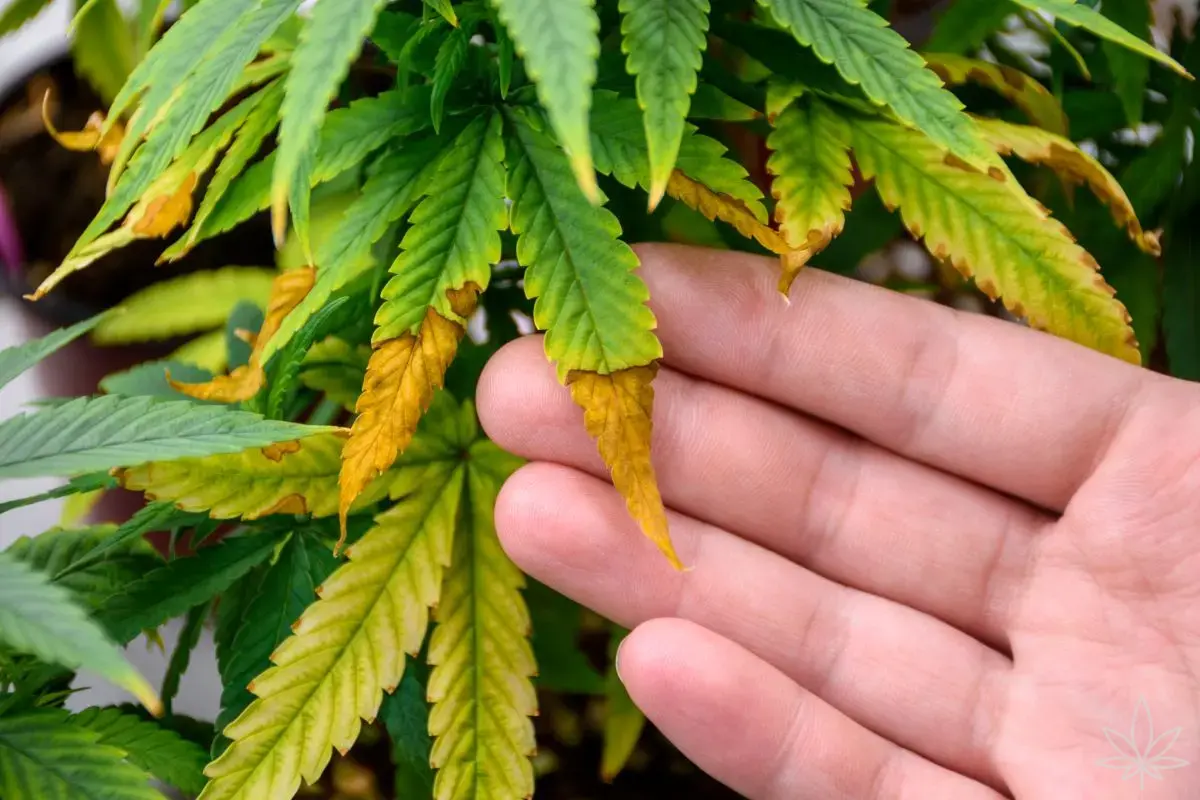
Burnt leaf edges (edge burn)
Looks like a potassium deficiency, but appears suddenly — after one hot day or just a few hours under a too-close LED.
Bleached new growth
Light intensity is too strong and whitens the tops. I’ve seen it even at 240 W in an 80×80 cm tent with the panel hanging only 20 cm above the canopy.
Drooping leaves despite wet soil
This is not lack of water — it’s overheated roots.
Outdoor: sunburn marks shaped like solar reflections
A typical symptom of afternoon sun at 35–40°C.
2. Immediate Help – What to Do in the First Hour to Keep the Plant Alive
When your plant is overheating, every minute matters. Below are five steps I always follow — and they always help.
1. Raise the LED by 15–30 cm
Most growers hang their lights too close.
Minimum safe distances during heat:
- 240–300 W LED: 40–45 cm,
- 400 W LED: 45–55 cm.
If you have a PPFD meter, bring intensity down to 650–750 µmol/m²/s.
2. Drop temperature to 24–26°C
Simple and cheap ways:
- open the tent + improve airflow,
- lower LED power by 10–20%,
- run the exhaust fan at 60–80%,
- cost: 0 EUR.
3. Increase humidity to 55–65%
High temperature + low humidity = sky-high VPD.
Quick fixes:
- wet towel,
- a bowl of water,
- small humidifier (20–30 EUR).
4. Apply “cold footing” – cool the root zone
Roots hate temperatures above 26–27°C.
Place the pot on:
- a cold tile,
- a tray with water (without soaking the pot),
- a laptop cooling pad.
Cost: 0–15 EUR.
5. Turn off the light for 2–4 hours
The plant will not die without light, but this break gives it time to equalize internal pressure and recover turgor.
3. Recovery in the Following Days – The 72-Hour Regeneration Protocol
Once your plant survives the first hours, it’s time for real recovery. This is my proven 2–3 day healing schedule.
Day 1:
- water with pH 6.3–6.5,
- allow 10–20% runoff to remove salt buildup,
- no fertilizers,
- LED at 60–70% power.
Day 2:
- observe whether leaves regain turgor,
- remove only the most charred tips (not whole leaves!),
- humidity 55–60%,
- temperature 24–25°C.
Day 3:
- if the plant looks stable, reintroduce gentle feeding: half-dose phosphorus and potassium, minimal nitrogen,
- LED at 70–85% power.
Within 4–7 days the plant should look significantly better.
4. How to Save the Plant at Different Growth Stages
Seedling stage (0–10 days)
The hardest stage to fix — seedlings die quickly.
- move them to a cooler spot,
- only 50–60% LED intensity,
- water in droplets.
No fertilizers at all.
A mistake here often equals total loss.
Vegetative stage (10–30 days)
Plants regenerate best here.
- pause LST for 2–3 days,
- give humidity 60–65%,
- remove no more than 10% of damaged leaf area.
Autos often handle this stage surprisingly well.
Flowering stage (>30 days)
Saving flowers is the toughest.
- reduce LED power by 10–20%,
- increase P and K by 10%,
- night temperature 19–21°C.
If you burned main tops — do not cut them off immediately.
Wait 2–3 days for stabilization.
5. Outdoor Recovery – When the Sun Shows No Mercy
Outdoor grows in 2025 are brutal. Temperatures of 36–40°C and no rainfall for weeks. But there are solutions.
1. Shade cloth
Absolute lifesaver.
Use 30–40% shading mesh (10–20 EUR).
2. Water at dawn, not in the evening
Evening watering means hot soil all day long.
Morning watering is far more effective.
3. Mulching (5–10 cm layer)
Wood chips, straw or coco greatly stabilize soil temperature.
4. Elevate the pot off the ground
Pots on concrete heat up like frying pans.
Place them on wood or foam insulation.
5. Anti-stress kelp sprays
Products like Bio-Bizz ALG·A·MIC (12–18 EUR).
They assist metabolic recovery.
6. Will the Plant Fully Recover? – The Harsh Truth
It depends. Realistic expectations:
- seedlings: low chance of full recovery,
- vegetative plants: 90% success,
- early flowering: moderate,
- late flowering: some loss is unavoidable.
Outdoor plants often bounce back, but the top cola is usually smaller.
7. How to Prevent Heat and Light Stress (2025)
This is what separates good growers from excellent growers.
1. Temperature and humidity sensors (10–30 EUR)
Use two sensors: one at canopy height, one at pot level.
A difference >3°C means your airflow is insufficient.
2. Ventilation controller (20–40 EUR)
Automatically adjusts fan speed based on temperature.
3. Smaller pots during heatwaves (11–15 L)
Larger pots store more heat in the substrate.
4. LED with dimming settings
Absolutely essential.
The ability to control power from 20–100% saves plants more often than you’d expect.
5. VPD as the main tool
VPD, or Vapor Pressure Deficit, is the difference between how much moisture the air can hold at a given temperature and how much water vapor is actually present, which makes it a precise indicator of the plant’s transpiration rate.
Optimal VPD:
- veg: 0.6–0.9 kPa
- flowering: 1.0–1.3 kPa
It is the only parameter that always reflects real stress conditions.
Heat and light stress are among the most frustrating problems growers face — they can destroy weeks of work in just hours. But the truth is that most plants can be saved if you recognize the symptoms early and respond correctly: raise your LED, adjust VPD, stabilize temperature and cool the root zone. Cannabis is far more resilient than most people think and can bounce back from incredibly harsh conditions. Your job is to read its signals — and then give it the stability it needs.