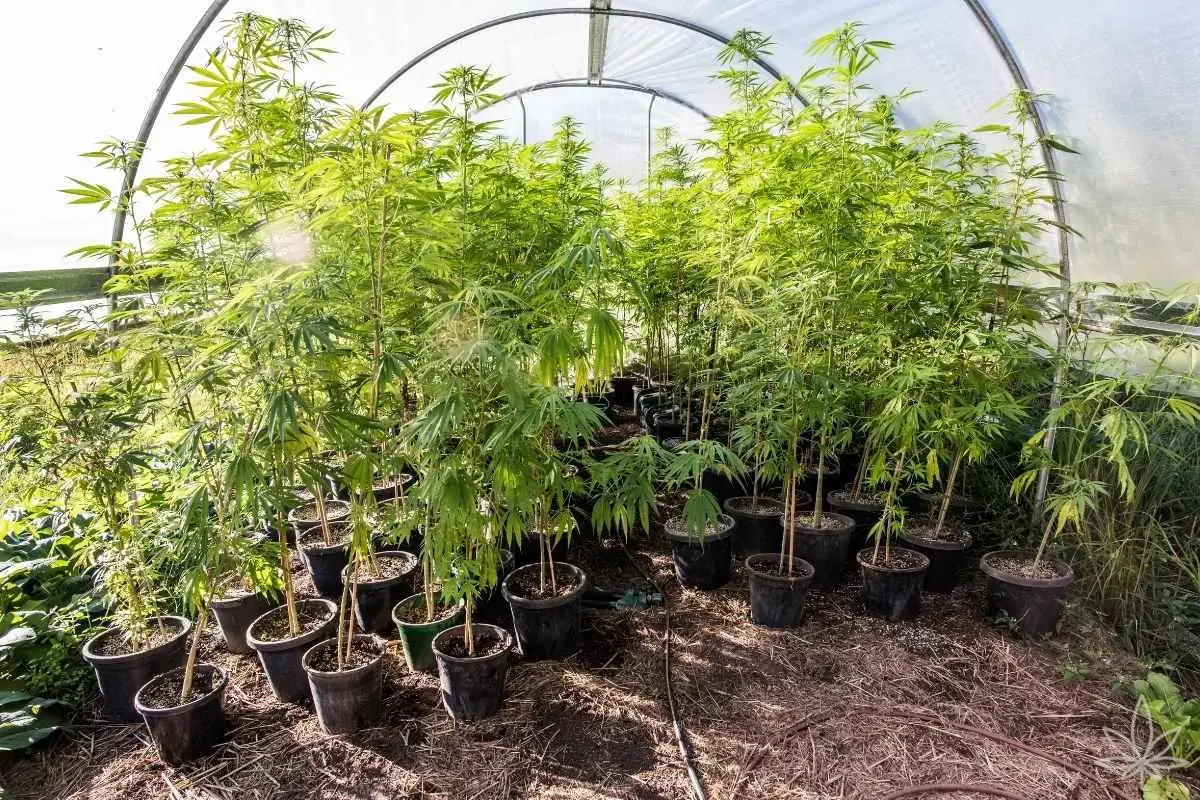
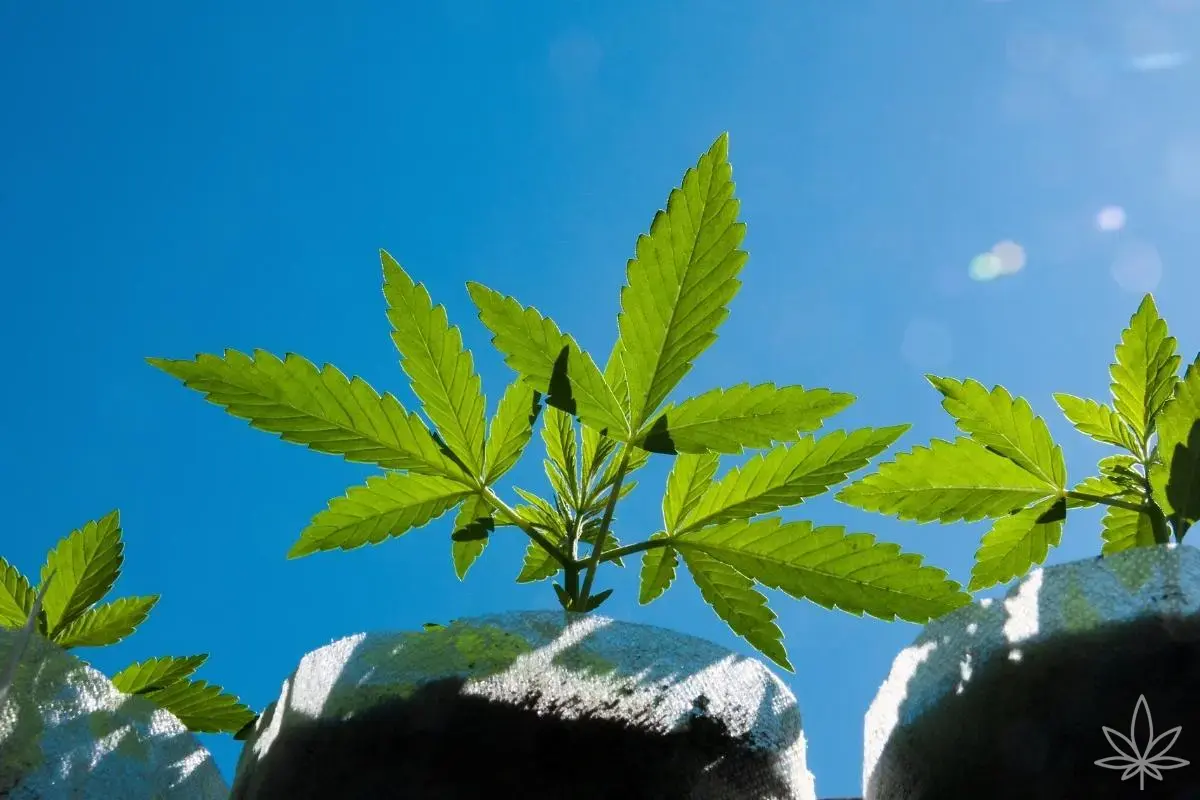
May has something deceptive about it. The days get longer, the sun finally starts to warm things up properly, you step out onto the balcony in the morning, feel that first real spring in the air and immediately the thought kicks in: “All right, outdoor season can begin.” Young seedlings are standing in the growroom or on the windowsill, the soil is already bought, the pots are waiting, the forest spot or backyard has been prepared. Everything looks as if nature itself is giving the green light.
Except outdoor does not begin when the grower is in a hurry. Outdoor begins when the plant truly has the conditions to survive the first weeks without shock.
And this is exactly where many beginners throw away the whole season. Not on fertilising. Not on genetics. Not because “the seeds were weak”. Most often, the problem starts much earlier: by moving plants outside too quickly, without hardening them off, without checking night temperatures, without understanding that May in Spain, May in Poland, May in Germany and May in Sweden are four completely different worlds.
Europe does not have one single date for transplanting cannabis outdoors. It has several climates, several spring rhythms and several traps that can surprise even experienced growers.
The European Environment Agency distinguishes, among others, Atlantic, Continental, Boreal, Alpine and Mediterranean regions in Europe, which shows very well why one calendar for the whole continent simply does not work. The season starts differently in Andalusia, differently in the Netherlands, differently in southern Poland, and differently again in Finland or in the mountains.
Mid-May Is Not a Magic Date
In many Central European countries there is a gardening rule that after mid-May the risk of frost drops significantly. In Germany, people talk about the “Eisheiligen”; in Poland it is often said that after the “Cold Gardeners” and “Cold Sophia”, you can plant frost-sensitive plants more confidently. This rule makes sense, but only as a general point of reference, not as a sacred law of nature.
The problem is that a beginner grower often looks at the calendar, not at the conditions. It is May 15, so the plant goes outside. End of analysis. And yet the difference between a night at 12°C and a night at 5°C is huge for a young seedling. On top of that there is wind, cold soil, rain, sudden sun after life under a lamp and transplant stress. The plant does not have to die immediately. More often, it simply stalls. It stops growing, turns pale, gets purple petioles, looks like it has a deficiency, and after a week the grower starts playing around with nutrients, even though the real problem was climatic.
Gardening data for specific locations clearly show that even within one country, last frost dates can differ a lot. For Frankfurt am Main, the typical last spring frost date is around May 5, but in other regions of Germany the ranges may be later or earlier.
That is why the most important rule is this: you do not transplant according to a date from the internet, but according to your own microclimate.
Outdoor in Southern Europe: The Season Tempts Early, but Has Different Problems
In southern Europe, everything starts faster. Spain, Portugal, southern Italy, Greece, Cyprus, Malta, southern France — there, spring often arrives earlier, nights become milder sooner and there is more sun than necessary. In such conditions, the outdoor season can begin noticeably earlier than in Central or Northern Europe.
But the south of the continent is not a paradise without catches. Yes, frost is less of a problem, especially in coastal regions, but drought, strong sun, high soil temperature, hot wind and water stress appear much sooner. A young plant moved from a calm indoor environment straight into harsh Mediterranean sun can take just as much damage to its leaves as a seedling in Poland after a cold night.
In southern Europe, the biggest mistake is not always planting too early. Sometimes the bigger problem is planting a plant that is too delicate in a place where it immediately gets full sun all day. Young seedlings need a transition. A few days of partial shade, protection from the sharpest midday sun, calm watering, not overwatering the soil and using a sensible pot make more difference than another magic product labelled “root booster”.
In the south, it is also worth remembering autoflowers. Autoflowering strains are fast, but for exactly that reason they do not forgive a bad start. If an autoflower spends the first two weeks fighting heat, drought or burned leaves, it does not later have the luxury of a long vegetative stage to make up for everything. With a photoperiod plant, you can still fight a bit. An autoflower simply keeps moving according to its own clock.
Western Europe and the Atlantic: Less Frost, More Moisture
The Netherlands, Belgium, Ireland, the United Kingdom, western France, north-western Germany and part of the Atlantic coast have a different character. There, spring may be milder, but it is often wet, cloudy and windy. This is a climate where a late frost may not be the only enemy, or even the main one.
For an outdoor seedling, moisture plus cold plus wind is a hard combination. The plant may not freeze, but it can spend many days sitting in wet, cold substrate. Roots do not like that kind of start. A young cannabis plant needs oxygen in the root zone, not constant mud. If someone puts a small seedling into a huge pot, waters it “just in case”, and then a week of rain and 9°C nights arrives, no great disaster is needed. Lack of growth is enough.
So in Western Europe the key question is not only “will there be frost?”, but also “will the soil have a chance to dry out?”. Outdoor in a humid climate requires a lighter substrate, good structure, water drainage and patience. Beginners often think rain takes care of watering. Sometimes it also takes care of the problem in such a way that the roots sit in a cold, wet mass and have no desire to work.
In such regions, it is not worth racing against a neighbour from southern Spain. It is better to transplant a week later, but into more stable conditions, than to put seedlings out too early and spend half a month watching them pretend to be plastic decorations.
Central Europe: The Classic Trap of May Optimism
Poland, the Czech Republic, Slovakia, Austria, Hungary, most of Germany, Switzerland outside high-altitude areas, the Benelux countries further inland — this is the region where the question “when to transplant outdoors” is especially treacherous. Because May can look like summer during the day and like early spring at night.
During the day you can have 22°C, sunshine, a short-sleeved shirt and full faith in the season. At night, the temperature drops to 6°C, the soil is cold, the plant gets a draft, and suddenly all that enthusiasm becomes a little less green. This is exactly where, in Central Europe, the rule of a cautious start after mid-May often works, but with a correction for local weather. In warmer cities, near walls, on sheltered balconies and in lowland areas, you can start earlier. In open ground, on allotments, in valleys, on the edge of a forest or in places where cold air flows down at night, you need to be more patient.
In this region, one warm day is not a good signal. A series of stable nights is a good signal. If the forecast shows nights above 10–12°C for a week, without cold drops, and the seedlings have already been hardened off, you can start thinking about transplanting. If every other day in the forecast shows 5°C, heavy rain and strong wind, it is better not to pretend that the season has to start immediately.
The Royal Horticultural Society recommends that plants moved from indoor or greenhouse conditions should be gradually accustomed to outdoor light, wind and cooler nights over about 2–3 weeks. This is a general gardening rule, but in the case of young cannabis plants it has very practical importance.
Northern Europe: A Short Season and More Pressure on Timing
Scandinavia, the Baltic states, northern Scotland, colder parts of Northern Europe — here outdoor is a different game. The season is shorter, nights remain cool for a long time, and autumn can arrive quickly and without asking. At the same time, summer days are very long, which gives plants beautiful energy for growth, as long as they manage to start properly.
In Northern Europe, the worst idea is to count on the plant “somehow managing”. Yes, cannabis is strong, but a young seedling coming out of the house is not yet a wild bush ready to fight northern wind. Here, three things are especially important: preparing seedlings earlier under protection, choosing faster strains and choosing a very sensible moment to move them outside.
Photoperiods in northern regions may have trouble finishing before autumn moisture and cold if the strain is too late. Autoflowers can be attractive because they finish faster, but again: an autoflower must have a good start. In a cold region, every week of stress at the beginning is a real loss that the plant may no longer make up for.
In Northern Europe, it is better to think of outdoor as a logistics project. The seedling should be strong, not stretched, with a good root ball, hardened off, ready for wind and light. Transplanting a weak stick just because the calendar says May is asking for a sad season.
Mountains and Highlands: Altitude Changes Everything
The Alps, the Carpathians, the Pyrenees, the Balkans, higher regions of Spain, Italy, France, Austria, Switzerland, Slovenia or Romania — here it is not enough to look at the country. You have to look at altitude above sea level. Two places 30 kilometres apart can have a completely different beginning to the season if one lies in a valley and the other high on a slope.
In mountains and highlands, nights are colder, the weather is more changeable, the wind is stronger, and local frosts can return at a time when people in the city are already sitting outside in beer gardens in the evening. Outdoor in such conditions requires more humility. Protection from wind, good sun exposure, faster-finishing genetics, the option to secure plants in an emergency and later transplanting are often not a whim, but a condition for a sensible start.
High-altitude outdoor can work, but you have to play with the place, not with fantasy. A southern slope, good exposure, no cold-air pockets and shelter from the strongest wind are worth more than the most expensive fertiliser.
Hardening Off, or a Lesson in Patience
Hardening off seedlings sounds boring. In practice, it is one of those things that separates a thinking grower from an impulsive one. A plant raised under a lamp, on a windowsill or in a mini greenhouse lives in a fairly luxurious world. It has a more stable temperature, less wind, less harsh radiation, often higher humidity and fewer brutal weather swings.
Then suddenly it lands outside. The sun is stronger than the lamp, the wind moves the leaves, the temperature fluctuates, the night is cooler, and rain does not ask about your watering schedule. Without hardening off, the plant can get transplant shock, meaning stress after a change of conditions and repotting. This shows up as stopped growth, wilting, discolouration, burned leaves or a general look of “I don’t know what happened, yesterday it was fine”.
Hardening off does not have to be complicated. For the first few days, you put seedlings outside only briefly, in a sheltered place, without full midday sun and without strong wind. Then you gradually extend the time. The plant gets to know the world slowly: a bit of light, a bit of air movement, a slightly cooler evening. After a few days, or a dozen or so, it is a completely different player.
Gardening experts describe hardening off as gradually accustoming plants to outdoor conditions, precisely to avoid stalled growth after moving them out of the house or greenhouse. In practice, this means short stays outside, a sheltered position and gradually increasing exposure.
Night Temperature Matters More Than Midday Sun
Beginners look at the weather like tourists. They see 21°C and sunshine, so they decide it is warm. The plant sees it differently. For it, the whole daily rhythm matters, and especially the night. It is at night that the truth about May comes out.
If the temperature drops very low for several nights in a row, a young cannabis plant can slow down badly. Cold limits root activity, makes nutrient uptake harder and increases the risk of overwatering, because the plant drinks less. The grower then sees yellowing, purple stems, spots, weak growth and starts diagnosing “deficiencies”. And often it is not a deficiency, but a cold start.
Good practice? Do not ask only how warm it will be during the day. Ask how warm it will be between 3:00 and 6:00 in the morning. Check the night forecast, wind, rainfall and feels-like temperature. If the plant is going into the ground, also check whether the soil is not icy and waterlogged. Cannabis likes life, but it does not like starting like rice in cold soup.
Autoflowers Outdoors: Fast, but With No Patience for Mistakes
Autoflowering strains tempt beginners. They are fast, you do not have to wait for a change in day length, and they can be grown on a balcony, in a garden or in a more discreet spot. In theory, perfect for outdoor. In practice, you need to understand their clock.
An autoflower does not wait until the grower fixes mistakes. If during the first 10–14 days after transplanting the plant fights cold, shock, overwatering or sunburn, its most important development period slips away. Later, the plant will start flowering anyway, only it will be smaller, weaker and less productive.
That is why with outdoor autoflowers it is better not to do heroic experiments with very early transplanting. It is better to give them a stable start. Final pot from the beginning or very careful transplanting, light soil, sensible watering, plenty of light, but without brutal shock. In colder parts of Europe, an autoflower planted a little later but in better conditions can outperform an autoflower put outside too early and tortured by cold nights.
Photoperiods Outdoors: More Margin, but Also More Responsibility
Photoperiod strains give more time for vegetative growth. If a young plant suffers temporary stress, it can make up for it later, especially if the season is long. That does not mean, however, that you can treat it brutally. A weak start always leaves a mark. A plant that spent the first weeks fighting for survival often later has a weaker structure, builds roots more slowly and reacts worse to training.
In Central and Northern Europe, with photoperiods you also have to think about the end of the season. A strain that grows beautifully through the summer but finishes very late can run into autumn moisture, mould and cold. In southern Europe, on the other hand, heat and drought in the middle of summer may be the problem. That is why the “best outdoor strain” does not exist apart from the region. The best one is the one that matches the local season, length of summer, humidity and risk of autumn mould.
A Balcony Is Outdoor Too, Just With Its Own Traps
Many growers think a balcony is easier than a garden or a spot. Sometimes it is, but not always. A balcony has its own microclimate. On a south-facing wall it can become an oven. On a high floor, wind can dry plants faster than the sun. On a concrete floor, the pot heats up during the day and cools down at night. In a corner without airflow, moisture can sit after rain, while in full exposure the leaves get harsh light from morning to evening.
A balcony in May can be especially deceptive, because you feel in control. The plant is close, you can water it, move it, observe it. But if you put a seedling from the windowsill straight into full sun and wind, the effect can be similar to the garden. Hardening off still makes sense. Sheltering the young plant for the first few days still makes sense. Checking night temperatures still makes sense.
On a balcony, it is also easy to overdo watering. The pot looks dry on top, so the grower adds more water. Meanwhile, deeper down the soil is wet, the roots are still small, the night is cool and evaporation is weak. And the classic situation begins: leaves droop, the plant stalls, and the owner types into Google “cannabis leaves drooping after transplant outdoor”.
A Simple Calendar for Europe, but Without Pretending Everyone Has the Same Climate
For southern Europe, the outdoor start can often fall already in April, and in very mild regions even earlier, but young plants still need protection from harsh sun, drying out and wind. In Mediterranean regions, heat quickly becomes the bigger problem, so the start of the season should be planned so that the plant has time to build roots before the hardest part of summer.
For Western and Atlantic Europe, May is often the real start, but moisture, rain and wind require caution. Here it is not only about the absence of frost, but also about whether the seedling will not land in a week of wet, cold weather.
For Central Europe, a sensible range is usually the second half of May and the beginning of June, depending on the region, altitude, forecast and microclimate. A warm balcony in the city is not the same as a cold allotment near a forest.
For Northern Europe, it is often safer to aim for a later start, stronger seedlings and faster genetics. A shorter season requires better preparation, not more bravado.
For mountains, highlands and cold valleys, the date has to be shifted even more towards safety. Altitude above sea level can turn May into something that is still too harsh for cannabis.
The Biggest Mistake: Planting Because “It’s Time”
In outdoor growing, the most expensive mistakes often look innocent. Someone put the plant outside one week too early. Someone did not harden it off. Someone watered too heavily after transplanting. Someone put an autoflower into cold soil. Someone decided that since it was warm during the day, the night would also “somehow be fine”. Then for a month they try to save something that could have started normally if it had been given a few days of patience.
Cannabis is a resilient plant, but a young seedling is not yet a bush with a thick stem and a strong root system. It is a young organism that is only learning its place. If you give it a stable beginning, it will repay you with growth. If you throw it straight into cold, wind, harsh sun and wet soil, do not be surprised if for two weeks it looks as if it is considering the meaning of existence.
A good grower does not only ask: “when can I transplant?”. A good grower asks: “is my plant ready, is the weather stable and does the place really suit it?”.
That is the difference between a season started with nerves and a season started with a clear head.
Summary
There is no single outdoor cannabis transplanting date for all of Europe. The south of the continent can start earlier, but has to watch out for harsh sun and drought. The west has a milder climate, but a lot of moisture and wind. Central Europe lives with May temperature swings, where the day can lie and the night tells the truth. The north requires stronger seedlings, faster strains and better planning. Mountains and highlands follow their own rules.
If I had to leave one rule, it would be simple: do not transplant cannabis outdoors just because it has become pleasant for a human. Transplant when it has become safe for the plant. First stable nights, then hardening off, then transplanting. In that order. Not the other way round.
Because outdoor is not won by the one who starts earliest. Outdoor is won by the one who starts at the right moment.