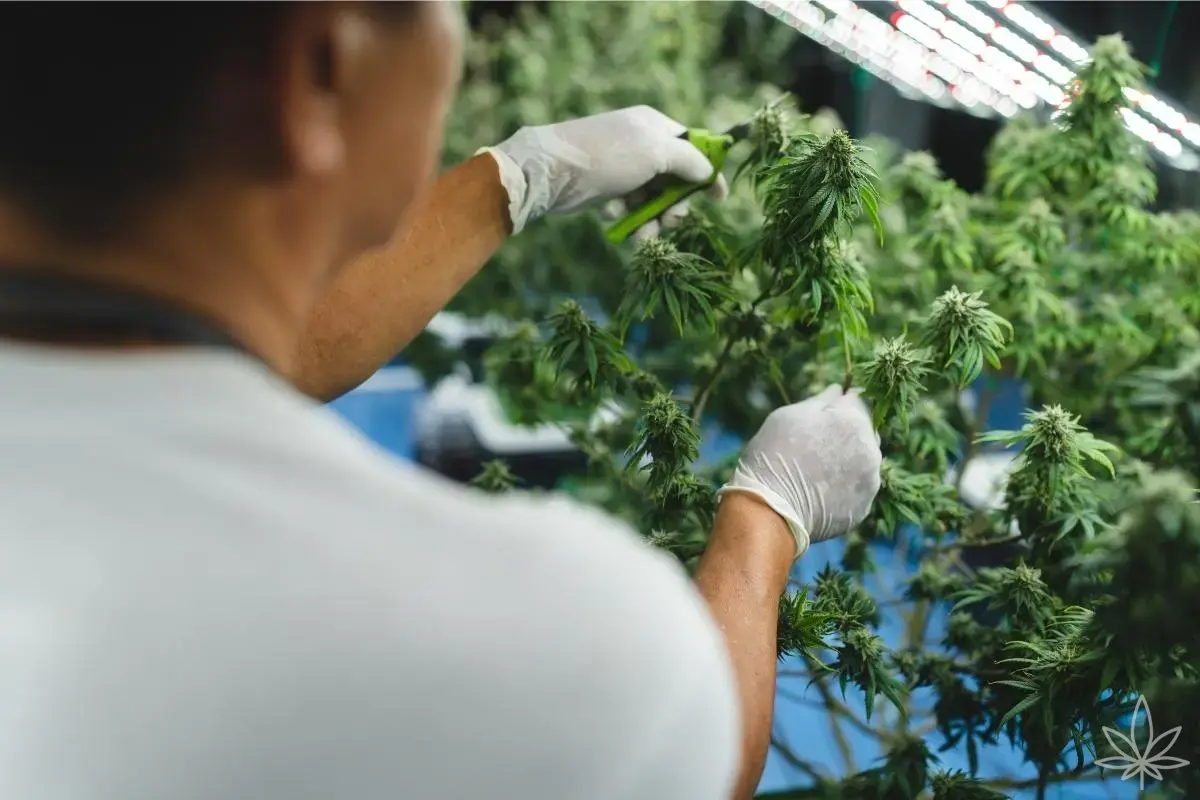
There is a moment in the life of almost every grower when they look at a healthy, nicely growing plant and the temptation appears: “What if I just cut that top?” On one hand, it sounds like sabotage. The plant is finally gaining speed, everything is going well, and suddenly you are supposed to take scissors and cut off its most dynamic point of growth. On the other hand, that is exactly what one of the most popular training techniques in indoor growing is based on. Topping can genuinely improve the shape of the plant, level out the canopy, and help you use the light better. But it can also slow growth, delay the cycle, and in some cases give you less, not more.
And that is exactly why topping is a subject that on the internet is often described either as a magic trick for a bigger yield or as a procedure beginners are afraid of. The truth, as usual, lies somewhere in the middle. It is neither black magic nor an obligation. It is a tool. A good one at the right moment, with the right genetics, and in the hands of someone who understands why they are doing it.
This text is exactly about that: not only how to cut, but above all when cutting makes sense and when it is better to leave the plant alone.
What Exactly Is Topping and What Happens to the Plant After the Cut?
Topping is simply the removal of the main growth tip, meaning the top of the plant. That one move changes the entire logic of its further development. As long as the plant grows naturally, it has a clear dominance of the main growth tip. That tip is “in charge” and causes the energy to go upward most strongly. The lower branches grow too, but they usually remain one step behind.
When you cut off that tip, the plant loses the main point of advantage and starts developing the side shoots more strongly. In practice, instead of one leader you get two, and later—if the procedure is repeated sensibly—an increasingly spread-out, even structure.
For indoor growing, that can be gold. The light does not love Christmas trees. The light loves an even green roof, meaning a canopy in which many tops stand at a similar height. That is exactly why topping works so well with modern LEDs. It is not about “more tops” by itself, but about better use of the light footprint.
Why Do Growers Even Do It?
Because naturally the plant often grows the way it likes, not the way the grower likes. In a tent or box, height is always limited. The light has its working distance. The filter, fan, hangers, cables—everything takes up space. If you let the plant grow without any control, it is easy to end up with one dominant top pushing into the zone of overly intense light, while the lower part remains in shade.
Topping helps organize that. The plant becomes wider, more branched, less “Christmas tree-like,” and more “bushy.” That gives several practical benefits:
- better use of light over a larger area,
- easier height control,
- a greater number of strong, equal tops,
- a better base for further training, for example LST or ScrOG.
But there is also the other side of the coin. Topping is mechanical stress. After the cut, the plant does not grow for a moment “as if nothing happened,” but has to reorganize itself. If it is healthy, well-rooted, and fed steadily—it will handle that without trouble. If it is weak, overwatered, hungry, or already tired from too much light, topping will only deepen the chaos.
When Is the Best Time for the First Topping?
This is probably the most important question in the whole topic. Because topping is not an art in itself. The biggest difference between a good and a bad result usually does not come from what motion you used with the scissors, but from when you did it.
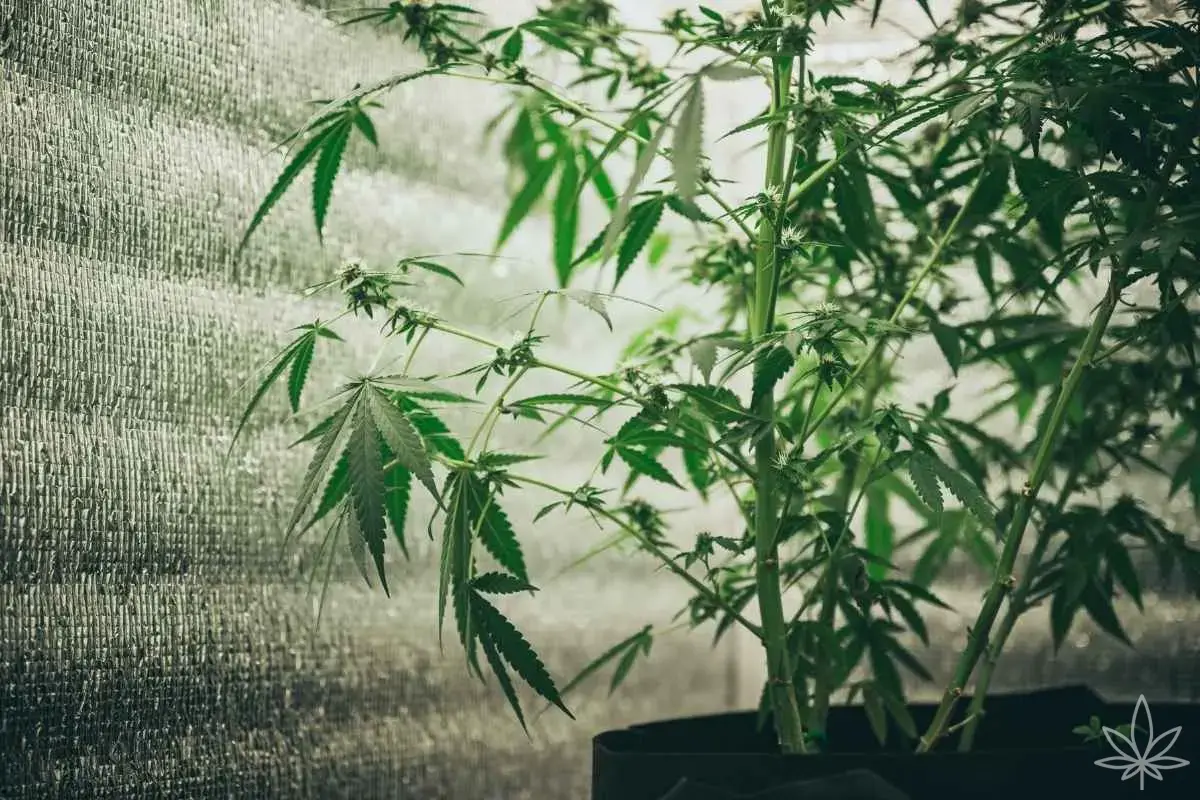
The plant should already be clearly underway in vegetative growth, healthy, firm, with a strong root system and several developed nodes. Nodes are the places from which leaves and side shoots grow. Most often, topping is done when the plant has around 4–6 clear growth levels. This is not about pharmacist-level counting to one exact number, but about the condition of the plant: it already has strength, but it has not yet shot up so high that you are starting to chase the ceiling.
If you cut too early, the plant may respond with slowed growth and go into stress at the very moment when it was only just building momentum. If you cut too late, you are correcting a problem that has already had time to grow—the plant may be too stretched, and its structure less graceful to correct.
In practice, a good moment looks like this: the plant already has strong leaves, active side growth, is not fighting overwatering or deficiency, and you can see that in a few days it will start pushing hard upward. Then topping usually works best.
Where Exactly Should You Cut?
Here many beginners complicate something that is simpler than it seems. Topping means removing the growth tip itself above the chosen node. You leave the healthy pair of side growths below the cut, because they are the ones that are supposed to take over the role of the new leaders.
You do not need to perform aesthetic surgery. This is not about a perfect angle with a ruler. It is about a clean, decisive cut made with a sharp, clean tool. With a dull knife or dirty scissors, you crush tissue more than cut it, and that unnecessarily lengthens recovery.
Most often topping is done above the 3rd, 4th, or 5th node—depending on how you want to guide the plant later. The lower you cut, the more compact and lower structure you will get. The higher you cut, the more starting material you leave, but the plant will also gain height faster.
How Many Times Can You Top?
You can do it more than once. The question is not “are you allowed to,” but “does it make sense in this specific grow?”
One topping is the simplest and often the most profitable version. It gives a clear structural change, does not overly delay growth, and works very well with light LST, meaning Low Stress Training—a low-stress method based on gently bending the shoots.
A second topping makes sense when:
the plant is healthy,
you have enough time in vegetative growth,
you want to build a more spread-out canopy,
and you can actually make use of that extra time.
A third and further topping in a home indoor grow increasingly starts resembling art for art’s sake. Yes, you can build beautiful multi-armed structures, but every such procedure costs time. If the grower has limited height, a short vegetative plan, or simply wants to reach flowering efficiently, multiple toppings are often less profitable than one sensible topping plus good branch spreading.
In the shortest terms: do not count cuts like trophies. Count usefulness.
Topping and Photoperiod Plants – This Is Usually Where It Makes the Most Sense
Photoperiod plants, meaning varieties dependent on day length, are the natural environment for topping. Why? Because you control the timing. If the plant needs a few days after the cut to return to full speed, you simply give it those days. You decide when to switch the light to 12/12 and begin flowering.
That gives huge comfort. You can calmly shape the structure, level the canopy, possibly combine topping with further training, and only then go into flower. That is exactly why most sensibly run photoperiod plants react very well to topping, if everything else is dialed in as it should be.
With photoperiods, topping very often genuinely improves yield, but not because “the cut magically creates more grams.” It simply helps you build a plant that will use the light and space better.
And What About Autoflowers? Here You Need to Ease Off the Gas
And this is where a lot of beginners fall apart. Because someone reads that topping gives more tops, so they automatically assume it should work exactly the same on autos. And it does not always work that way.
An autoflower, meaning an automatically flowering plant, plays by a different clock. It does not wait until the grower “finishes” it in vegetative growth. Its time passes regardless of your plans. So if you stress it at the wrong moment, you will not recover that as easily as with a photoperiod plant. You can lose precious growth days and enter flowering with a plant smaller than it could have been.
That does not mean topping an autoflower is always a mistake. It means the auto needs to be:
very healthy,
moving very strongly,
cut early and decisively,
and guided by someone who truly knows why they are doing it.
If someone does not yet have the feel to assess a plant’s vigor, then with autoflowers it is usually safer to go with gentler LST rather than topping. Less spectacular, but more often better for the final result.
Topping vs FIM – It Is Not the Same Thing
These two terms are often thrown into one bag, but they are not exactly the same. Topping means complete removal of the growth tip. FIM means partial cutting of the new growth so that it is not removed completely. In theory, FIM can give more than two new tops and distribute the structure somewhat differently.
In practice, FIM is often more temperamental. One time it comes out beautifully, another time the plant does something between a topping and a chaotic regrowth. That is why for many growers topping is simply more predictable. Less finesse, more control.
If someone is just building their skill set, topping is usually a better entry point than FIM. First it is worth learning to read the plant’s reaction after a simple cut, and only later play with more nuanced approaches.
How Do You Combine Topping with LST, ScrOG, and Lollipopping?
This is where it gets interesting, because topping rarely works alone. By itself it is the beginning of shaping the plant, but it gives the best effects when the grower knows what comes next.
After topping, LST works very well. When the two new leading shoots start growing, you can gently stretch them outward and even out the whole canopy. Thanks to that, not only do you have more tops, but all of them begin working at a similar light level.
In ScrOG, meaning Screen of Green, topping is almost a natural partner. The screen likes plants that want to grow sideways, not vertically. Topping helps achieve that.
Lollipopping, meaning cleaning the lower part of the plant from small shoots and leaves, usually comes later. You do not do everything at once in a frenzy. First you build the structure, then you guide it, and only later do you tidy the lower part so that the energy goes where it truly makes sense.
The biggest mistake? Doing topping, LST, defoliation, and heavier pruning at the same time, because “I am already working on the plant anyway.” That is a simple way to push it into excessive stress.
How Do You Know the Topping Worked?
A plant after a successful topping does not look like the victim of a disaster. For a moment it slows down, then it pushes with side shoots and starts becoming denser. After a few days, it is usually clearly visible that two new tops are taking over the role of leaders, and the rest of the plant becomes more symmetrical and definitely less “Christmas tree-like.”
Good signs are:
maintained leaf turgor,
active growth after a short pause,
no clear wilting,
no tip burn and no light stress right after the procedure,
and an increasingly even top of the plant.
If after the cut the plant stalls for a long time, becomes sluggish, pale, or starts showing stress, then usually topping itself was not the main problem. The problem was that you did it on a plant that was already not in shape.
When Is It Better to Skip Topping?
This is the part worth reading twice, because this is where the most mistakes are saved.
It is better to skip topping when:
the plant is freshly transplanted and has not properly started yet,
it has root problems,
it is overwatered or dried out,
it is already fighting deficiencies or nutrient lockout,
it is very small and poorly developed,
it is an autoflower with no clear vigor,
or you are planning a very short cycle and do not want to lose time on recovery.
In such situations, topping does not fix the structure. It only adds another stress to a plant that has already had enough.
It is a bit like training a human. If someone is healthy, rested, and fed, they will handle a hard workout and profit from it. If someone is sick, dehydrated, and sleep-deprived, the same workout will crush them.
The Most Common Topping Mistakes
The most classic ones are four.
First: cutting too early. The grower wants to “do something already,” because the plant has a few leaves and their hands are itching. But it is not the moment yet.
Second: cutting a plant that already has a problem. Instead of first stabilizing watering, climate, or pH, the grower tries to “organize the structure.” That almost always makes things worse.
Third: too many techniques at once. Topping does not like the company of chaos. If you put cutting, heavy bending, big defoliation, and a change in feeding all into one day, you remove your own ability to clearly read the plant’s reaction.
Fourth: topping out of boredom, not from a plan. It sounds funny, but very often that is exactly what happens. Not because the plant needs it, but because the grower read that “this is what you do.” And not every plant needs to be cut.
Does Topping Always Increase Yield?
No. And it is good to say that directly, because it demystifies the subject.
Topping increases the potential for better use of space and light. If the grower knows how to use that potential, the yield often rises. If they do not, topping can give the same, less, or simply turn one large top into several medium ones.
It is not a machine for grams. It is a tool for building structure. Yield rises when the rest follows that structure:
good light,
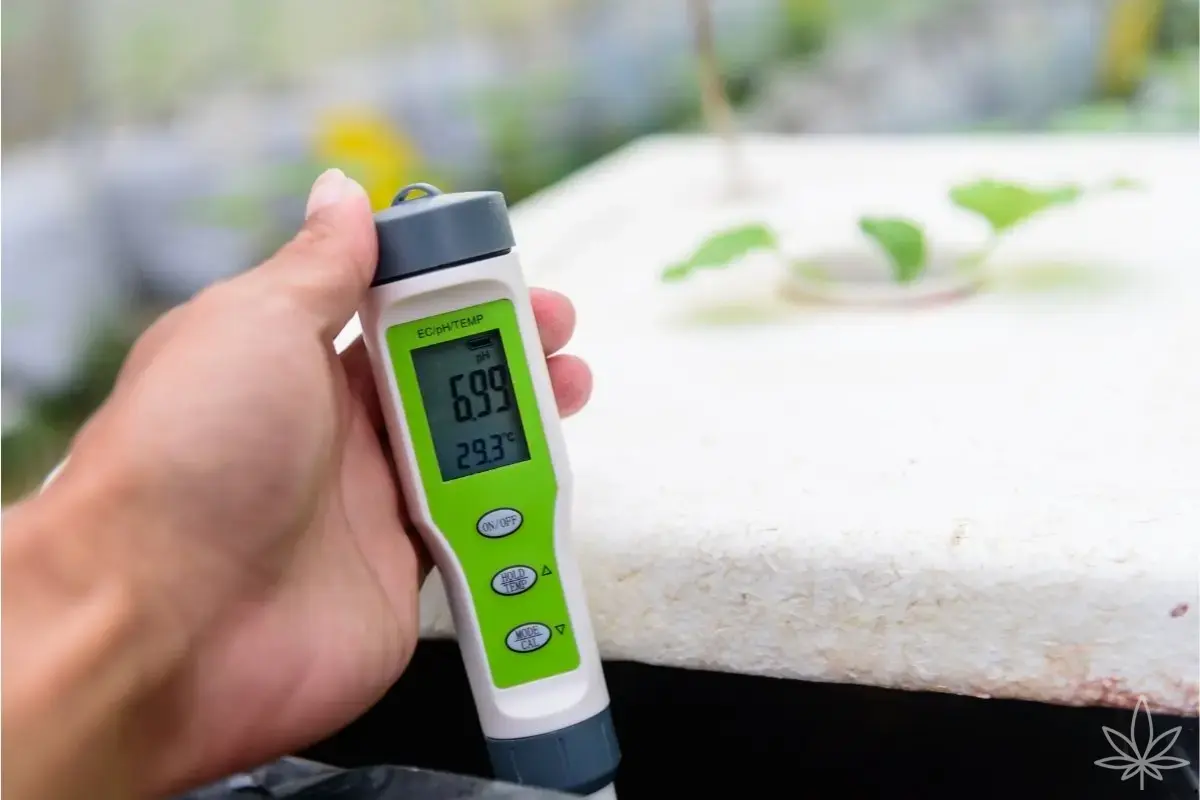
stable pH,
healthy roots,
sensible watering,
good air circulation,
and a well-managed canopy.
Without that, topping is not a miracle worker. It is just a cut.
The maryjane.farm Verdict
Topping is one of those techniques that is genuinely worth knowing, because it can make a big difference indoors. But it is not a procedure “for the sake of it.” It works well when the plant is healthy, has time to recover, and the grower knows what they want to achieve: a lower profile, a wider structure, a better base for LST or ScrOG.
With photoperiod plants, topping very often makes sense. With autoflowers, much more feel is needed. One sensible cut can bring more benefit than three nervous attempts to make an “Instagram monster.”
The simplest rule is this:
do not cut because it is expected;
cut because you know why.
Because in indoor growing, scissors do not increase yield by themselves.
Yield only increases with what you know how to do with the plant after the cut.