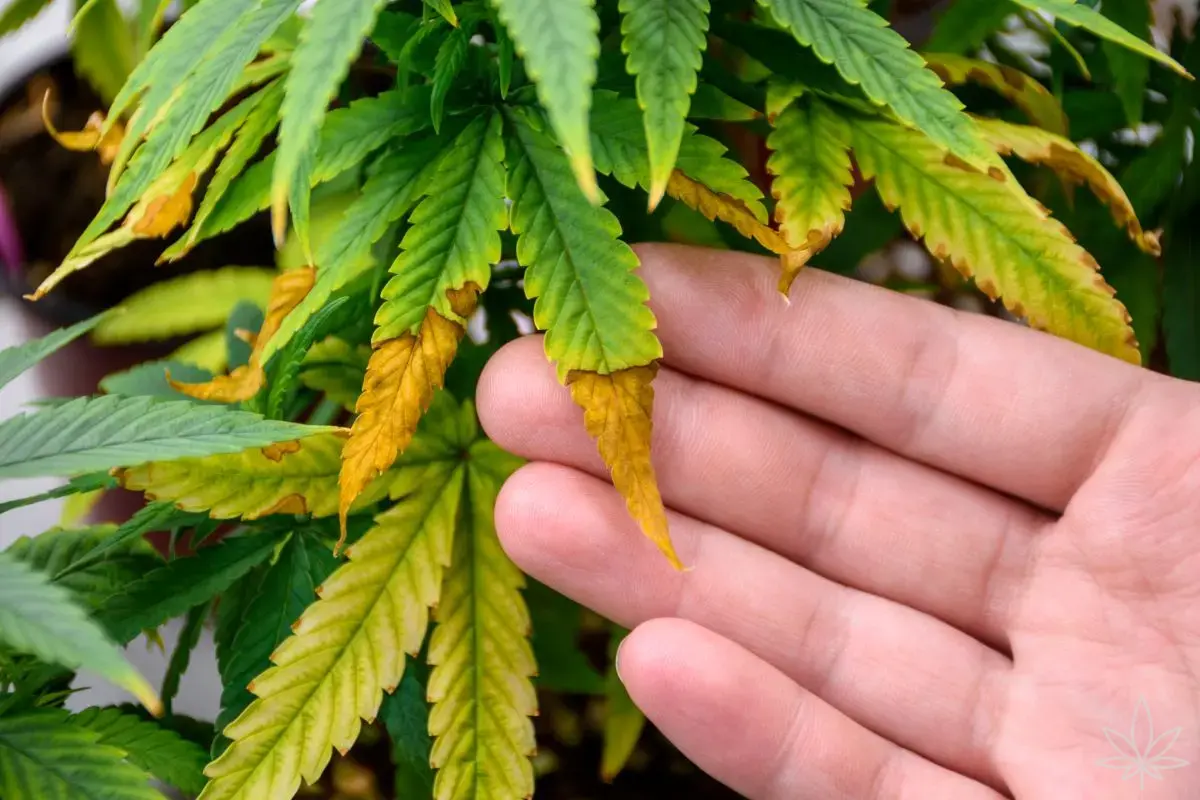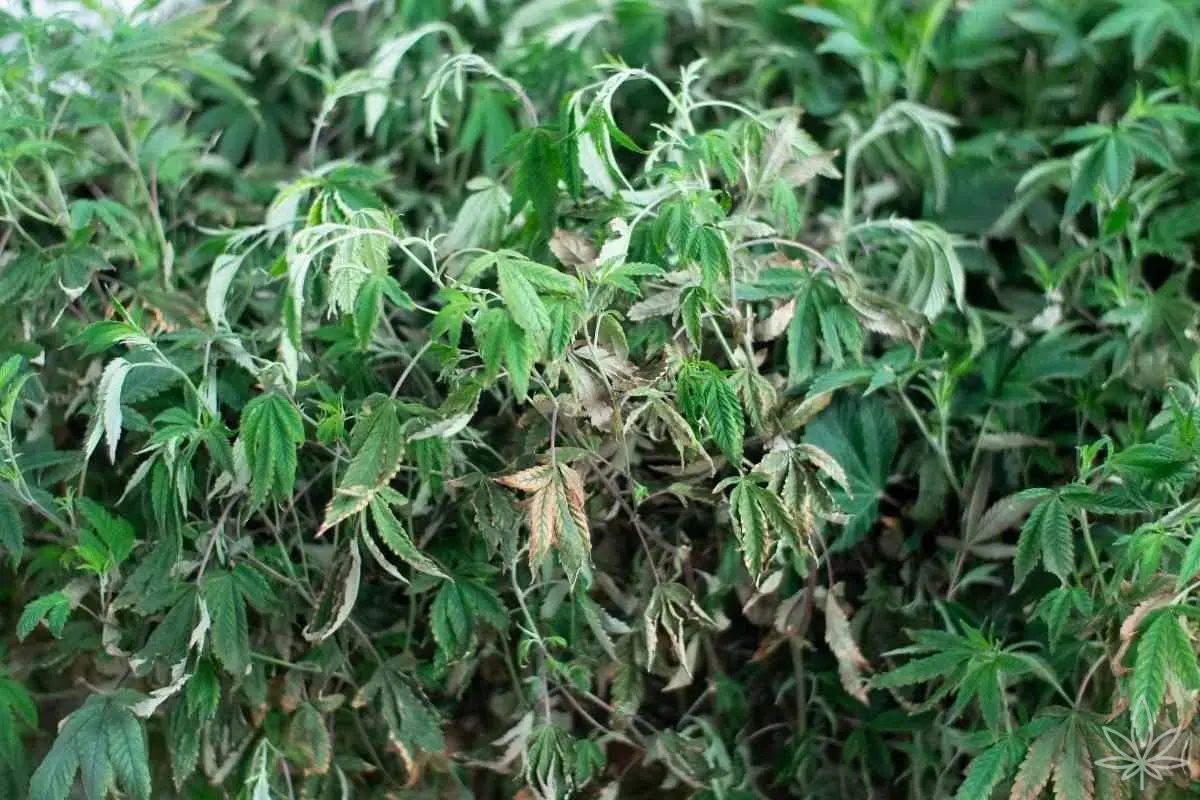
Most growers have been there. Everything looks “by the book”: pH is correct, EC matches the chart, nutrients are branded, the feeding schedule is followed. And yet the plant does not respond. Leaves turn pale or strangely dark, tips burn, growth slows down, and every additional dose of nutrients makes things worse instead of better. That is when the word “lockout” appears. But lockout is not a cause — it is a symptom. To understand why a plant does not absorb nutrients, you need to look wider: at transpiration, roots and the root zone as one system, not as three separate problems.
Nutrients Do Not Work Because They Cannot Work
What many growers overlook is that nutrients do not move on their own. Mineral elements reach the leaves only together with water. And water moves inside the plant only when transpiration occurs — when leaves release water vapor into the air. If transpiration slows down or stops, nutrients — even perfectly balanced ones — stay in the medium. The plant is not “broken”. It simply has no mechanism to absorb them.
That is why problems that look like nitrogen, calcium or magnesium deficiencies often are not deficiencies at all. They are transport problems, not availability problems.
Transpiration: the Invisible Engine of the Entire Grow
Transpiration connects everything into one system: air, leaves, roots and growth speed. When leaves release water into the air, a pull is created inside the plant that draws water and dissolved nutrients upward from the roots. Without this pull:
- roots do not “pull” solution,
- calcium and magnesium do not reach new growth,
- micronutrients accumulate in the root zone,
- EC rises even though the plant is starving.
This is why deficiency and overfeeding symptoms can appear at the same time. It is not a paradox — it is a stalled flow.
When the Plant Stops Drinking — and Why
One of the most misleading situations is when the pot stays wet for a long time. The grower thinks: “the roots have water, so everything is fine.” In reality, this is an alarm signal. A plant stops drinking when it stops releasing water through the leaves. The most common causes are:
- VPD too low (too humid relative to temperature),
- leaf temperature too low,
- lack of air movement around the leaves,
- oxygen-deprived root zone.
In these conditions, adding nutrients is like adding coal to a furnace that is not burning.
Roots: the Second Side of the Problem
Even with correct transpiration, nutrients will not be absorbed if roots lack oxygen. Constantly wet medium is a classic mistake. Cannabis roots breathe. When oxygen is missing:
- root hairs die,
- ion uptake stops,
- the plant behaves as if it were deficient,
- the grower increases feeding and makes things worse.
That is why improving watering rhythm often works better than changing nutrients.
What “Nutrient Lockout” Really Means
“Lockout” is one of the most overused words in growing. In practice, it means that nutrients are present but cannot be used. Reasons include:
- lack of transpiration,
- cold roots,
- oxygen-poor medium,
- excessive salinity,
- disturbed microbial life.
The common denominator is simple: the problem is not the feeding chart.
Why pH and EC Are Often Innocent
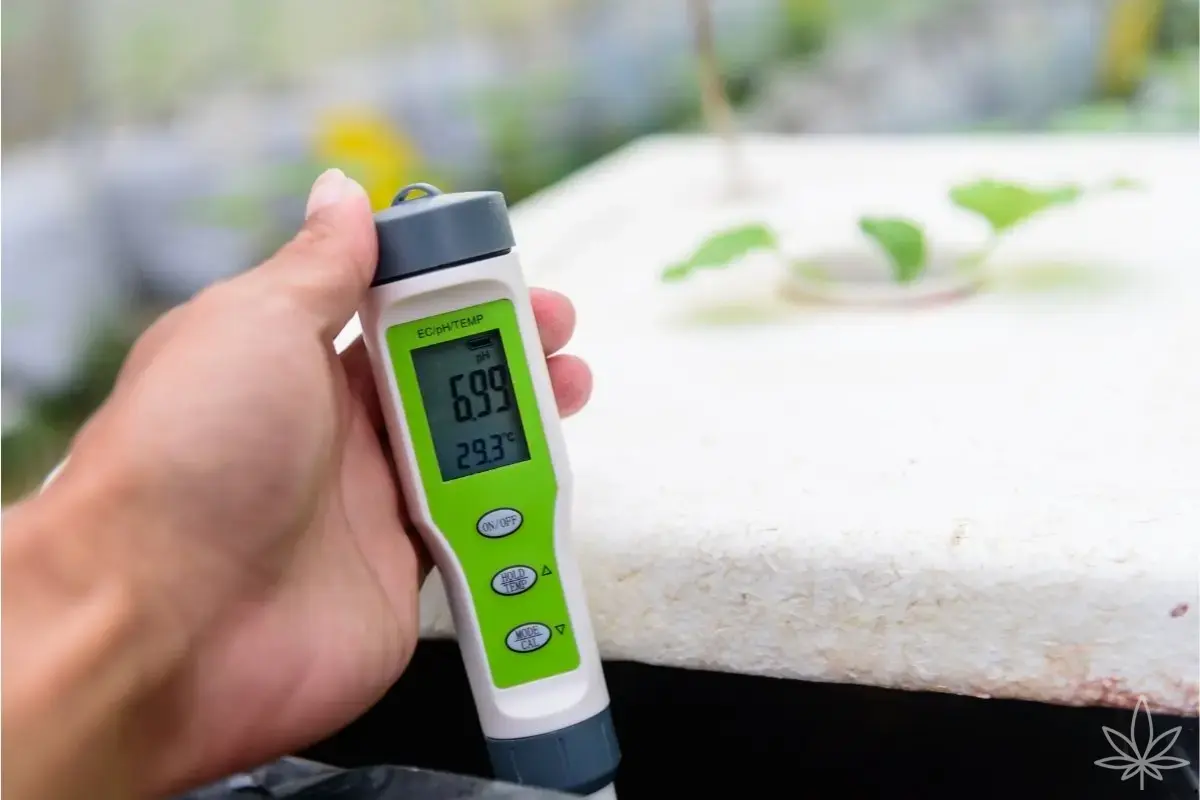
This may sound controversial, but in many cases pH and EC are correct — and the problem still exists. Why? Because pH and EC describe the solution, not the process. You can have perfect pH in the pot, but if water does not move, the plant will not “see” it. That is why obsessively correcting pH without fixing air and watering leads to frustration.
LED, Modern Growrooms and New Problems
HPS lighting masked many mistakes with heat. LEDs changed everything. Cooler leaves, lower radiant heat and higher climate control mean that transpiration became the bottleneck. Under LEDs:
- unexplained deficiencies are more common,
- Cal-Mag “stops working”,
- plants look hungry despite full feeding.
This is not a flaw of LEDs — it is the need for better system understanding.
How to Diagnose the Problem Step by Step
Instead of changing everything at once, ask yourself:
- Is the plant actually drinking between waterings?
- Are the leaves active or heavy and dull?
- What is the VPD at leaf level?
- Does the medium dry and re-oxygenate?
- Is root temperature too low?
Often one answer points directly to the real cause.
What to Fix First — and What Not to Touch
The golden rule is: air first, then water, nutrients last.
If the plant does not absorb nutrients:
- do not increase EC,
- do not immediately change nutrient brands,
- do not look for a magic additive.
Instead:
- correct VPD,
- improve air movement around leaves,
- ensure roots can breathe,
- simplify feeding.
Often climate correction alone makes the plant “suddenly” respond.
Summary: Nutrients Are the Last Piece of the Puzzle
Nutrients matter, but only when the system works. A plant is not a bottle you pour minerals into. It is a living organism that needs a transport trigger. That trigger is transpiration, and its foundation is proper air and healthy roots.
If a plant does not absorb nutrients, it rarely means “it needs more nutrients”.
Most often it means it cannot absorb them.
And that is good news — because fixing fundamentals works better than fighting chemistry.