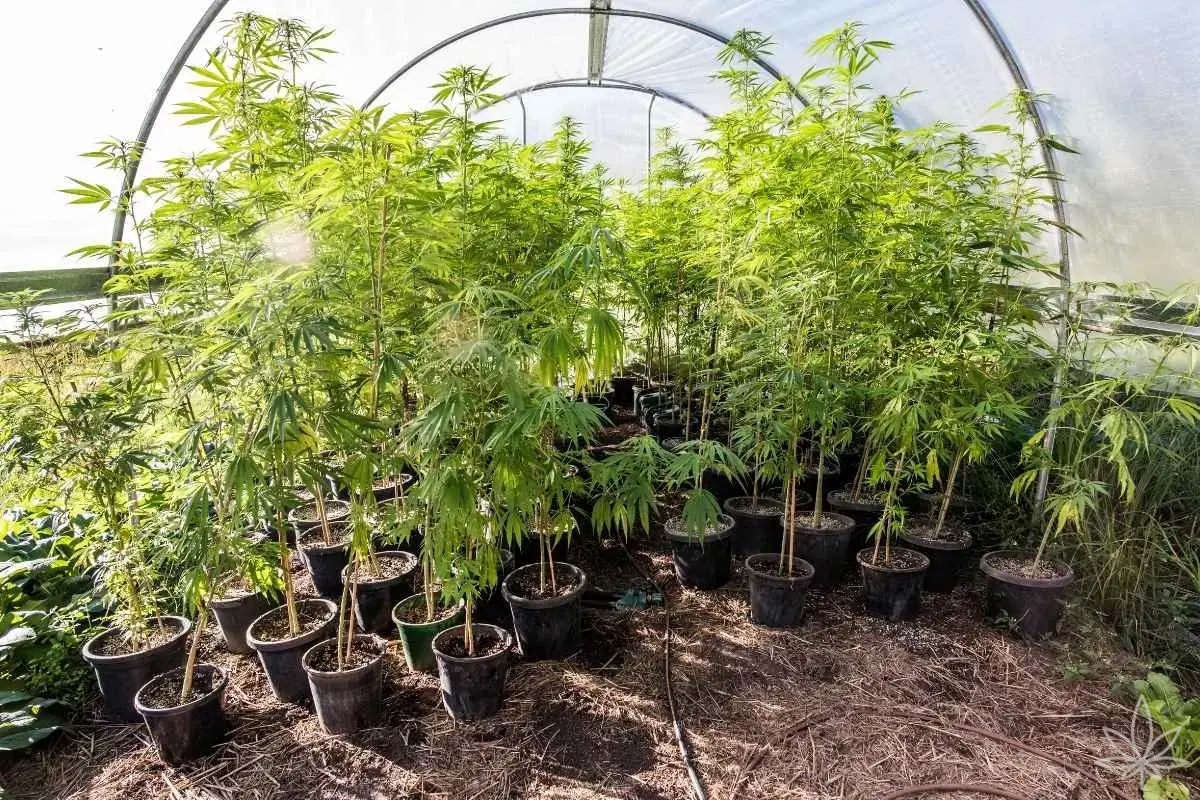
Outdoor growing has something beautiful about it, but also brutally honest. In a growbox, the grower deals the cards: light, ventilation, watering, temperature, humidity — everything more or less under control. Outside, it suddenly turns out that the plant enters a world that does not ask for permission. There is wind, rain, cold nights, sun that can burn a leaf faster than an overly strong LED lamp, and a whole army of small creatures that treat a fresh seedling like a free buffet.
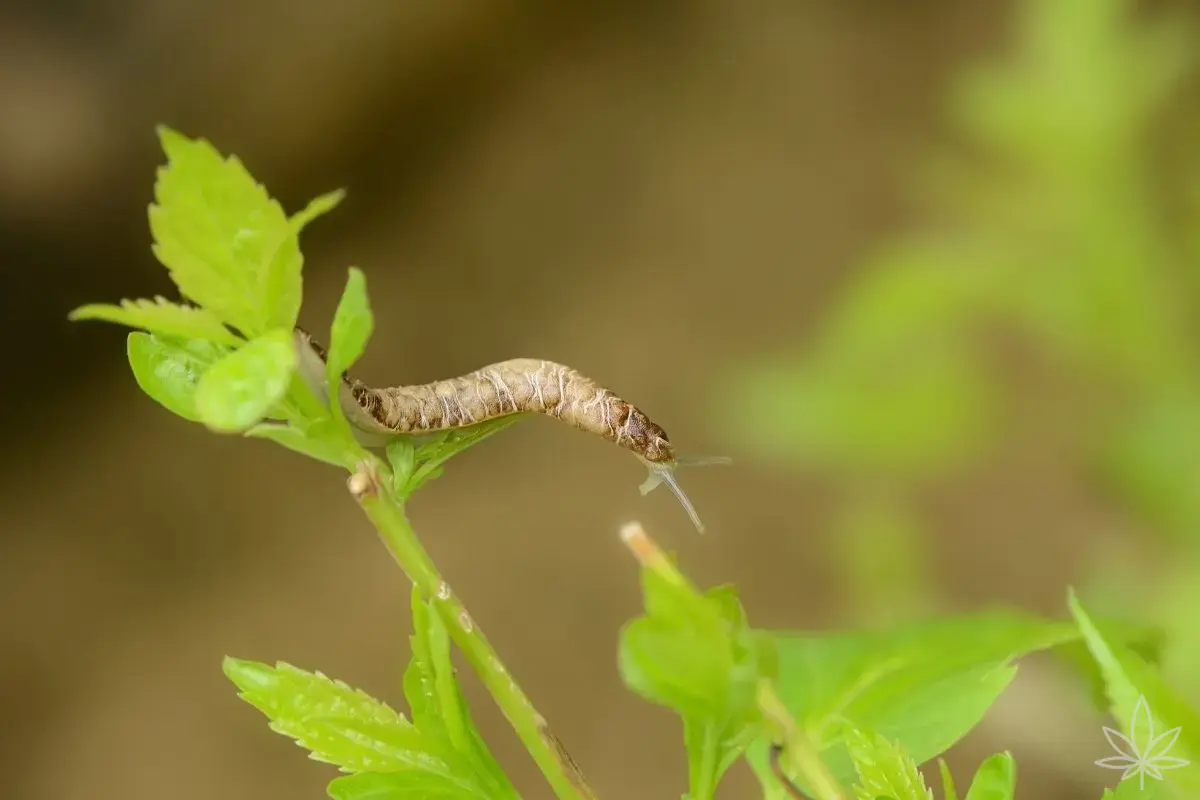
Among them, slugs are one of the most underestimated enemies of a beginner grower. They do not look dangerous. They do not fly in swarms like aphids. They do not make webbing like spider mites. They do not immediately leave dramatic mould like botrytis. A slug is quiet, slow and has the reputation of a lazy guest from the garden. Except that on a wet, slightly warm night, it can do more damage than many a nutrient mistake.
The worst thing is that the problem often only appears in the morning. In the evening, the seedling looked good. Maybe still a little delicate, maybe freshly planted out, but alive, green, promising. In the morning, the grower comes with a coffee, looks, and there are holes in the leaves, chewed edges, a damaged stem or — in the worst-case scenario — only a sad little remnant of the plant left at soil level. And then the classic panic begins: disease? deficiency? birds? mouse? genetics? No. Very often the culprit had been crawling through wet soil during the night.
Why do slugs like young seedlings so much?
A young outdoor seedling is an ideal target for a slug. It has soft tissue, delicate leaves, a thin stem and it has not yet managed to build a hard, resistant structure. For us it is the beginning of the season; for a slug it is a fresh, juicy meal placed exactly at its height.
An older cannabis plant usually tolerates minor damage much better. It has more leaf mass, a stronger stem and more energy stored in the roots. If a slug nibbles one leaf on a bigger bush, it is not a tragedy. The plant often barely notices it. But if the same slug finds a few-day-old or two-week-old seedling, the situation looks completely different. In a young plant, every leaf matters, because it works for further growth. Every injury to the leaf surface limits photosynthesis, meaning energy production. And if a slug damages the main growing tip or the thin stem near the soil, the season for that particular plant may be over before it has really begun.
This is especially painful with autoflowers, meaning automatically flowering varieties. An auto does not have time for a long recovery. If during the first two weeks of life outside it is fighting cold, overwatering, slugs and rebuilding leaves, the clock is still ticking. The plant may later enter flowering as a small, stressed dwarf. With photoperiods, the situation is a little more forgiving, because a longer vegetative phase gives a chance to bounce back, but even here a strong attack at the start leaves a mark.
May and June: the ideal time for slugs
The slug problem does not come from nowhere. It usually explodes when conditions become comfortable for them: moist soil, rainy days, mild nights, plenty of hiding places and fresh greenery. In other words, exactly when many growers start moving seedlings outdoors.
In Europe, this moment looks different depending on the region. In southern Spain or Greece, drought and sharp sun may be the bigger problem, but in shady gardens, watered beds and more humid corners, slugs can still operate. In Western Europe — the Netherlands, Belgium, Ireland, the United Kingdom, western France or northern Germany — moisture is often part of everyday life, so slugs have excellent conditions for much of the season. In Central Europe, including Poland, Czechia, Austria, Germany or Slovakia, the worst periods are often after May and June rains. In Northern Europe, there is also the cold, which slows down seedling growth, and a slowly growing seedling remains an easy target for longer.
In practice, this means one thing: the fact that the plant survived the night in terms of temperature does not yet mean it is safe. You may choose the transplanting date well, wait for more stable nights, harden off the seedling, and then lose it to something as banal as a wet garden full of slugs.
Outdoor growing does not forgive thinking about only one threat. If earlier we talked about cold nights being able to stop plants at the start, slugs are another element of the same puzzle. A young plant outside is not only fighting the weather. From day one, it enters an ecosystem.
How to recognise that it is slugs?
Slugs leave fairly characteristic traces, although beginner growers often confuse them with something else. The most typical are irregular holes in the leaves. They do not look like an even, aesthetic pattern. They are more like ragged losses, chewed-out pieces of the leaf blade, sometimes holes in the middle of the leaf, sometimes chewed edges.
With young seedlings, the damage can be more brutal. A leaf may disappear almost completely. The growing tip may be damaged. Sometimes the stem right at soil level is chewed so badly that the plant falls over. If the seedling was very small, a slug may simply treat it as a snack and leave very little behind.
The second signal is slime. Slugs often leave silvery, shiny trails on leaves, soil, pots, bed edges or mulch. In the morning, when the sun starts to hit at an angle, such a trail can be clearly visible. If you see leaves with holes and a silver trail nearby, the matter becomes fairly clear.
The third clue is the timing of the damage. If the plant was whole in the evening and in the morning looks as if it suffered a night attack, slugs are high on the suspect list. They feed mainly at night and after rain, when moisture protects them from drying out. During the day they often sit hidden under boards, stones, pots, leaves, mulch, agrotextile, in tall grass or in cracks in the soil.
Why do growers notice the problem too late?
Because slugs do not make a spectacle. Aphids are visible when they cover young shoots. Spider mites reveal themselves with tiny dots and webbing. Deficiencies develop gradually, so you can observe the leaves day by day. A slug comes at night, eats and disappears.
On top of that, beginner growers often check plants at the wrong moment. They come at noon, when everything is dry, sunny and calm. They look at the leaves, see damage, but do not see the culprit. Then they start searching for the answer in a completely different place: maybe pH? Maybe calcium? Maybe magnesium? Maybe a spray? Maybe too much sun? And it would be enough to come in the evening after rain or early in the morning and look under pots, boards, leaves and damp corners.
Slugs like hiding places. If there is old wet mulch, rotting leaves, pieces of wood, stones, tall grass or abandoned pots around a young seedling, the grower is making them a hotel with a restaurant next door. The plant stands in the middle, and the slugs have accommodation a few centimetres away.
The riskiest outdoor locations
Not every outdoor grow is equally exposed. The highest risk appears where there is moisture, shade and plenty of organic hiding places. Areas near compost heaps, old boards, dense shrubs, tall grass, ditches, streams, ponds or in a constantly watered garden are classic slug zones.
At a forest spot, the problem can be even more deceptive. The forest and its edges hold moisture, especially after rain. A layer of leaves, twigs and humus gives slugs excellent shelter. From the plant’s point of view, the place may look promising: discreet, green, with access to light for part of the day. From the slug’s point of view, it is also a good place: moist, quiet, plenty of hiding places and a fresh seedling in the middle.
On a balcony, the risk is usually lower, but it does not disappear. If the balcony is low, connected to a garden, full of pots, old saucers, damp corners and ornamental plants, slugs may appear. Sometimes we bring them ourselves with soil, seedlings or pots that were previously kept outside. In big cities, the problem may be rarer, but on a ground floor, terrace or in a winter garden, slugs can still find a way.
First rule: the seedling must not stand defenceless
The biggest mistake is planting out a young plant and leaving it to itself. The grower thinks: “It is in the soil, now nature will do its job.” Nature will indeed do its job, just not necessarily in our favour.
The first days after planting out are critical. The plant is still adapting to new light, wind, temperature and root work in the new substrate. If it is chewed by slugs at the same time, it gets stress on top of stress. It is like sending a beginner boxer into the ring, switching off the light and saying: “manage somehow.”
A young seedling should have physical protection. The simplest method is a protective collar around the plant. It can be a cut plastic bottle without a bottom and without a cap, a special garden ring or another barrier that makes it harder for slugs to reach the stem and leaves. It is important that the plant has airflow, access to light, and that such a cover does not turn it into a mini sauna in full sun.
In pots, raising the plant above ground level works well. A pot standing directly on wet grass is an easier target than a pot placed on a clean, dry base, grid, stand or surface that can be controlled. This does not provide one hundred percent protection, but it reduces accidental slug entry.
Copper, barriers and sensible mechanics
One of the popular methods for limiting slugs is copper barriers. Copper tape around a pot or a copper ring near a bed can make it harder for slugs to cross, because contact between their slimy foot and copper is unpleasant for them. It is not a magic shield from a computer game, but as one element of protection it can make sense, especially when growing in pots.
The problem with every barrier is that it must be continuous and properly placed. If a leaf touches the ground outside the barrier, a slug can climb up the leaf like a bridge. If the pot stands next to a wall covered with plants, the slug can find another route. If the barrier is dirty, covered with soil or broken, its effectiveness drops. Outdoor growing teaches that the devil is in the details.
Some people use sharp, dry materials around plants, such as crushed eggshells, sand, ash or diatomaceous earth. Here you need common sense. After rain, many such barriers lose effectiveness, and some additives can change the properties of the substrate if you pour them around without moderation. Instead of believing in one miraculous method, it is better to think in layers: clean around the plant, fewer hiding places, physical protection, checks after rain and quick reaction.
Traps and evening patrols
The most underestimated method is also the most primitive: observation. Go out in the evening after rain with a flashlight. Check the area around the seedlings, the underside of pots, the board next to the bed, wet leaves, edges of beds. Very often you will see the culprits with your own eyes.
Hand-picking slugs does not sound like great grow technology. But it works. Especially in a small grow, in a garden, on a balcony or with a few outdoor plants. If every day for a few days after rain you remove slugs from the closest area around the seedlings, the pressure on the plants can drop noticeably.
Traps can also help, but you need to understand their purpose. Beer traps are popular because the smell attracts slugs. But they can also attract them from farther away, so if they are placed thoughtlessly right next to the plant, they sometimes create more traffic near the seedling than we would like. It is better to treat them as a tool for population control in the garden, not as magical protection for one plant.
You can also use boards, pieces of cardboard or damp hiding places as control traps. Slugs go under them during the day, and the grower can check them in the morning and remove them. It is simple, cheap and very outdoor. It does not look like a gadget from a catalogue, but sometimes exactly such solutions save young plants.
Slug products: carefully, because outdoor is not only your plant
There are slug control products on the market, but when using them you need to think more broadly than only about your own seedling. Outdoor means a garden, an allotment, a spot, animals, insects, birds, soil, sometimes children or dogs. Not every granule and not every poison is neutral for the surroundings. If someone decides to use a ready-made product, they should choose products approved for use in the given country, read the label and use them according to the instructions. It sounds boring, but this is the kind of boredom that separates a responsible grower from someone scattering chemicals “by eye”.
In many gardens, iron phosphate-based products are used and are considered safer for the surroundings than older, more toxic substances. Still, even such products should not be treated like powdered sugar to sprinkle over everything. The goal is to reduce slug pressure, not to wage total war on all life in the garden.
When growing cannabis, it is worth remembering one additional thing: everything you do near the plant may later matter for harvest quality and user safety. That is why the closer you are to the plant, the more it is worth preferring mechanics, barriers, site hygiene and control, while treating products as a supplementary tool, not the first reflex.
A clean start: fewer hiding places, fewer problems
One of the best things you can do before planting out a seedling is to tidy up its closest surroundings. This is not about having a sterile garden like from a catalogue. Outdoor does not have to look like an operating room. The point is that within several dozen centimetres of the young plant, there should not be a slug hotel.
Remove rotting leaves, pieces of wet wood, old boards, dense clumps of grass, unnecessary pots and everything under which slugs can sit during the day. If you use mulch, do not immediately push it tightly up to the stem of the young seedling. Mulch has advantages, because it holds moisture and protects the soil, but with freshly planted plants it can also create a comfortable corridor for slugs. It is better to leave a clean zone right by the stem and only farther away build a protective layer for the soil.
In pots, it is worth checking saucers. Standing water, wet soil remains and tight spaces under the pot are excellent hiding places. Often the grower looks at the top of the plant, while the whole problem is sitting under the container.
Do not overwater, because you are inviting slugs yourself
Slugs love moisture. Of course, a young seedling needs water, but outdoor beginners often water too much, especially after transplanting. They mean well. They give the plant something “to start”. Then a cool night comes, the soil takes a long time to dry, and the area around the seedling becomes perfectly moist.
Overwatering does not only harm the roots. It also improves conditions for slugs. Wet substrate, wet mulch, damp corners — all of this increases their activity. If, on top of that, the plant is small and grows slowly, it remains an easy target for longer.
Outdoor watering should come from real conditions, not emotions. After rain, you do not water “because that was the plan”. After a cool night, you do not pour the same amount as on a warm, sunny day. In a large pot, a small seedling does not yet use huge amounts of water, so overwatering is ridiculously easy. It is better to water sensibly, locally, observing how quickly the soil dries, than to create a little swamp around the plant.
A larger plant at the start has better chances
One of the simpler ways to reduce damage is not to plant out seedlings that are too small and defenceless. Of course, every season has its own pace, and growers sometimes hurry for various reasons. But the stronger the seedling that enters outdoor life, the better it will handle its first contact with the real world.
A plant with several well-developed sets of leaves, a stronger stem and a more solid root ball has more reserve. If it loses part of a leaf, it will survive. If it slows down slightly after transplanting, it has something to bounce back from. If one slug appears overnight, it does not necessarily mean the end. A very small seedling has a much smaller margin for error.
Here the topic of hardening off returns again. A plant prepared for outdoor is not only more resistant to sun and wind, but also generally handles stress better. And a stronger plant is a plant that grows faster above the most dangerous zone near the soil. Slugs can still do damage, but the bigger and stronger the plant, the less dramatic a single attack becomes.
What to do when slugs have already attacked?
First, do not panic. That is difficult, because the sight of a seedling with holes hurts, especially if you kept it under a lamp for a long time. But panic usually leads to bad decisions: too much fertiliser, too many sprays, too much watering, too much digging in the soil. After damage, the plant first of all needs stable conditions.
If the growing tip is intact and the stem has not been seriously damaged, the seedling often has a chance to bounce back. You need to protect it from another attack, remove slugs from the surroundings, set up a barrier, check hiding places and give the plant a few quiet days. There is no point immediately flooding it with nutrients, because chewed leaves do not mean a deficiency. It is mechanical damage.
If the growing tip has been damaged, the plant may try to send out side shoots. With a photoperiod, sometimes you can still lead something out of it. With an autoflower, you need to be more realistic. If a young auto has been heavily eaten at the start, it may never use its potential. Sometimes it is better to have a backup seedling than spend the whole season saving a plant that took too heavy a hit from the beginning.
If the stem has been chewed through at soil level and the plant is lying down, the situation is the worst. You can try to save it, but in practice young seedlings after such damage often drop out. That is why protection against slugs is more important than later treatment. This is not a problem you want to solve after the fact.
Natural allies, or not every garden resident is an enemy
Outdoor is not a sterile laboratory. In a well-functioning garden, there are also natural enemies of slugs: hedgehogs, birds, frogs, toads, beetles, some predatory insects. Of course, a grower cannot always influence the whole ecosystem, especially when working on a balcony or in a random place. But it is worth understanding that the garden is not only a battlefield.
Using chemicals too aggressively may limit not only pests, but also organisms that help maintain balance. That is why smart outdoor growing is more about reducing pressure and protecting plants at the key moment than obsessively destroying everything around. A clean zone around the seedling, barriers, moisture control, traps, hand-picking and sensible products if they are really needed — this is usually a better path than total war.
The biggest mistake: trusting that “it will somehow be fine”
Many growers lose to slugs not because they do not know any protection methods. They lose because they underestimate the problem. They think: “It is only one night.” “It is only a few slugs.” “The plant will manage.” And sometimes it really does. But sometimes that one night is enough for a young seedling to be eaten down to a level from which it will not return.
Outdoor teaches humility. Not the dramatic, poetic kind, but ordinary practical humility of a person who knows that a small plant in a wet garden is truly small. It has no growbox walls, no filter, no fan, no climate controller. It is a living seedling in a living environment.
That is why a good outdoor start does not end the moment you put the plant into the soil. In fact, that is when the most important observation phase begins. It is worth treating the first week after planting out like being on duty. Check in the morning, check after rain, take a look in the evening, improve the cover, remove hiding places, do not overdo water. It does not have to be complicated. It has to be consistent.
Summary
Slugs are one of those outdoor problems that seem small until they destroy a young plant. They are especially dangerous in May and June, after rain, during mild nights, in humid gardens, at forest spots, in tall grass and anywhere they have hiding places close to fresh seedlings.
Young plants are the most vulnerable, because they have delicate leaves, thin stems and a small energy reserve. For a larger bush, a few holes in the leaves are often a minor issue. For a small seedling, it may be the end of the season. With autoflowers, the risk is even greater, because every loss of time at the start later affects the whole result.
The best protection is not one miraculous method. It is rather a set of simple actions: clean surroundings around the seedling, fewer hiding places, checks after rain, a physical barrier, sensible watering, raised pots, copper where it makes sense, control traps and a quick reaction after the first feeding marks.
Outdoor is won not by the one who only plants the plants outside and counts on luck. It is won by the one who understands that the first weeks are the most fragile. Because sometimes the season is not decided by an expensive lamp, the best genetics or the priciest fertiliser. Sometimes it is decided by whether, after the first May rain, you check what is crawling around your seedling.