
Cal-Mag is one of the most commonly purchased supplements in grow shops. For many growers it has become almost mandatory — “because LED”, “because tap water”, “because forums say so”. The problem is that Cal-Mag can be both a rescue tool and a silent grow killer. Everything depends on whether you know why you are using it, or whether you are just reacting to symptoms.
This article is not a “pour more” instruction. It is an attempt to bring order into chaos, separate facts from myths, and explain why in modern grows — especially under LEDs — Cal-Mag is often used to fix the wrong problems.
What Cal-Mag Really Is (and What It Is Not)
Cal-Mag is a supplement containing calcium (Ca) and magnesium (Mg), often with a small amount of nitrogen. Its purpose is to correct real deficiencies, not to “boost plants” or “improve leaf color”.
Calcium is responsible for:
- cell wall structure,
- tissue stability,
- development of new growth.
Magnesium:
- is the central atom of chlorophyll,
- enables photosynthesis,
- affects overall leaf health.
Important detail: both elements are transported only with water, and their uptake depends directly on transpiration.
The Biggest Myth: “LED = Always Cal-Mag”
This belief has caused more damage than benefit. LEDs do not cause calcium or magnesium deficiencies by themselves. They change the physical conditions under which these elements are transported.
Under LEDs:
- leaves are cooler,
- evaporation is lower,
- transpiration often slows down.
Result? Calcium and magnesium do not reach where they are needed, even if they are present in the medium. The grower sees symptoms and thinks: “Cal-Mag deficiency”. In reality, what is missing is water movement, not minerals.
Adding Cal-Mag in this situation often:
- does not fix symptoms,
- raises EC,
- creates secondary lockouts.
What Real Calcium and Magnesium Deficiencies Look Like
This matters, because most “deficiencies” under LEDs are not real.
Calcium deficiency:
- mainly affects new growth,
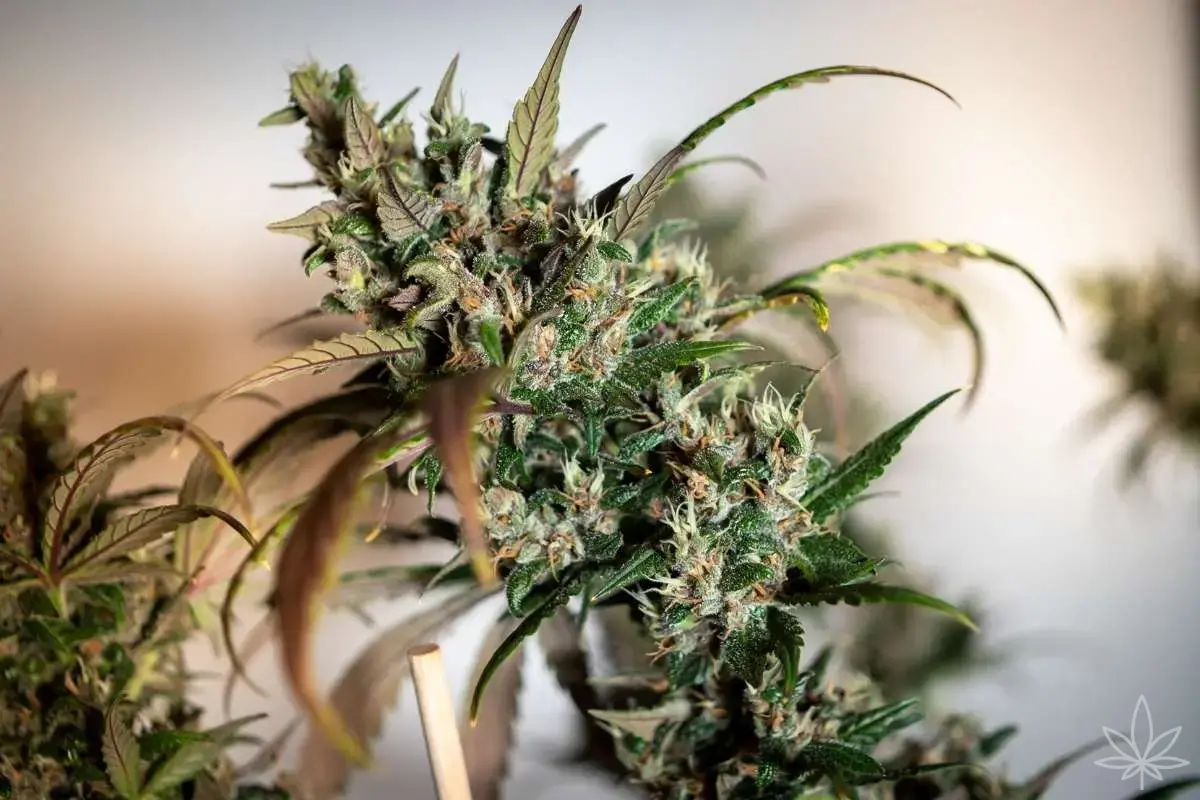
- causes deformed, twisted leaves,
- new leaf tips may die back.
Magnesium deficiency:
- starts on older leaves,
- interveinal chlorosis appears,
- veins remain green.
If symptoms are:
- chaotic,
- present on old and new leaves at once,
- worsening despite increased dosing,
it is very likely not a deficiency, but a transport or lockout problem.
Cal-Mag and VPD: the Missing Connection
Calcium and magnesium are immobile or weakly mobile elements. They go only where water goes. If VPD is too low:
- transpiration drops,
- Ca and Mg get “stuck in traffic”,
- new growth starves.
In such cases, adding Cal-Mag treats symptoms, not causes. First fix transpiration conditions, then evaluate supplementation.
When Cal-Mag Is Actually Needed
Cal-Mag makes sense when:
- water is very soft (RO, demineralized),
- hydroponic systems lack Ca/Mg buffering,
- coco substrates are used (especially unbuffered),
- long LED cycles push fast growth,
- deficiencies are confirmed after climate issues are excluded.
Here, Cal-Mag fills a real gap instead of masking systemic errors.
When Cal-Mag Destroys a Grow
Much more often, Cal-Mag causes harm when:
- used “preventively”,
- added without transpiration,
- applied at already high EC,
- climate is ignored,
- it is used to fix bad watering.
Typical results:
- potassium and phosphorus lockouts,
- root zone salinity,
- growth slowdown,
- leaves that feel “plastic-like”.
Why “More” Almost Never Means “Better”
Calcium competes with other cations. Excess Ca:
- blocks potassium uptake,
- destabilizes ionic balance,
- alters substrate structure.
That is why “emergency Cal-Mag doses” often create new problems that did not exist before.
How to Approach Cal-Mag Rationally
Instead of asking “how much to add”, ask:
- Is the plant actually drinking?
- What is the VPD?
- Do roots have oxygen?
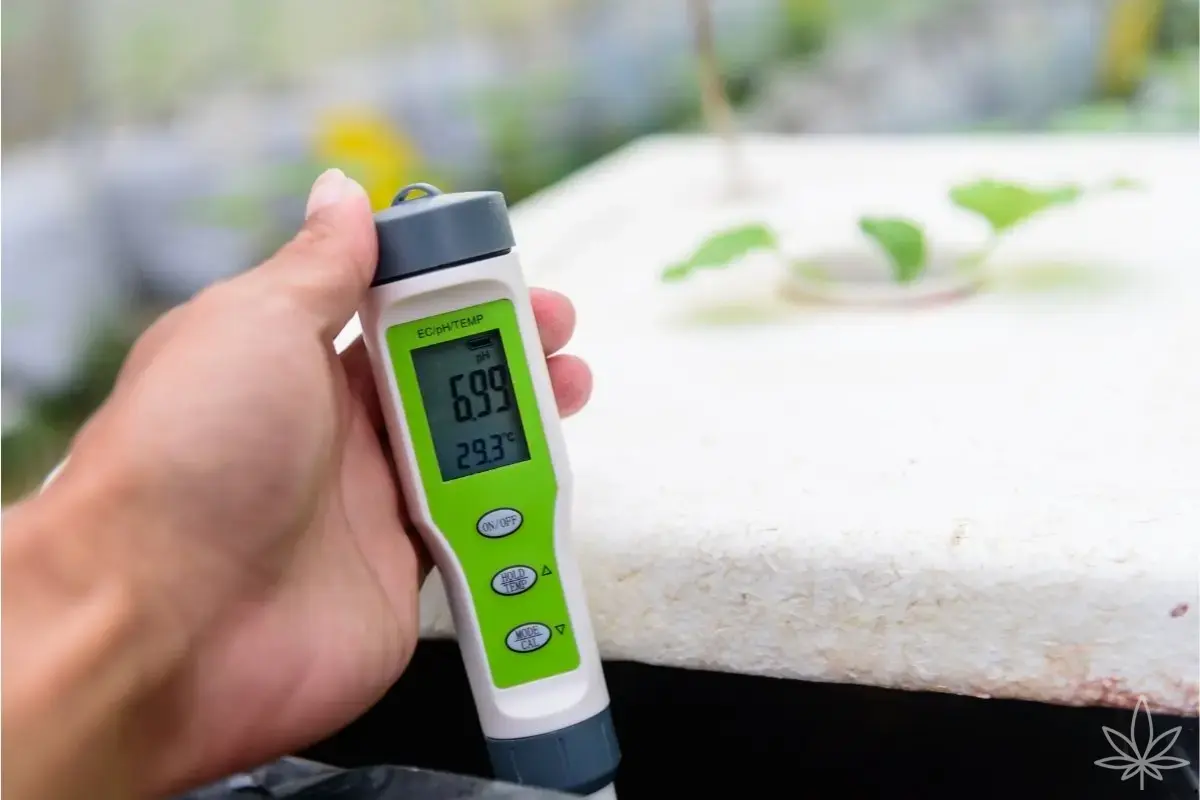
- What is the EC in the medium?
- Do symptoms match real deficiencies?
Only then does Cal-Mag become a tool, not a liability.
Summary: Cal-Mag Is a Scalpel, Not a Hammer
Cal-Mag is neither good nor bad by itself. It is a precision tool that causes damage when used blindly. In the era of LEDs, automation and closed growrooms, success comes not from adding more bottles, but from understanding the physics of growth.
If a plant does not absorb calcium and magnesium, ask first:
does it have the conditions to absorb them at all?
Because very often the problem is not in the bottle — but in the air.